A new regional facility on the Catawba River will serve growing communities in Mecklenburg and Gaston counties
For the first time in 47 years, Charlotte Water is opening a brand-new wastewater treatment plant. The Stowe Regional Water Resource Recovery Facility (WRRF) is a major investment in the behind-the-scenes infrastructure our region needs as more people and businesses call this area home.
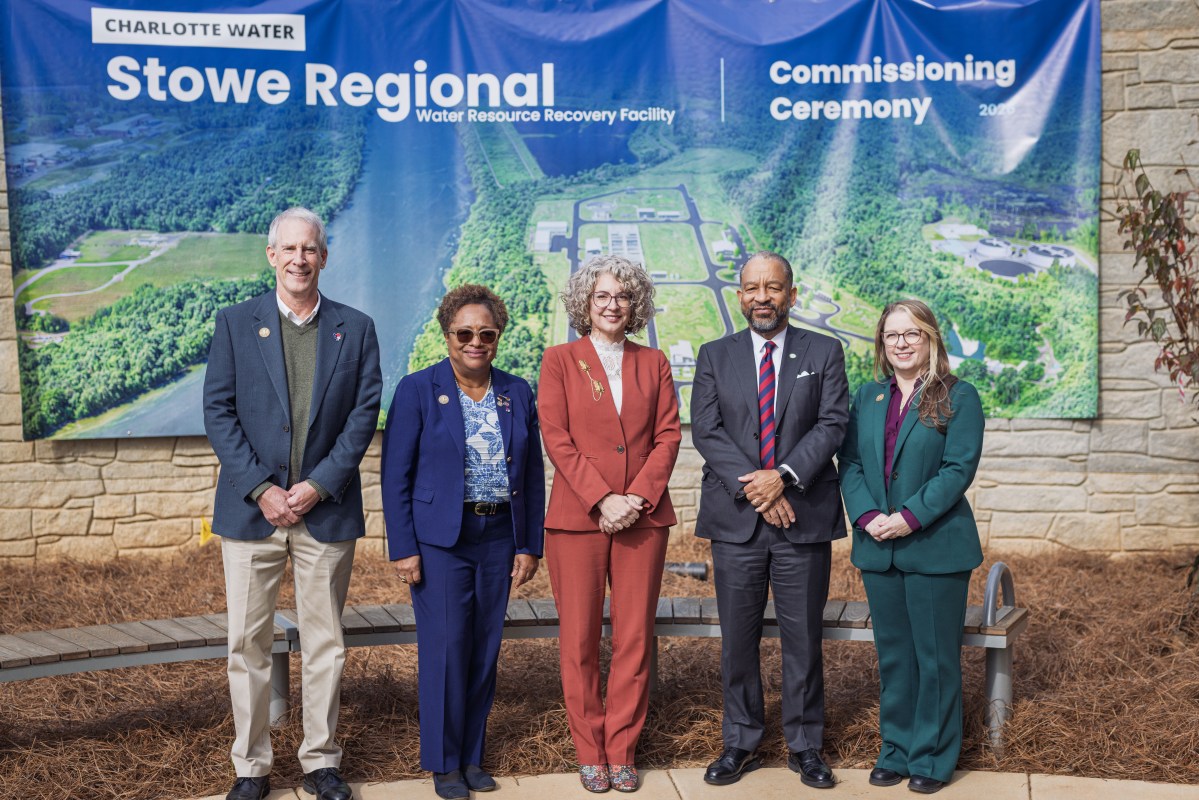
What is a “Water Resource Recovery Facility”?
It’s a modern name for a wastewater treatment plant. Every time you flush, shower, or run the dishwasher, that water travels through underground pipes to a plant like Stowe, where it’s cleaned before it goes back into the environment. Many utilities now use the term “water resource recovery” because these facilities do more than get rid of waste. They return clean water to our rivers and streams and treat water as the valuable resource it is.
Built for a growing region
Stowe sits along the Catawba River in Mecklenburg County. To start, it will be able to treat up to 15 million gallons of wastewater every day. That is enough to fill more than 20 Olympic-size swimming pools. As the area keeps growing, future expansion could raise that capacity to 25 million gallons per day.
Stowe is also a team effort. The project brings together Charlotte Water and the cities of Mount Holly and Belmont to serve northwestern Mecklenburg County and both Gaston County cities.
A shorter trip and cleaner water
Wastewater from northwestern Mecklenburg County has historically traveled about 27 miles to Charlotte Water’s McAlpine Creek facility for treatment. Stowe brings treatment much closer to the communities it serves.
As Mount Holly’s and Belmont’s existing treatment plants are phased out, Stowe will bring that work together in one regional location. The facility also uses advanced treatment processes to meet higher water-quality benchmarks before the cleaned water is released into Long Creek.
“A historic milestone”
“Opening the Stowe facility is a historic milestone for Charlotte Water and the communities we serve,” said Charlotte Water Director Angela Charles. “It’s our first new wastewater treatment plant in nearly five decades, and it reflects years of planning and partnership to prepare for the region’s growth. We’re proud to bring this facility online and grateful to everyone who helped make it possible.”
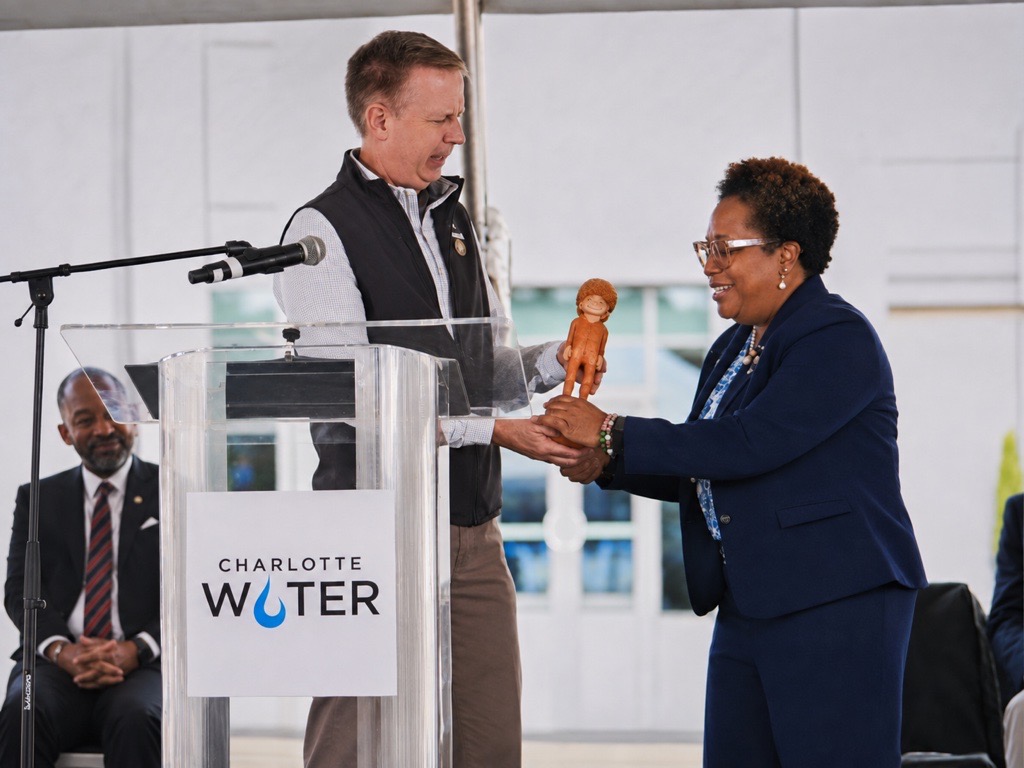
Named for a leader in the water industry
The facility is named for Joseph C. Stowe Jr., a former director of the Charlotte-Mecklenburg Utility Department and a longtime leader in the water and wastewater industry. His legacy continues through the partnerships he built, the communities he brought together, and the leaders he mentored.