Challenge: To build a structurally efficient model water tower that holds water and can be filled and drained quickly, while also being aesthetically pleasing.
Age range: Upper Elementary and Middle School Students
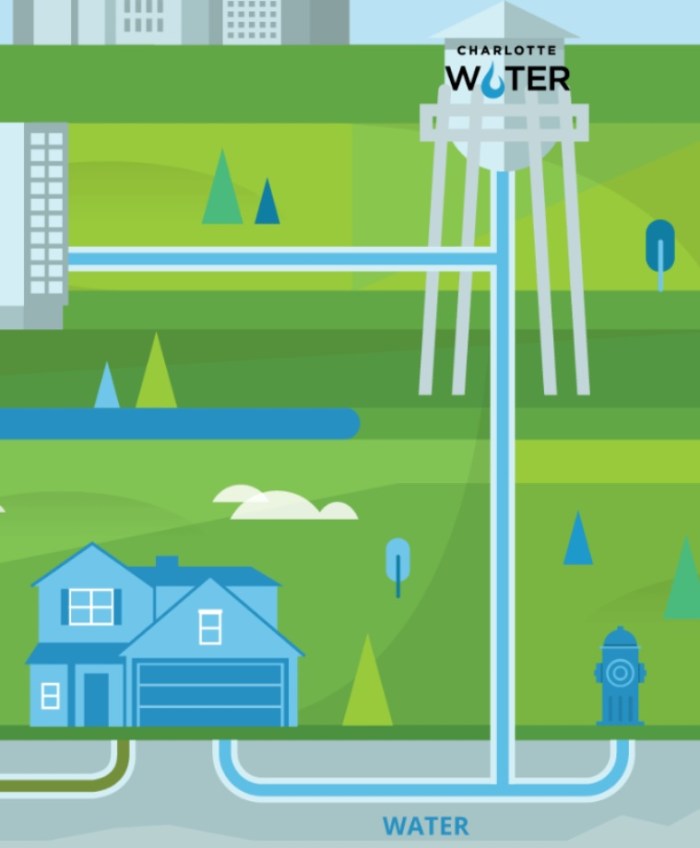
This week’s activity is to build your own water tower at home! In years past, Charlotte Water has held a competition for students to build their own water tower to be reviewed by a panel of judges, but as an alternative we have provided this activity to allow anyone to try this out at home.
The purpose for this project is not only to have fun and experiment with building your own tower, but also to bring awareness to the importance of reliable drinking water and to the various jobs and duties within the water profession. This project does this by having learners develop their own idea into a functioning water tower, just like water professionals do in the real world!

While designing your water tower, it is important to focus on these four criteria: structural efficiency, hydraulic efficiency, cost efficiency and design ingenuity. Understand and achieve these criteria to do well! They are explained below.
Structural Efficiency
Structural efficiency is calculated by dividing the weight of the model when it is empty by the average height of the tank, times (multiplied by) the amount of water it holds. The lower this number the better. This is shown with the following formula:

Remember, the tank should be between:
- 1.5 feet from the base of the tower to the bottom of the tank,
- 2.5 feet from the base of the tower to the hydraulic height (the point where the tower cannot hold any more water, i.e. top or overflow point), and
- Base should fit within a one square foot area.
Hydraulic Efficiency
Hydraulic efficiency is the amount of time it takes to fill the model with one gallon of water and drain it back out again. The less time it takes to fill and drain the tank through the connector the better.
Cost Efficiency
Cost efficiency measures your ability to save money while building your model. For this project, we encourage builders to use materials that they already have, and to only make purchases if necessary. Once complete, see how well you did using the cost efficiency rating system below:
$0.00 – $5.00 = 5 stars
$5.01 – $10.00 = 4 stars
$10.01 – $15.00 = 3 stars
$15.01 – $20.00 = 2 stars
More than $20.00 = 1 star
Design Ingenuity
Ingenuity is how much imagination and skill were used in your model. Water professionals must often use ingenuity; they use skill and imagination to solve difficult problems. It is important to keep the following in mind when designing and building your tower:
- Craftsmanship: Is the model sturdy, do the parts fit together nicely?
- Imagination: Are the design or materials unique?
- Artistic merit: Does the model have creative ideas, colors or themes?

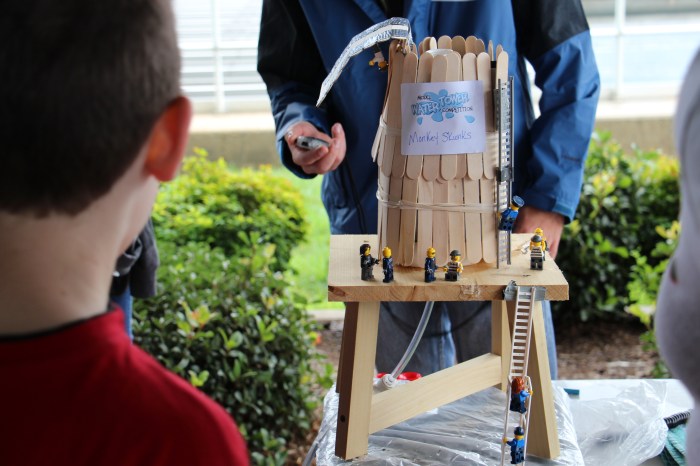
Once you have completed your project, we would love to see how you did! Feel free to share on social media and tag us!
Good luck, engineers!