“What is my water pressure?”
That is a very simple question that can also be very important to Charlotte Water’s customers. Alan Gaines, Senior Engineer with Charlotte Water, explains more in-depth about the water pressure across our distribution system.

If the water pressure is too low, customers may have trouble performing basic tasks such as washing clothes or dishes. However, water pressure that is too high can make some tasks, such as taking a shower, uncomfortable, or cause damage to pipes and appliances.
Charlotte Water serves all of Mecklenburg County with over 4,500 miles of water mains. Pressures will be dependent on where the customer’s service is in our system. Customers should expect to see a range of pressures that can occur throughout the day. This is because water pressure depends on many factors such as the water supply pumping into the water system, water levels in the system’s elevated storage tanks, and water use by other customers.

The elevation of a customer’s home is also a major factor in their water pressure. Customers in low-lying areas, closer to creeks and streams, can expect higher pressures than neighbors on top of a hill or along a ridgeline. Because of topography in our Charlotte Water’s service area, pressures could be 40 psi or lower in some areas of higher elevation and well above 100 psi in areas with lower elevation.
Distribution System Recorded Pressures chart:

If a customer is concerned about their water pressure, they should consult with a licensed plumber or they can measure their water pressure themselves (many home hardware stores sell gauges that attach to a hose spigot).
Based on the plumbing code, if a customer or plumber finds a reading above 80 psi, then the customer should consider having a pressure-reducing valve (PRV) installed to protect their plumbing. A PRV is a small bell-shaped device that is typically installed right after the water meter or at the home’s shut-off valve to bring pressures to an optimal level for domestic use. This is important to help protect the customer’s appliances and maintain the life expectancy of the customer’s private plumbing. PRVs should be checked periodically and may need to be replaced on a frequency similar to a water heater tank (10 to 15 years on average).
Addressing a customer’s low water pressure concerns is a more complex process because there are multiple potential causes. Because of this, customers will likely need to contact Charlotte Water customer service and a licensed plumber to help evaluate the issue and develop an appropriate solution.
If the low-pressure cause is due to the customer’s ground elevation, then Charlotte Water will be unable to help in most circumstances. Pressure is created by adding energy to the distribution system, typically with a pump. Utilities can only add so much energy into the system without creating problems for other customers or making significant changes in major water infrastructure.
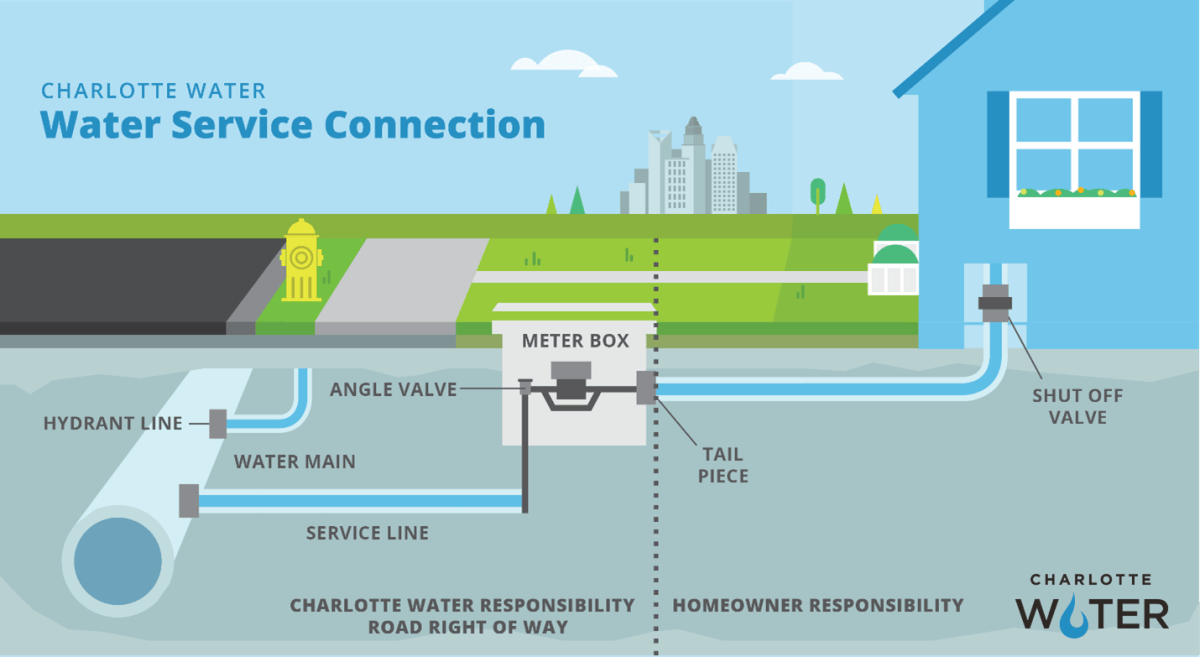
If the low pressure occurs during the customer’s water use, then there is likely a restriction between the water main and the plumbing fixture in the home. Customers are responsible for infrastructure past the meter and Charlotte Water is responsible for the meter and service line to the water main. A restriction’s location will determine which party is responsible to address the issue.
“What is my water pressure?” This simple question has a complex answer involving multiple factors. Water pressures for Charlotte Water customers will occur in a range dependent on conditions in the Utility’s system as well as the customer’s plumbing.