There is a wastewater spill. What should I do?
Call 311 or 704-336-7600 and say or select ‘wastewater emergency’ to speak to a CLTWater dispatcher. We will respond 24 hours a day.
How can I help reduce overflows?
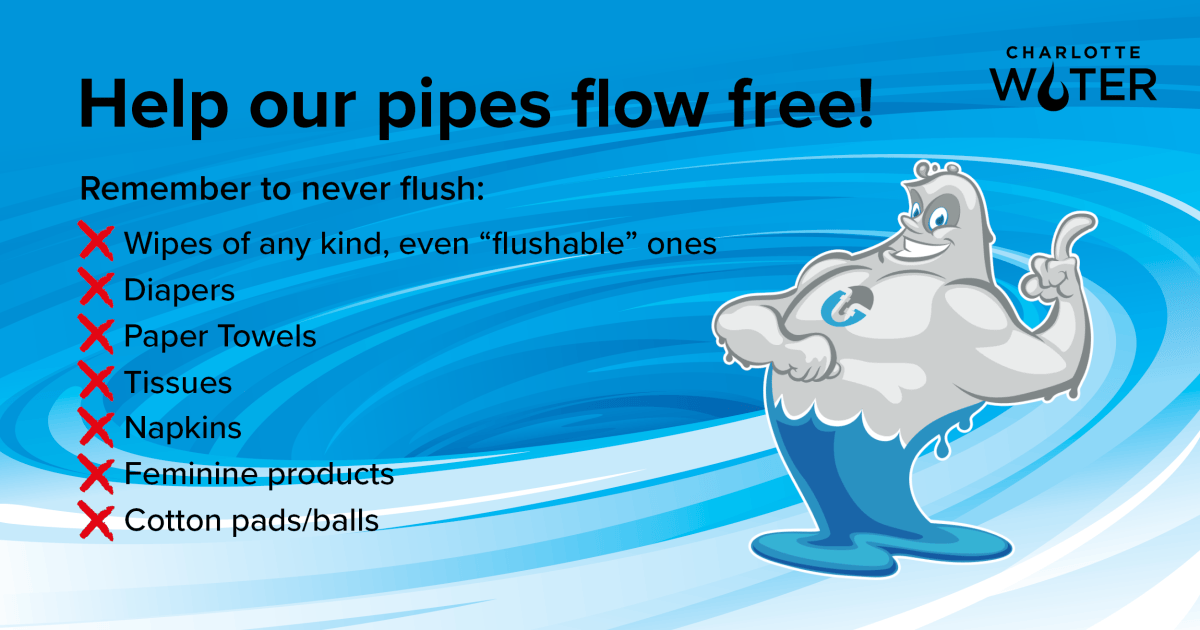
- Toss in the trash: paper towels, wipes, hair, cotton swabs, feminine products, dental floss, coffee grounds, and excess food.
- Toss in the toilet: only toilet paper.
- Drain in the sink: soap suds, small amounts of food from the plate, and liquids.
- Always call 811 before you dig.
Take to a full-service recycling center: used and expired oils and grease.
What causes wastewater overflows?
- Clogs of wipes, paper towels, leftover kitchen grease, oils, or anything other than toilet paper.
- Pipe failure (tree falls and breaks pipe, stream/creek erosion causing the pipe to fall into the creek)
- Tree roots attacking and clogging the pipe
- Damage by nearby construction.
How does CLTWater respond?
A rapid response crew will investigate the area and attempt to remove the clog. This work does not impact drinking water quality. Residents and their pets were encouraged to avoid contact with the creek during an overflow response.
How does CLTWater respond to a large overflow?
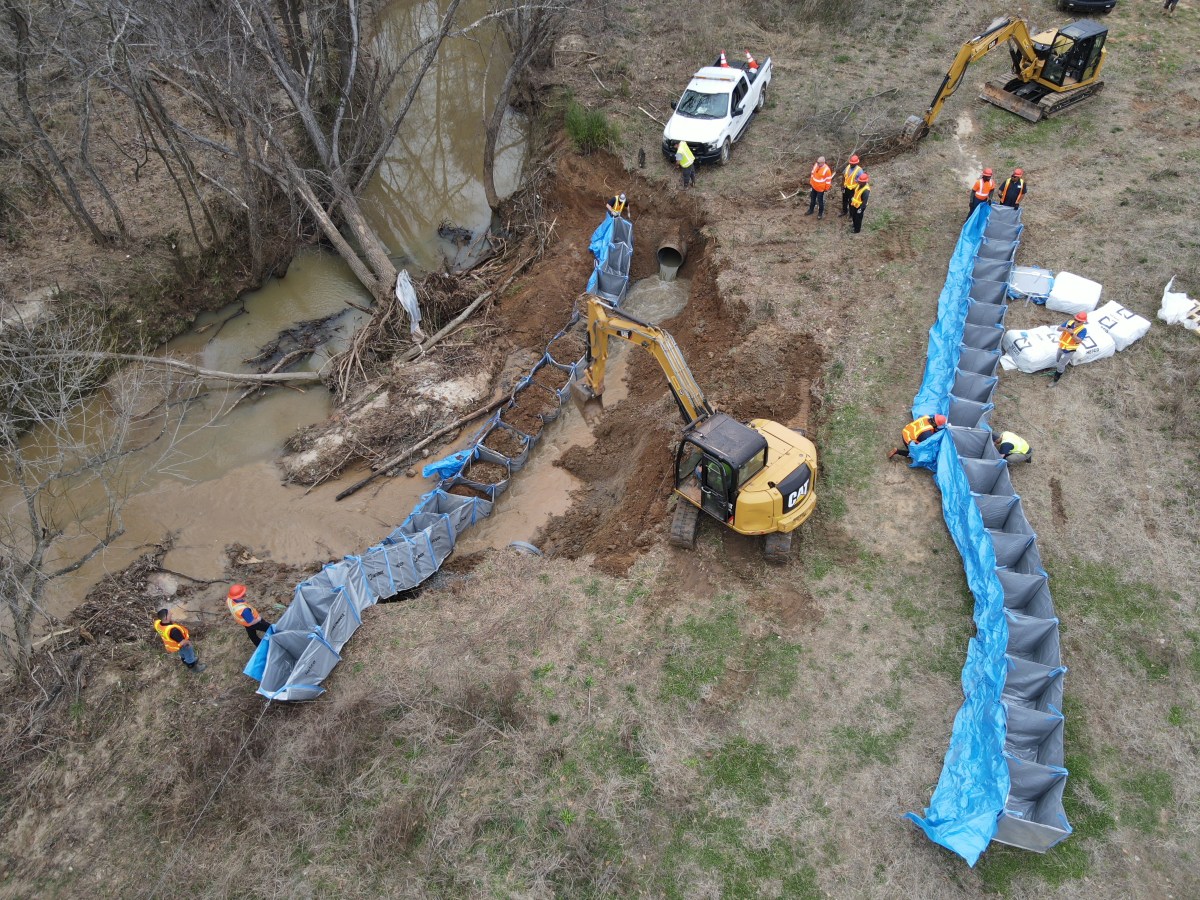
For example – a tree falls into the creek washing out the creek bank and undermining the wastewater pipe just behind the creek bank. Crews frequently inspect these areas, but erosion can occur quickly during heavy rain events. Crews will:
- Create a temporary access road or path if necessary to respond.
- Install a temporary wastewater pipe to bypass the broken pipe and stop the overflow. The pumps and temporary above-ground pipes are checked several times daily to prevent possible wastewater overflows.
- Stabilize the creek bank.
- Construct a barrier / temporary stream bank to protect workers.
- Remove the broken pipe.
- Install the new pipe and test it.
- Rebuild the stream bank with clean fill material (soil).
- Remove temporary pipes and pumps.
- Remove large spoil piles of dirt.
- Complete grading/drainage.
- Plant trees/shrubs and seed/straw the area.
- Restore the stream bank and revegetate.
- If the greenway was closed during work, it would be restored and reopened. When greenways are affected, CLTWater works with Mecklenburg County on restoration.
How does CLTWater handle tropical storms or heavy rains and prevent spills?
The underground sanitary sewer pipe network is not designed to handle rain, yet the runoff and flooding from large rains inevitably infiltrate the wastewater pipe network. Overflow basins at the five largest wastewater treatment plants capture and later treat more than 160 million gallons of rainwater mixed with wastewater. These equalization basins (EQ basins) help prevent wastewater from overflowing out of manholes in our community.
CLTWater has also added several large wastewater pipes to help reduce the impact of heavy rains. Crews work to prevent rainwater from getting into the sanitary sewer system and are out investigating our system soon after a storm ends.