All posts by Cam Coley CLTWater Communications

How CLTWater Repairs Leaks Under Highways, Interstates

To serve customers, CLTWater has water pipes under most roads, including crossing under highways and interstates.

So what happens when there is a leak or a necessary repair under a highway or interstate?

It starts with a lot of planning and preparation.

Teams of engineers and crews investigate the scope of the repair and begin working with the Charlotte Department of Transportation (CDOT) and the North Carolina Department of Transportation (NCDOT) to minimize impact on drivers.

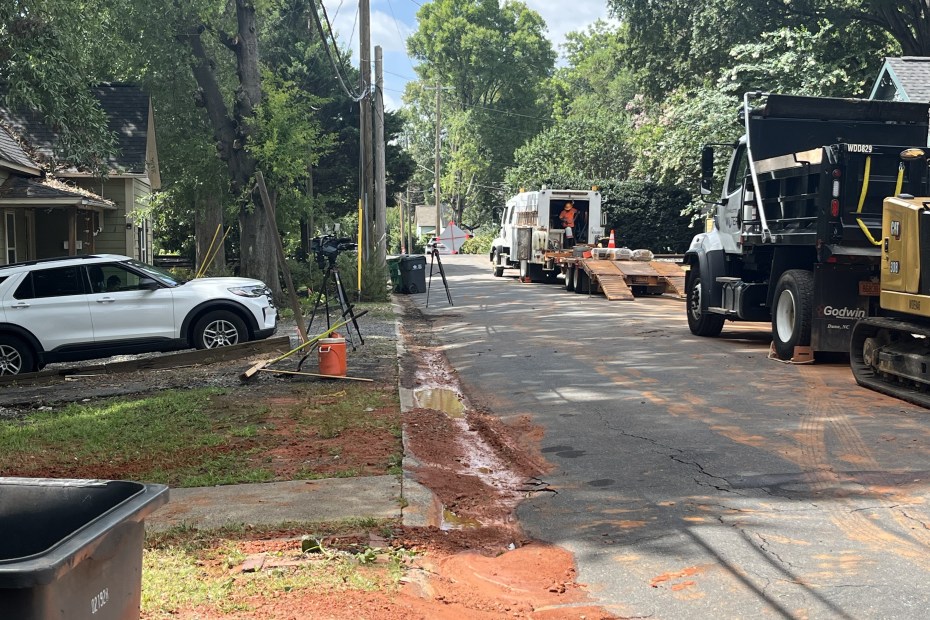
Example: In the fall of 2024, crews installing a new pipe under Interstate 85 found excessive water entering the tunneling pits. Investigations revealed two underground leaks and cracked asphalt, which showed signs of water damage.

  • The team worked on an emergency plan.
  • At least one lane was closed on the interstate from 9:00 pm until 6:00 am Monday through Friday for at least a month.
  • Ground-penetrating radar (GPR) scans of each lane of the interstate helped identify the location of leaks and voids under the asphalt.
  • Stabilizing foam was injected under multiple lanes. More than 600, ¾ inch diameter holes were bored and injected to stabilize the subsurface.
  • The pipes were investigated from the inside using robot cameras. The pipes were in good condition, but some seals needed to be temporarily installed to keep them in service.
  • New pipes were installed inside the existing pipes to maintain use and minimize leaks.


Additional Resources:
How Charlotte Water Repairs Water Pipe Leaks | Charlotte Water Blog

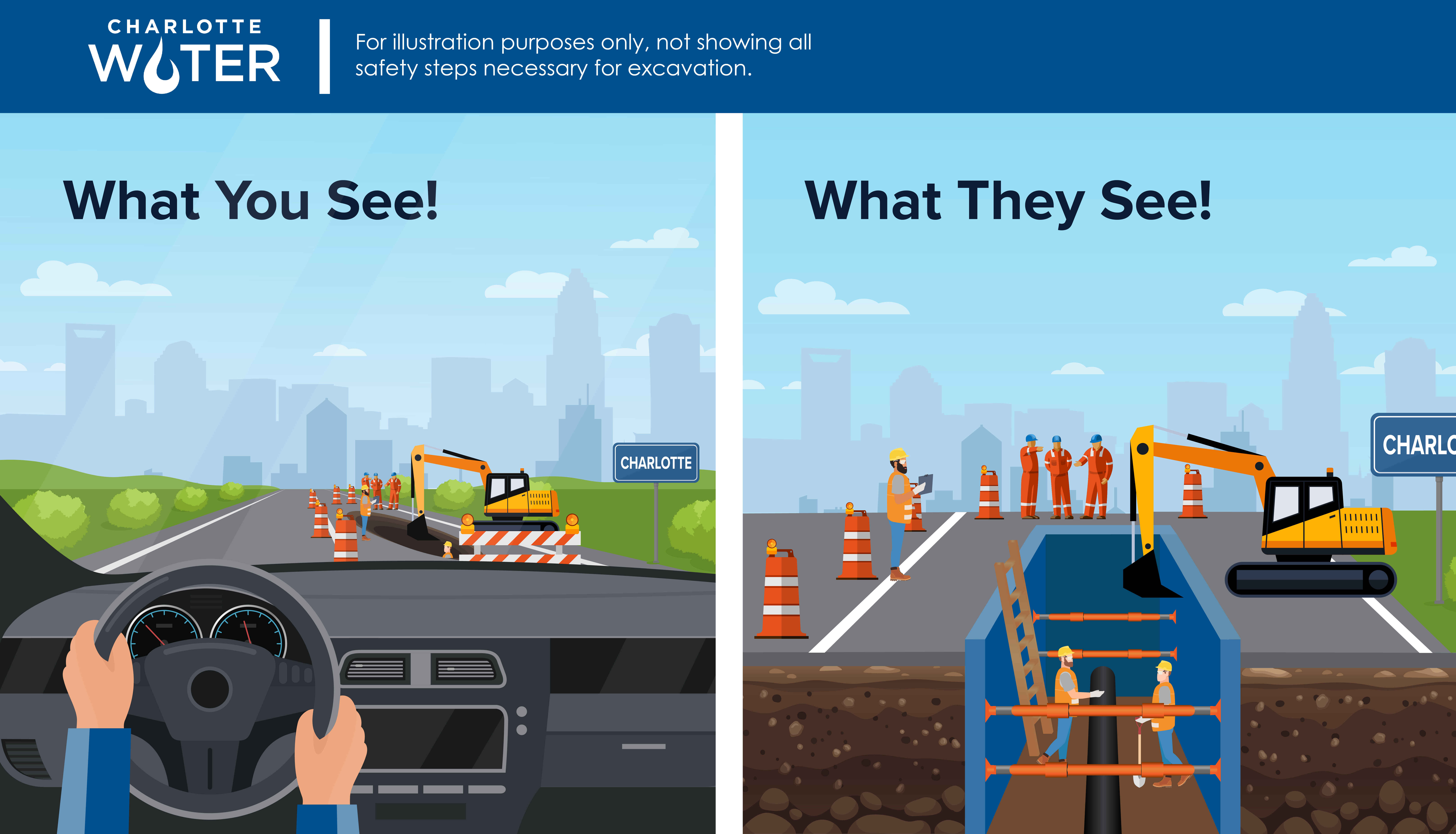
Why are People Standing Around a Construction Site / Repair Site?

Everyone has a job to do…

To watch coworkers underground to ensure they are safe. If someone is injured they are to call 911.

To communicate with equipment operators about raising or lowering materials in or out of the trench.

To supervise or verify that the project or repair is being completed efficiently and effectively.

Training opportunities for new coworkers to see how we safely work in a trench.

To hand equipment and tools down to team members in the trench.

And sometimes they are waiting on more equipment or materials to be delivered.

Trenches are typically just enough space for the minimum number people to get the job done. The less digging, the less time to restore the trench.

Mountain Island Lake Lyngbya Management For Water Quality

Our excellent drinking water starts with protecting the source, The Catawba River. Charlotte Water (CLTWater) is part of the Catawba-Wateree Water Management Group (CWWMG), which manages the river and lake system.

A new program by the CWWMG will ensure algae and other bacteria do not negatively affect our source water.

Lyngbya, a thick blue-green algae grows year-round at the bottom of freshwater lakes throughout the southeastern US. Currently, Lyngbya infestation levels are low in Mountain Island Lake. We want to keep it low. Thanks to the efforts of the CWWMG, a treatment program was developed, funding 21 acres of Lyngbya treatment throughout Mountain Island Lake. This program will reduce the spread of Lyngbya.

The treatment program will span from April to September, using EPA-approved chelated copper-based algaecides. This proactive approach to environmental management is a testament to the community’s commitment to safeguarding the lake.

Resources:

Lyngbya Management Program Fact Sheet.

CLTWater Water Quality Information

Current Fire Hydrant Permit Decal

Any company using a fire hydrant to draw water must have a 2026-2028 Blue Fire Hydrant Permit Decal affixed to the back or side of its equipment.

The Charlotte Water fire hydrant program provides temporary service for customers in Mecklenburg County for authorized use of public fire hydrants. Hydrants are part of the water distribution system and are essential to public safety, public health, and customer service to our community. Charlotte Fire Department (CFD) and Charlotte Water (CLTWater) are the only two organizations authorized to access the fire hydrants without a special permit.

You play a crucial role in the Hydrant Permit Program.
If you notice a company using a fire hydrant without the proper Fire Hydrant Permit Decal, immediately report it to Charlotte Water by calling 311 or 704-336-7600.

Please provide the following information:

  • Time and Location of Occurrence, including any address or cross streets.
  • Description of Vehicle or Assembly, including Company Name.
  • License Plate Number, Name of Operator, or description of individuals.

For more information about the Charlotte Water Hydrant Program and to obtain a permit, please go to https://www.charlottenc.gov/water/DevelopmentBusiness/Fire-Hydrant-Use-Program