Fixing at home leaks can be quick, cheap, and easy.
Taking a few minutes to fix small leaks in your home can prevent costly water bills. Household leaks can waste almost one trillion gallons of water per year nationwide. Some common household leaks are dripping faucets, worn toilet flappers, leaking valves, and irrigation systems. You can fix many of these leaks without having to call a professional. The Environmental Protection Agency (EPA) sponsors Fix a Leak Week annually to encourage leak detection and water conservation. Here are a few of the EPA’s leak repair tips:
Faucet Leaks
Your dripping faucet could be wasting more than 3,000 gallons of water per year. Check out this drip calculator from the AWWA to see how much water you could be wasting at home!
Once you know which part of your faucet is leaking (spout, base, etc.) you can purchase a single replacement piece or a faucet repair kit. Video tutorials like this one can take you from DIY to drip-stopping pro in under three minutes!
To ensure you purchase the right kit or replacement part, it’s best to research your current faucet or disassemble your faucet and take the pieces that need replacement with you. Once you have the necessary replacement parts, simply swap them out and test the faucet for leaks.
How to Repair a Leaky Faucet (with a single handle)
(transcript for this video appears at bottom of page)
Toilet Leaks
A worn-out toilet flapper can silently waste thousands of gallons of water per year. Toilet leaks can be some of the sneakiest leaks in a home. Luckily, replacing a toilet flapper only takes a few minutes and the parts are inexpensive. The easiest way to figure out if your toilet is leaking is to perform a dye test.
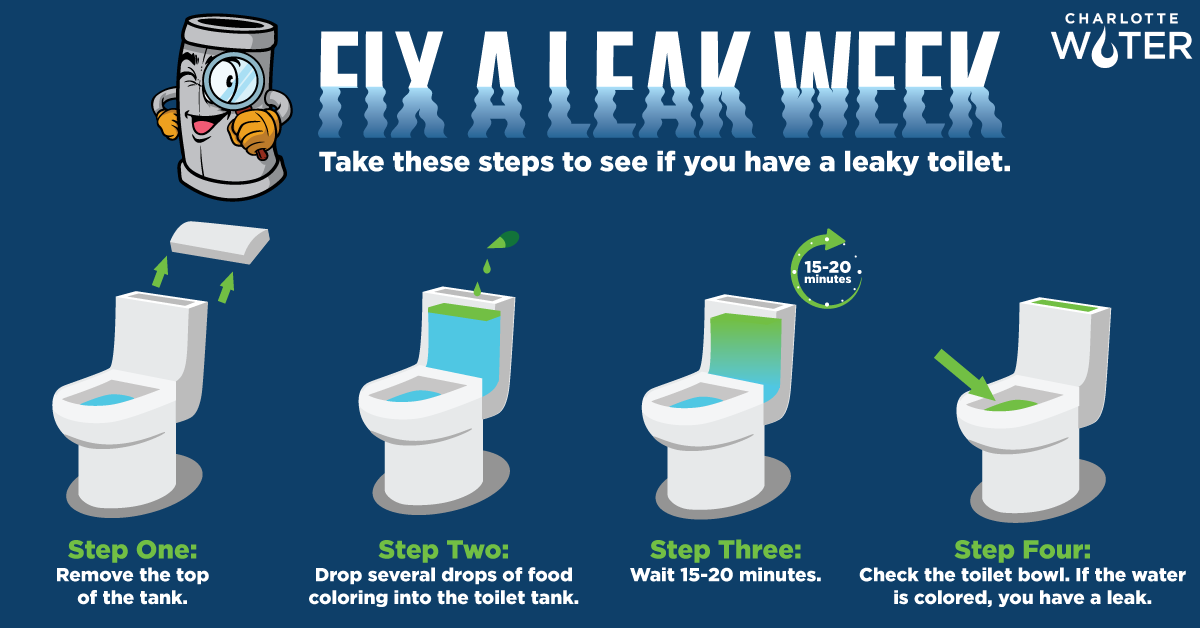
Make sure to carefully examine your old flapper before tossing it to ensure you buy the correct replacement. This simple swap can prevent you from flushing hundreds of dollars down the drain.
Outdoor Leaks
In-ground irrigation systems, hose connections, and pools can also be sources of leaks that can skyrocket your water bill. It’s important to monitor your water bill when you water your lawn or during pool season to ensure you’re not missing a leak. Here are some outdoor leak detection tips:
- Check your irrigation system for damage from freezing temps before you use it each spring.
- Check your irrigation system for faulty sprinkler heads.
- Check your hose connections regularly for pooling water or drips between uses.
- Consult a professional if you suspect a pool leak.
If you need assistance fixing a leak, please contact a professional. If you receive a high bill and are unsure of what to do next, check out this video for next steps.
High Water Bills: Common Causes and Leak Tips
Transcript for this video appears at the bottom of this page.
Charlotte Water can assist you with your outstanding balance from a high bill after your leak is repaired. To get help with your outstanding balance, please dial 311 or 704-336-7600.
Transcript for video “How to Repair a Leaky Faucet (with a single handle):”
Got a dripping faucet? We’ll show you how to fix three types of single handle faucets—ball, cartridge and ceramic disc. First, determine the source of the leak. A leaky spout means damaged parts inside the body. A leak at the base means damaged seals around the body. Turn off the shut off valves. If they’re stuck, turn off the main water valve. Turn on the faucet to release any residual water. Close the drain and place a towel in the sink to help protect it. Also remove the aerator. If it’s stuck, soak a towel in white vinegar and wrap it around the aerator for about an hour. After an hour, gently remove the aerator with a towel and pliers. As you’re taking apart the faucet, lay the parts in order and snap a picture to help with reassembly. Put the parts in a plastic bag to take to the store. You can replace one specific part, but it’s usually best to get a kit and replace all the parts. Also buy a new aerator if yours is damaged. Keep in mind these directions are typical but check the manufacturer’s instructions for your faucet. On ball valve faucets, loosen the set screw and take off the handle. Then take off the cap. To repair a leaky spout, remove the cam, washer and ball. Note how the holes in the ball line up with the faucet body. Use a small screwdriver to remove the seats and springs. To repair leaks at the base, slide off the spout, then replace the O-rings. Add a little plumber’s grease and replace the spout. Put new seats on new springs and put them back in place. Replace the ball — making sure the holes are lined up. Then replace the washer and cam, and reassemble the rest of the faucet. For cartridge faucets, remove the cap and take out the screw and clip. Then take off the handle and trim ring. Unscrew the retainer and pull out the cartridge. Insert a new cartridge. Then reassemble the faucet. To repair a ceramic disc faucet, remove the handle, and trim ring. Unscrew the retainer nut, and pull out the cylinder. Instead of repairing the discs on the bottom it’s best to install a new cylinder. Put the faucet back together, and turn it on. For all faucets turn on the supply valves slowly and without the aerator let the water run for a few minutes to flush out any debris. Clean a dirty aerator by soaking it in white vinegar. Rinse it and screw it back in. Now your faucet should be working like new. Want more great ideas and how tos? Go to Lowes.com/HowTo or click to subscribe. Rather have a new faucet? Check out our installation video.
Transcript for video:”High Water Bills: Common Causes and Leak Tips:”
Do you know that a simple leaking faucet or running toilet can cost you hundreds of dollars in wasted water? Let’s talk high water bills. Charlotte Water has a dedicated team of individuals who go out to read our meters every month. Once that information is received, it will be downloaded, reviewed, and then generated into a bill. If you receive a high bill and are unsure what to do, it’s best to begin by check in your property for leaks right away. The leading cause of a high water bill is a private plumbing leak. Some of the most common private property leaks that we see would be running toilets, leaky faucets, fautly irrigation systems and old plumbing. Many of these are issues that you can fix on your own without having to pay professional. For at home repair tips visit cltwaterblog.org. When it comes to leaks, it’s important to look and listen. Walk around your home to see if you can see or hear water running where it shouldn’t be. Check outside hose connections. If you have a sprinkler system, test your spray heads. If you’ve completed an investigation on your property and you’re unable to find a leak, please contact Charlotte Water by dialing 311 or 704-336-7600. We will send someone out to complete a high bill investigation. This includes reviewing your account, average usage, and Charlotte Water’s equipment. Our staff will notify you after the investigation is complete. Charlotte Water is here to help. If your high bill was caused by a private leak, Charlotte Water has resources to assist you with your outstanding balance after the leak is repaired. To learn more about these programs, please visit charlottewater.org or call us 311 or 704-336-7600.