All posts by Hannah Kendall

From Data Overload to Strategic Insight: Turning Information into Impact at Charlotte Water

At the NC One Water Annual Conference, Charlotte Water’s Colin Stifler shared a simple example to explain why data matters. He said to think about a trip to the doctor. When you check in, they take your blood pressure, temperature, weight, and other numbers. Each number tells you something small, but when you look at them together, you get a clear picture of your overall health. That’s what helps the doctor figure out what’s going on and what to do next.

Colin explained that organizations work the same way. To understand how they’re doing, they need to look at a few key results that really matter. Then they need to understand what affects those results. When you connect the dots between what you want to achieve and what causes changes over time, you can make smarter decisions.

Focusing on What Matters Most

Charlotte Water has six main priorities that guide its work:

  • A strong, high-performing workforce
  • Great customer service
  • Good community engagement
  • Reliable and safe infrastructure
  • Financial stability
  • Protecting the environment

For each priority, Charlotte Water tracks certain measures. However, Colin emphasized that the numbers alone aren’t enough; leaders also need to understand what drives them.

For example, a key measure for workforce success is the vacancy rate. Vacancy rate is shaped by things like how long it takes to fill a job, how many people apply, and how many accept an offer. Those things are then shaped by deeper factors, like training, leadership, pay, and workplace culture. Looking at all of this together helps leaders understand why a number changes, not just that it changed.

Turning Insight into Action

Colin shared how this approach is helping Charlotte Water reduce sanitary sewer overflows (SSOs). An SSO happens when wastewater spills out of the sewer system. These spills are bad for the environment and for public health.

Last year, Charlotte Water had 3.2 SSOs for every 100 miles of pipe. This result is good compared to many large utilities, but the team’s goal is two or fewer. To understand why the number wasn’t lower, staff looked at the main causes of recent SSOs. They found that more SSOs were happening because of pipe failures—up 68% compared to the last three years.

Taken by Cam Coley, employee City of Charlotte, Charlotte Water

After seeing that, staff checked the rate at which old pipes were being replaced. They discovered that pipe replacement had slowed down during the same time pipe-related SSOs went up. This showed a clear path forward: increasing pipe repair and replacement would help bring SSO numbers down. Engineering teams will continue working on the details, but the data helped point everyone in the right direction.

A Clearer Path Forward

Colin closed with one key message: when you choose the right things to measure and take the time to understand what affects them, you make better decisions.

This approach helps leaders avoid guesswork, stay focused, and take action that truly makes a difference. Just like a doctor uses vital signs to care for patients, Charlotte Water is using simple, meaningful data to guide decisions and continue serving our community well.

Save Money, Save Water

Fixing at home leaks can be quick, cheap, and easy.

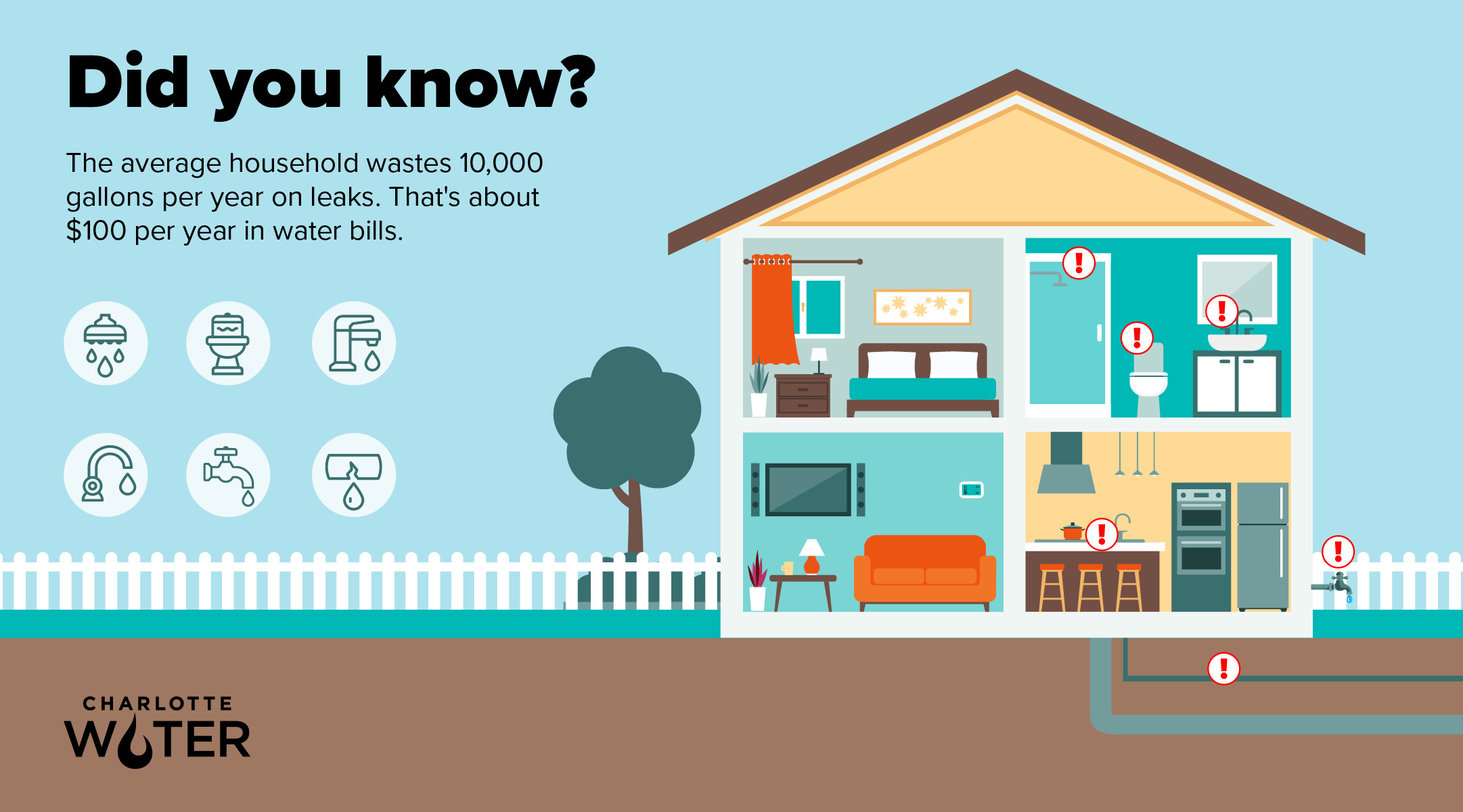
Taking a few minutes to fix small leaks in your home can prevent costly water bills. Household leaks can waste almost one trillion gallons of water per year nationwide. Some common household leaks are dripping faucets, worn toilet flappers, leaking valves, and irrigation systems. You can fix many of these leaks without having to call a professional. The Environmental Protection Agency (EPA) sponsors Fix a Leak Week annually to encourage leak detection and water conservation. Here are a few of the EPA’s leak repair tips:

Faucet Leaks

Your dripping faucet could be wasting more than 3,000 gallons of water per year. Check out this drip calculator from the AWWA to see how much water you could be wasting at home!

Once you know which part of your faucet is leaking (spout, base, etc.) you can purchase a single replacement piece or a faucet repair kit. Video tutorials like this one can take you from DIY to drip-stopping pro in under three minutes!

To ensure you purchase the right kit or replacement part, it’s best to research your current faucet or disassemble your faucet and take the pieces that need replacement with you. Once you have the necessary replacement parts, simply swap them out and test the faucet for leaks.

Toilet Leaks

A worn-out toilet flapper can silently waste thousands of gallons of water per year. Toilet leaks can be some of the sneakiest leaks in a home. Luckily, replacing a toilet flapper only takes a few minutes and the parts are inexpensive. The easiest way to figure out if your toilet is leaking is to perform a dye test.

Make sure to carefully examine your old flapper before tossing it to ensure you buy the correct replacement. This simple swap can prevent you from flushing hundreds of dollars down the drain.

Outdoor Leaks

In-ground irrigation systems, hose connections, and pools can also be sources of leaks that can skyrocket your water bill. It’s important to monitor your water bill when you water your lawn or during pool season to ensure you’re not missing a leak. Here are some outdoor leak detection tips:

  • Check your irrigation system for damage from freezing temps before you use it each spring.
  • Check your irrigation system for faulty sprinkler heads.
  • Check your hose connections regularly for pooling water or drips between uses.
  • Consult a professional if you suspect a pool leak.

If you need assistance fixing a leak, please contact a professional. If you receive a high bill and are unsure of what to do next, check out this video for next steps.

Charlotte Water can assist you with your outstanding balance from a high bill after your leak is repaired. To get help with your outstanding balance, please dial 311 or 704-336-7600.