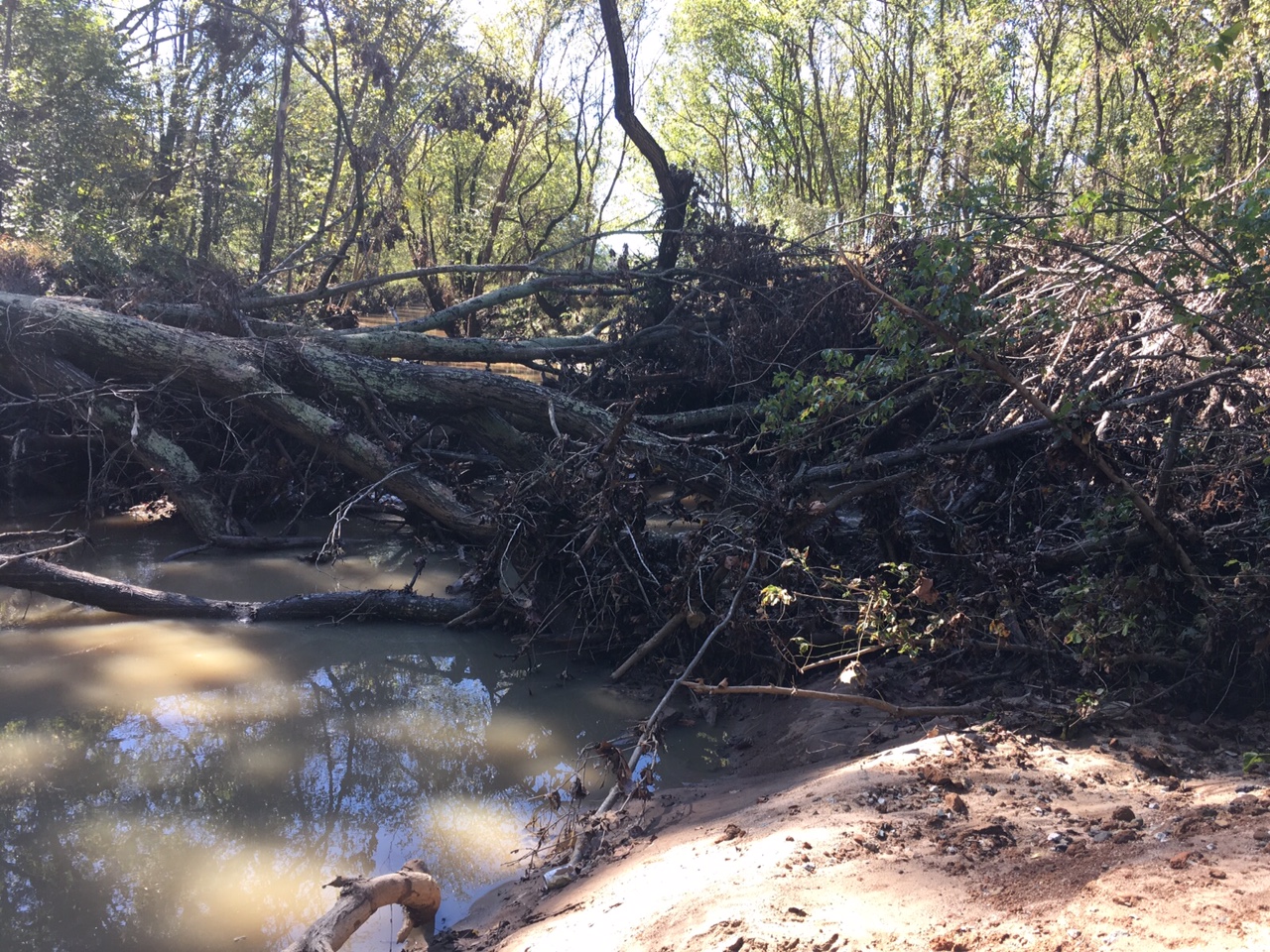
October 24, 2017 – Charlotte Water (CLTWater) crews responded to a broken wastewater pipe east of E. Mallard Creek Church Road, downstream of Kirk Farm Field Park on October 24th. Crews are working to estimate gallons that may have reached Mallard Creek.
CLTWater staff at the Mallard Creek Wastewater Treatment Plant observed lower than normal amounts of wastewater coming into the plant. Staff began checking manholes and pipes upstream to look for a cause of the lower flows. A broken pipe was discovered upstream of the plant in Mallard Creek. A fallen tree across the pipe has caused a 36” wastewater pipe to break, possibly due to Monday evening’s storm.
Charlotte Water is currently notifying downstream residents, mobilizing crews and resources to control the spill, and make repairs.
Updates will follow with details as they are available.
Mallard Creek Wastewater Treatment Plant is located in the Yadkin-PeeDee River basin.
This year, Charlotte Water completed construction on a system at McAlpine Wastewater Treatment Plant that captures and converts methane gas (a byproduct of wastewater treatment) into a fuel for electricity production and useful heat.
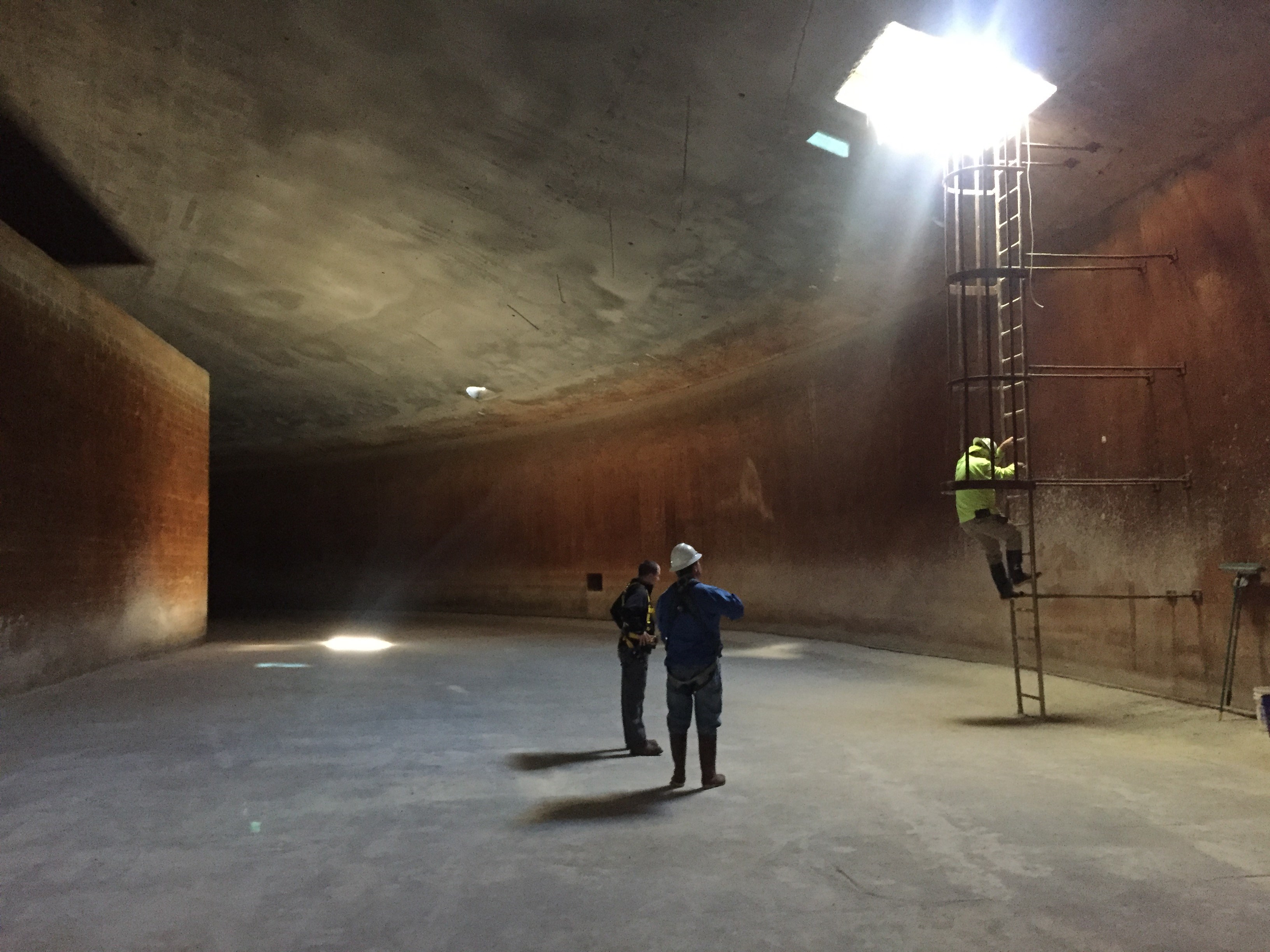
Typically the bacteria used to break down organic materials during wastewater treatment creates their own waste in the form of methane. Up to 900 pounds of this waste is produced per day at McAlpine and is normally used for heating in boilers or burned off. The new facility to convert methane gas into something useful is called a Combined Heat and Power (CHP) facility – and Charlotte Water is the first water/wastewater utility in the state to utilize this system.
The CHP facility produces 762,480 kWh in a given month, which is enough energy to run about 846 homes.
The electricity will be added to the electric grid through a partnership with the local electric provider, Duke Energy. The excess heat will be returned to the wastewater treatment process, offsetting some of the electricity it needs to operate.
A 20-year, zero-interest loan from the state’s Clean Water State Revolving Fund (a federal Clean Water Act program that’s been in operation since the late 1980’s) financed the project. The state allowed for no-interest financing because of the project’s positive environmental impact and renewable energy generation, which made it financially feasible for the utility. The partnership means Charlotte Water won’t have to divert any of its operations budget reserved for routine system upgrades, there will be no additional costs to water customers, and the project will pay for itself in about a decade.
At 7:20 a.m. on Friday, July 14, Charlotte Water received a call reporting a Sanitary Sewer Overflow (SSO) near 700 Farmhurst Drive. Charlotte Water crews responded to discover an active spill of wastewater discharging into Kings Branch, a tributary of Sugar Creek. The wastewater appeared to be escaping from a 21” sanitary sewer pipe that had separated at a joint. Between 9:00 a.m. and 2:30 p.m., crews worked to assess the pipe failure and gain access for heavy equipment. Access to this particular stretch of Kings Branch was hindered by a ¼ mile thick streamside zone of trees, vines, underbrush and dense bamboo.
Dense bamboo vegetation along Kings Branch
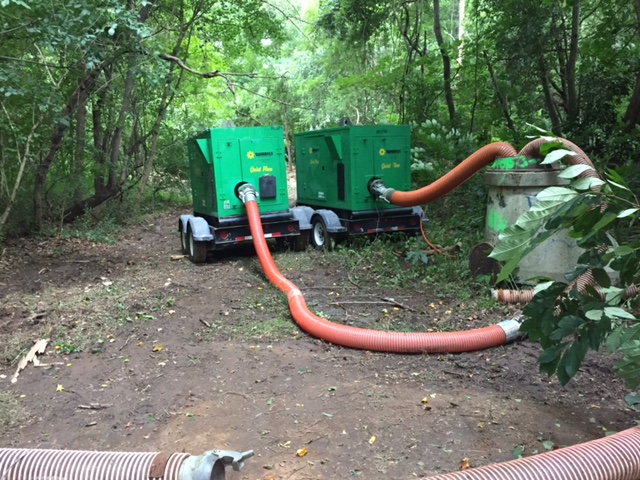
In order to control wastewater spills, crews must set up pumps and hoses to collect the wastewater coming to the break area, bypass the break in the pipe and send the wastewater to a nearby manhole so that the wastewater can continue to flow to the treatment plant. Bypass pumps arrived at approximately 2:15 p.m. At 6:20 p.m. the bypass operation was completely set up and wastewater was no longer spilling into the creek.
Bypass pumps and hoses redirecting wastewater into a nearby manhole
Spill Volume & Location
Charlotte Water estimates that approximately 201,850 gallons of wastewater entered Kings Branch. It was first reported that the total would be close to 180,000 gallons but revised the spill volume once the spill was contained. Spill volume is based on the duration of the spill, the diameter of the pipe and the fullness of the pipe. Kings Branch is located near Archdale Drive and South Boulevard. The creek flows from the break point about 3 miles before it meets with Sugar Creek just south of I-485. Sugar Creek flows from that point through South Carolina about 8 miles where it meets with the Catawba River.
Notification
Nearby residents were notified of the event through social media posts to NextDoor, door hangers and media notification. Downstream water supply operators and other stakeholders were notified of the spill via email. Union County (NC), Lancaster County (SC) Water and Sewer District, Lugoff-Elgin Water Authority, Duke Energy, Camden (SC) experienced no impacts to their water supply. The media reported that the SC Department of Health and Environmental Control issued No Swim Advisories at some Catawba River access points until sampling tests could confirm any impact.
Repair
Charlotte Water crews have monitored the bypass operation 24 hours a day to ensure no secondary spills occur. A contractor has been gathering the necessary materials and equipment to make the repair as well as improving site access. Repair construction is expected to begin Friday, July 21.
Improving site access to begin repair
A conversation with Charlotte Water
document.addEventListener('DOMContentLoaded', function () {
const observer = new MutationObserver(() => {
document.querySelectorAll('.jetpack-instant-search__search-result-expanded__image').forEach(img => {
if (!img.hasAttribute('alt')) {
img.setAttribute('alt', '');
}
});
});
observer.observe(document.body, {
childList: true,
subtree: true
});
});