Turbidity is a key water quality measurement taken at our treatment plants, fire hydrants and sampling stations throughout the 4,300 miles of drinking water pipes.
Turbidity is the measure of the cloudiness of the water. Generally, it comes from soil runoff. We monitor it because it is a good indicator of the effectiveness of the filtration system. If turbidity is high, it reduces the effectiveness of the chlorine used to disinfect the water (read: bacteria)
Turbidity tests standards from the distribution system are considered secondary standards by the EPA.
“EPA has established National Secondary Drinking Water Regulations (NSDWRs) that set non-mandatory water quality standards for 15 contaminants. They are established only as guidelines to assist public water systems in managing their drinking water for aesthetic considerations, such as taste, color, and odor. These contaminants are not considered to present a risk to human health at the secondary maximum contaminant levels. These contaminants are not health threatening at the SMCL. Public water systems only need to test for them on a voluntary basis. EPA believes that if these contaminants are present in your water at levels above these standards, the contaminants may cause the water to appear cloudy or colored, or to taste or smell bad. This may cause a great number of people to stop using water from their public water system even though the water is actually safe to drink. Secondary standards are set to give public water systems some guidance on removing these chemicals to levels that are below what most people will find to be noticeable”. EPA’s website
This is not to say at all that Charlotte Water finds rusty water or cloudy water in the distribution system acceptable. We take all reports of unusual water quality very seriously. All reports of unusual water quality will be investigated immediately.
The EPA standard for tests done at the treatment plants are that the highest NTU (Nepthelometric turbidity unit) be less than 1 and that at least 95% of samples are less than or equal to 0.3 NTU.
In most cases, staff are testing water that has an NTU that is much much lower than the limit and is not visible to the human eye. If tests show a high level of turbidity in the distribution system (generally more than 1 NTU) hydrant flushing is done to clear the water.
As you can see from the 2018 Consumer Confidence Report results, the highest measurements at each water treatment plant were around 0.1 NTU.
See the following chart:

Keep in mind that turbidity in excess of 5 NTU is just noticeable to the average person.
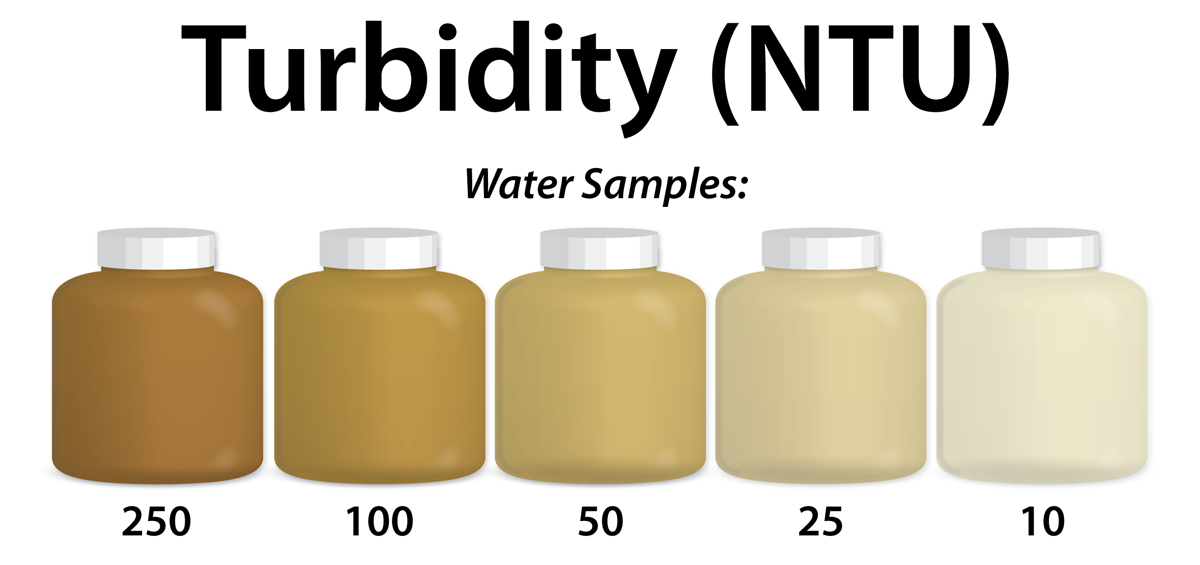
Image from LearnNC.org