Skip to content

Water Week Spotlight: Sarah Harris, Lab Analyst

Lab analysts play a critical role in our water distribution system.

They are responsible for testing our water system on a daily basis, conducting approximately 195,000 tests per year! Sarah Harris, a Lab Analyst at our Environmental Services Facility, takes us around the lab to share what a typical day is like in her role.

Sarah works in the receiving department of the lab, where lab analysts receive all of the water samples that need to be tested that day. On a typical day, Sarah arrives between 7:30-8:00am, and the lab opens each day at 8:00am, and they accept water samples up until 3:00pm each day. At the beginning of each day, the analysts will calibrate anything they will need to use for the day, i.e. thermometers, the cold room, etc. and check the Di (deionized) water system for quality control.

lab technician wearing glasses, floral print mask, blue-black gloves, and long white lab coat hold up a plastic specimen jar with white lid and label containing a tark liquid
lab technician with long brown hair and white lab coat inspects a wall mounted black metering device while 6 mustard yellow tanks hooked up to black hoses stand behind her
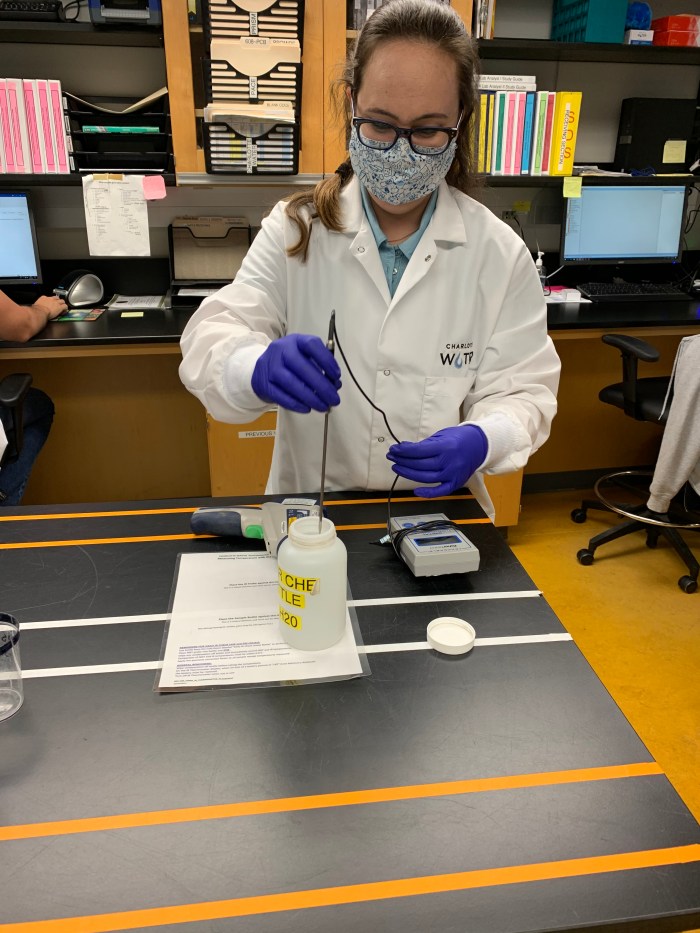
standing a at black table, a lab technician wearing floral printed mask, glasses, white lab coat and blue gloves inserts a testing probe into an open sample jar, probe is attached to a nearby small, grey plastic meter with a black wire

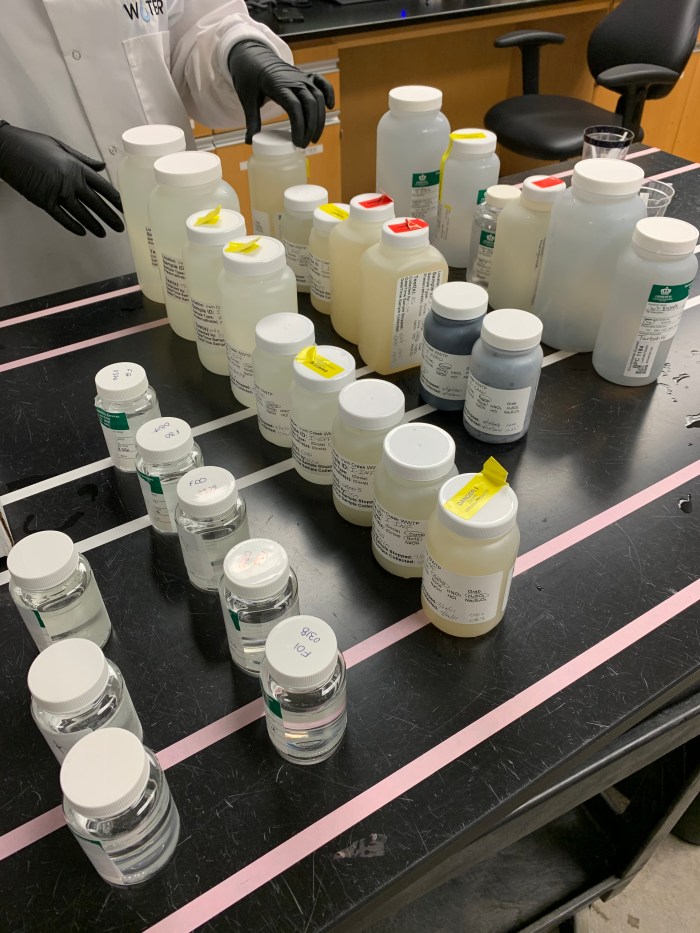
Then they wait on their first samples to come in, both water and wastewater. Lab analysts test the drinking water every single day; each day they test for total coliforms and E.coli, and the first Tuesday of every month they test for taste and smell. They do a mineral analysis twice a month, looking for silica metals, suspended solids, and turbidity. Every couple of months the lab also receive samples for testing from our lakes, which each have different properties.

lab technician wearing glasses, floral printed mask, long white lab coat and black gloves shows off a grey sample jar as she stands in front of 2 red and white consumer coolers; one marked on lid Franklin WTP and the other CW Dukes
5mrows of plastic white or clear specimen jars with white plastic lids are lined up on black table top
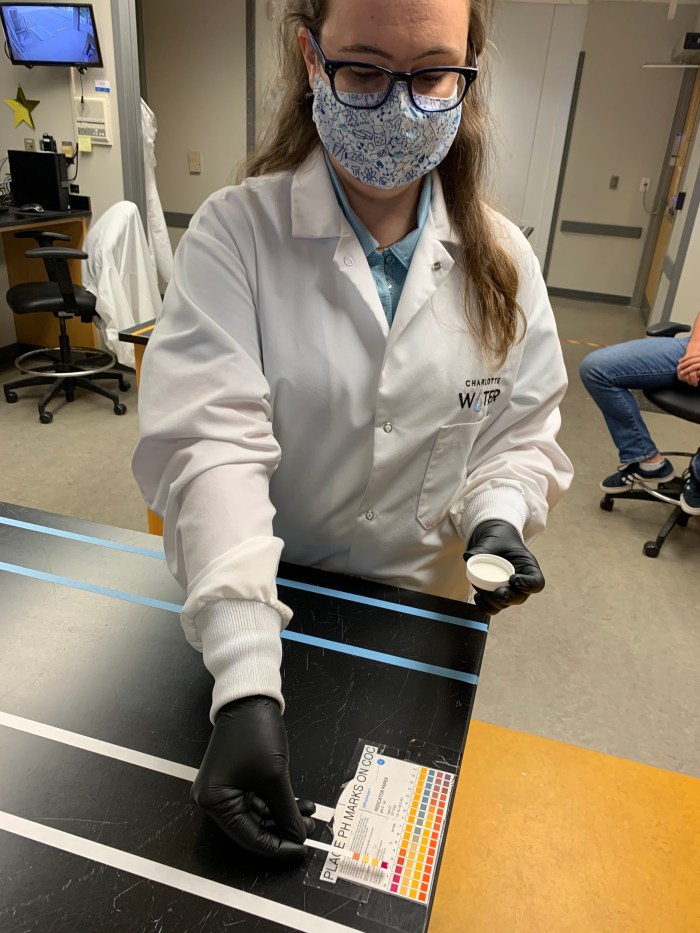
lab technician with glasses, floral print mask, white lab jacket, black gloved hands holds a colorful ph lab strip against a ph chart as comparison
lab technician wearing glasses, floral printed mask, long lab coat and black gloves points to colorful writing on a white board

The lab is all about quality control – everything that touches a sample is very important! Everything must be handled and cleaned carefully in order to prevent any type of cross-contamination to any of the samples or tools they use for testing. They even test the air in the lab once every month!

lab technician wearing glasses, floral print mask, black gloves and white lab coat with Charlotte Water logo, pulls open a lab station wooden drawer full of empty, clear plastic sample jars with white lids
lab technician wearing glasses, floral print mask, black gloves and white lab coat holds a clear sealed package as she stands at a black lab table
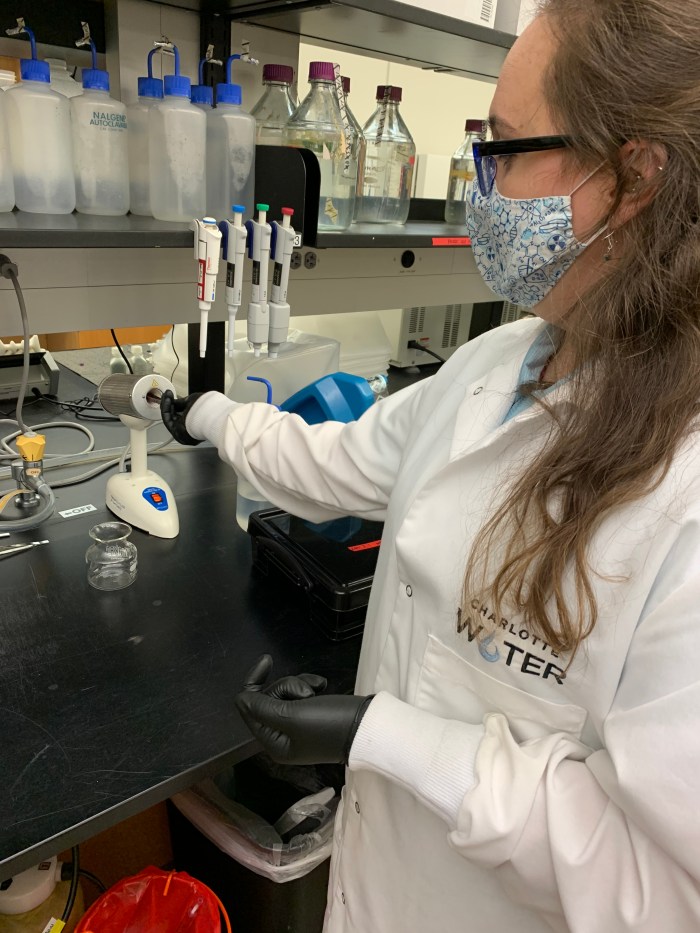
lab technician wearing glasses, floral print mask, black gloves and white lab coat with Charlotte Water logo, inserts a probe into a white testing device sitting on a black lab table
2 metal shelves hold miscellaneous lab supplies including bottles, jars and an opaque bin of sealed packets of light brow, sanitized testing devices
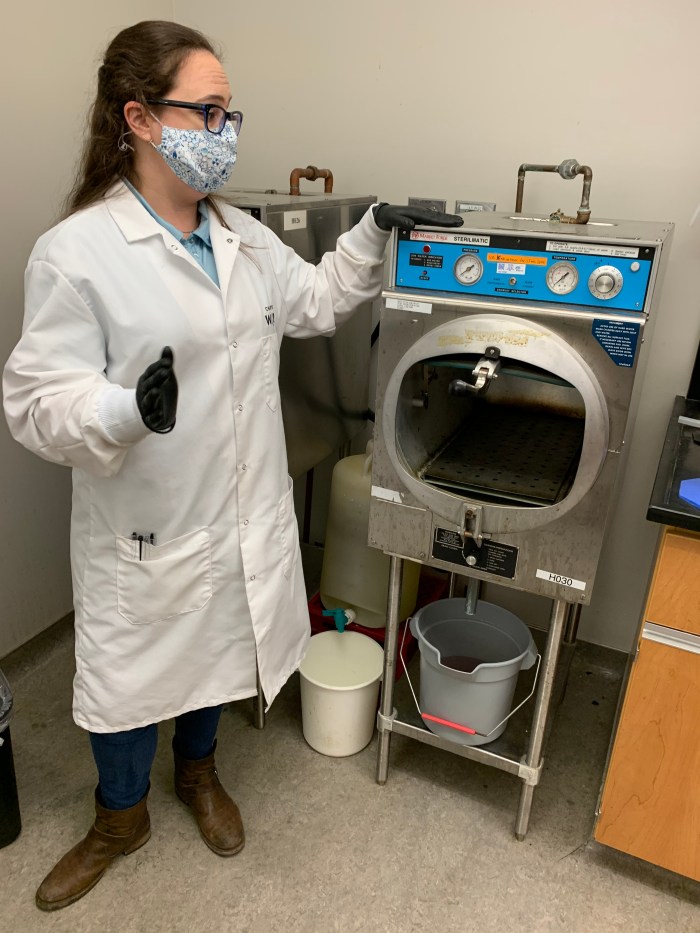
lab technician wearing floral printed mask, glasses and long white lab coat stands next to tall, stainless steel testing device with blue trim and large round, black window with grey bucket underneath
The autoclave used for cleaning some of their testing materials

The water distribution system is tested at the end of the day. Lab field staff have designated water sampling station checkpoints where they retrieve their samples. They test the water for the “Big 10” metals, i.e. lead, mercury, etc. They also check the fluoride content and bacterial status.

Lab analysts will test their water samples for 24 hours in certain conditions that would cause certain bacteria to grow if it were present in the water sample. Water samples are placed onto agar plates and placed into a water bath for 24 hours.
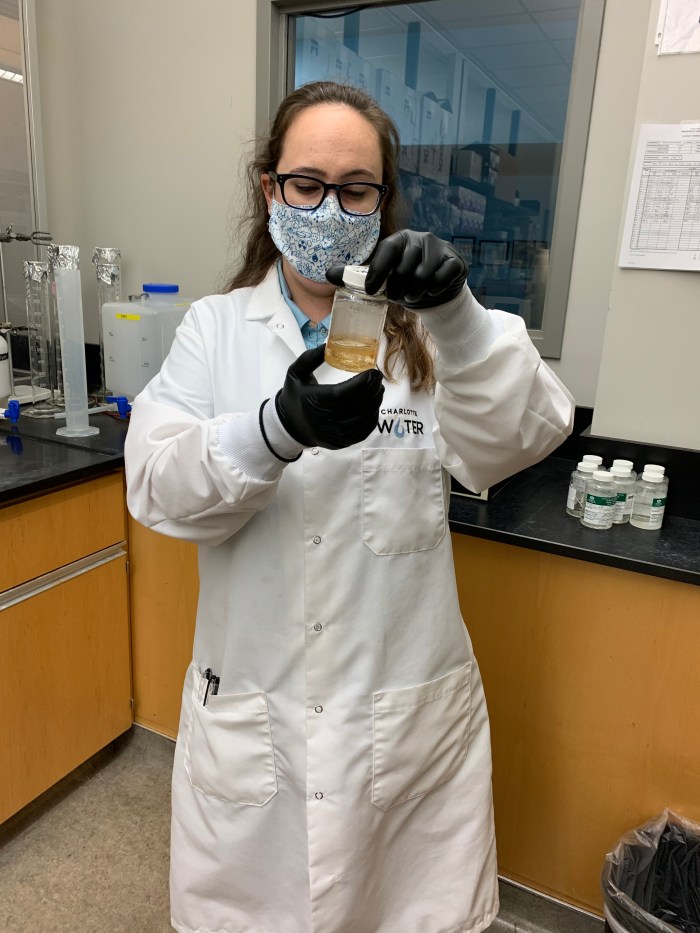
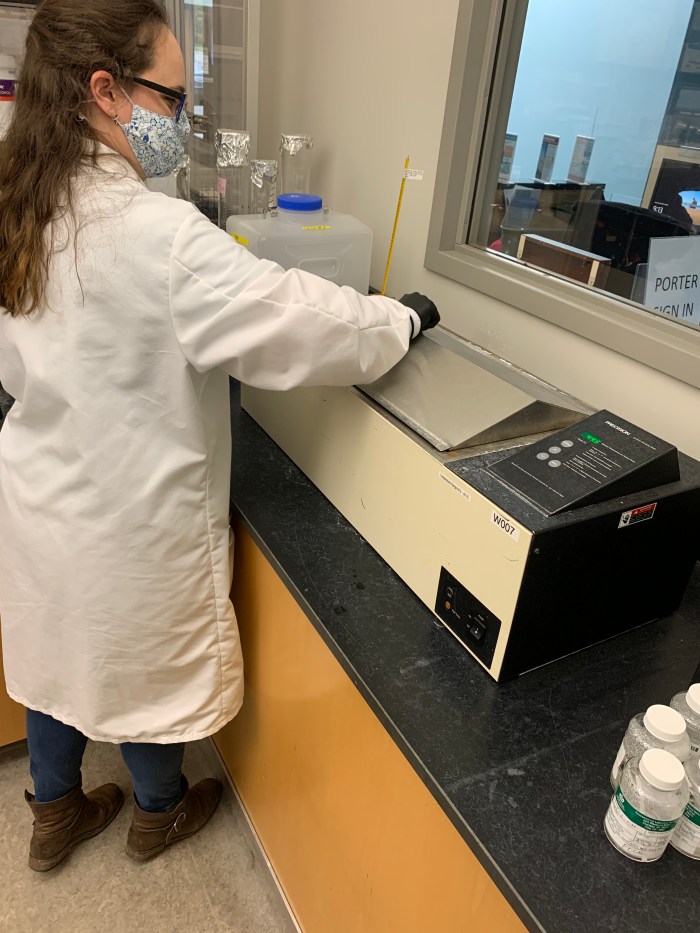
lab technician wearing glasses, floral print mask, black gloves, and long white lab coat examines the ginger-ale colored liquid inside a glass specimen jar with white lid
lab technician wearing glasses, floral printed mask and long white lab coat puts a grey cover on top of tan and black warming console
large tan and black warming console for rubber gaskets and o-rings, currently 6 rings warm on two racks while 1 ring is submerged at bottom of shallow vat of clear liquid
lab technician wearing glasses, floral print mask, white lab coat and black gloves shows off tan flat oval disc with a fringe of pink rubber hoses
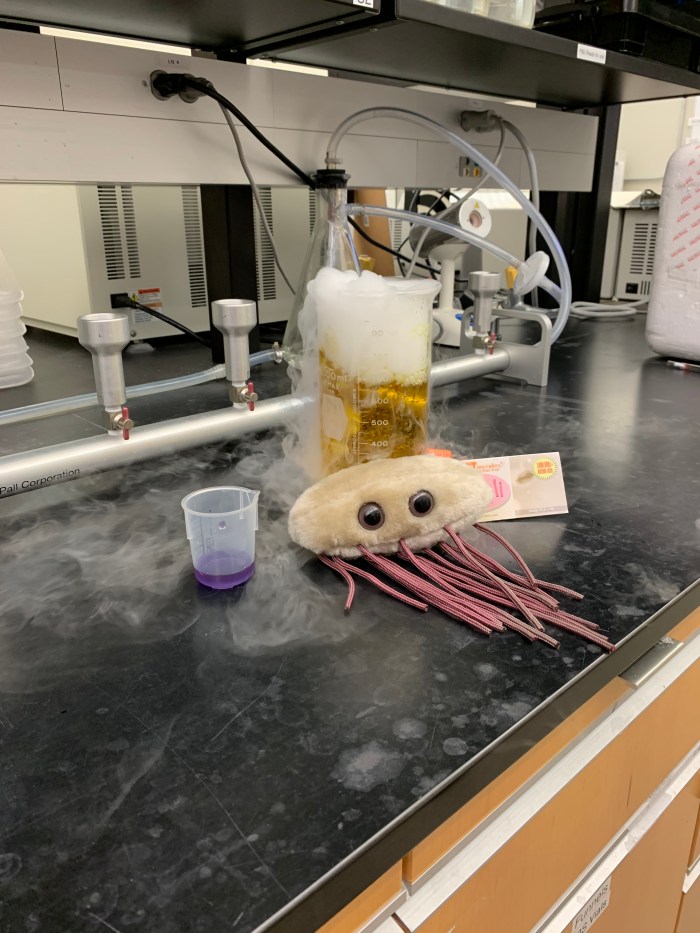
large glass beaker bubbling frothy steam from a ginger-ale colored liquid sits on a black lab table next to a small plastic cup partially filled with dark blue liquid and a white plastic oval disc with a fringe of pink rubber hoses
E.coli is cute as a stuffed animal, not in your drinking water
lab technician wearing glasses, floral print mask, blue and black rubber gloves, clear visor and white lab coat with Charlotte Water logo, stands by a black lab table holding a stainless steel pipe with testing terminals
Science can be fun, too! Mixing dry ice with water, the carbon dioxide releases these bubbles creating this fun effect.

Sarah began working for Charlotte Water a little over a year ago in early March, right when the pandemic began and many of our staff began working from home. Sarah was part of the lab’s hand sanitizer project that the lab coordinated during the pandemic in 2020, when hand sanitizer was scarce.

Sarah’s favorite part of her job is that the work itself if very rewarding, knowing that lab analysts play a vital role in the health and safety of the community. Sarah also shares that she enjoys working in a fun and friendly team-oriented environment. She works on a team of three analysts, herself included, who work in the receiving lab, and there are a little more than 30 total analysts working in the entire lab division.

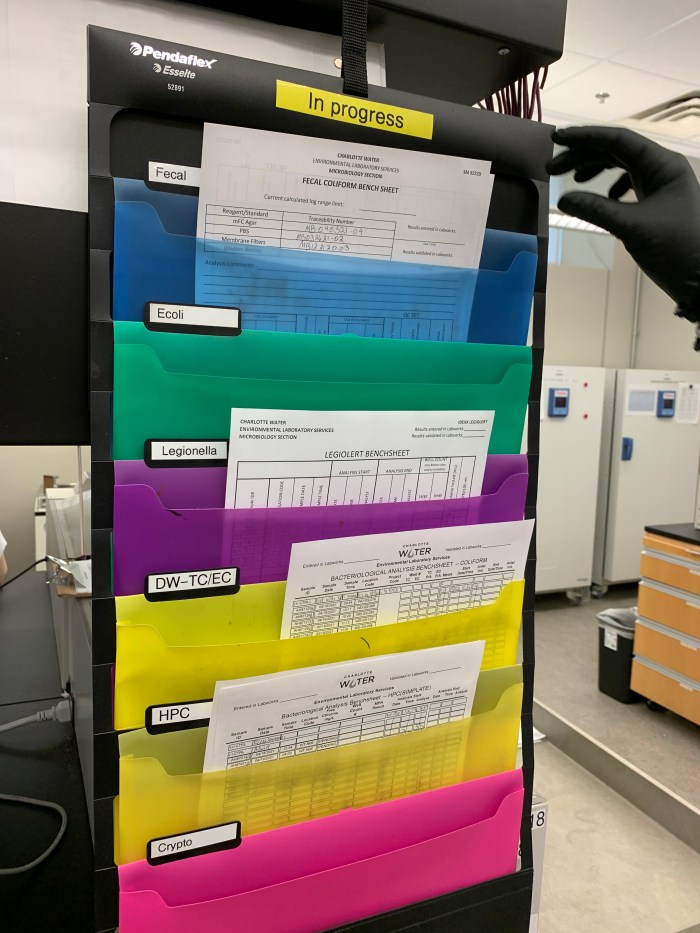
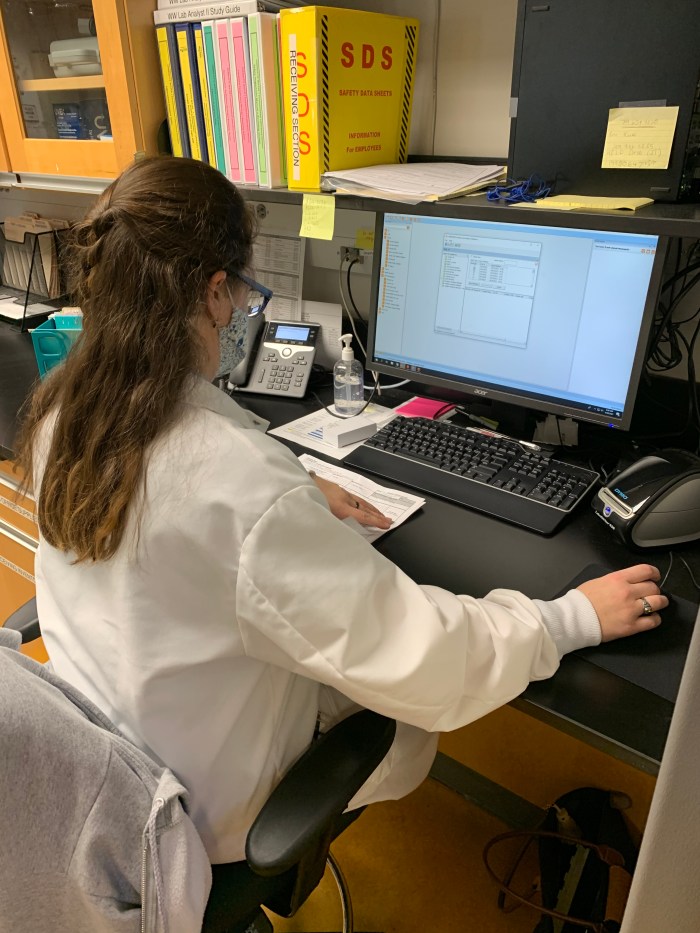
There is also good amount of paperwork, and documentation that goes into a lab analyst’s role – it’s not always the most exciting part, but it is definitely an important step!

Sarah also receives calls from customers who call in to 311 with any complaints or concerns about their water. The lab staff are required to check the customer’s water for every complaint that is called in.
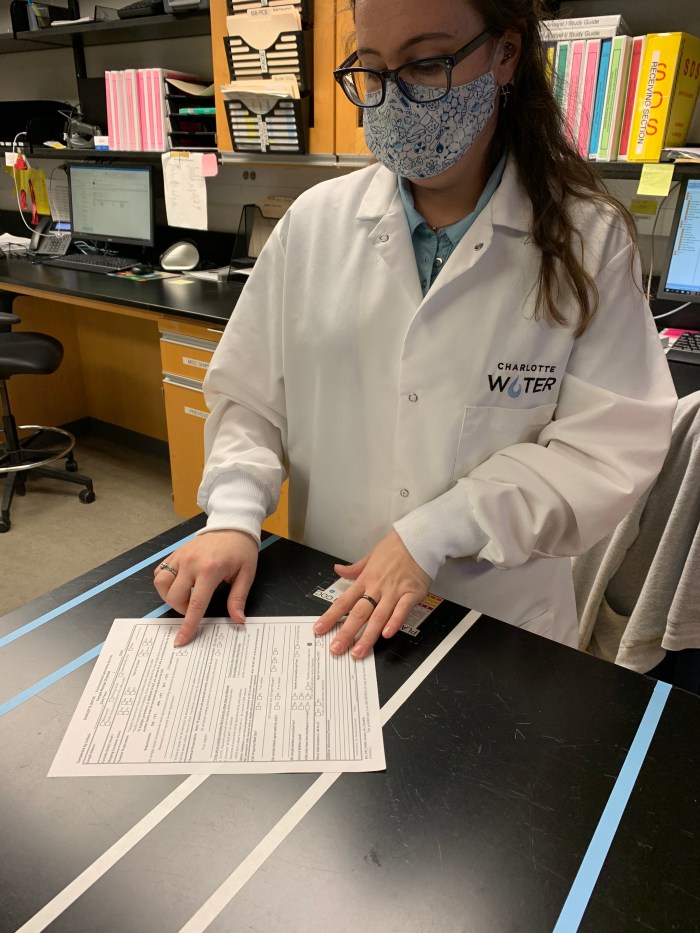
lab technician wearing glasses, floral print mask, and white lab coat with Charlotte Water logo, stands at black lab table pointing at a section of text on a printed piece of paper
Sample Receipt Checklist
lab technician wearing glasses, floral printed mask and white lab coat sits at desk looking a computer screen
black plastic rack holds 5 colorful folders holding white lab test documentation papers

Thank you Sarah for showing us around the lab and sharing some of the important work that you do! We appreciate all of our lab analysts and their hard work to provide safe and clean water to our community!

Continue to follow along this week as we will share more “day in the life” stories of our staff members during National Drinking Water Week!
 

Facebook

Twitter

Instagram

LinkedIn

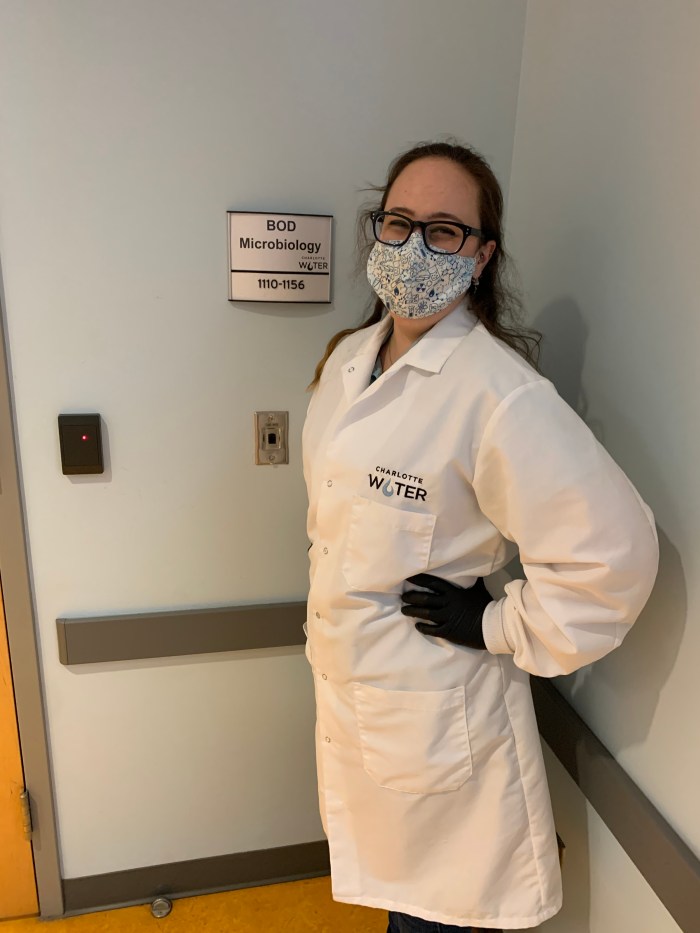
lab technician wearing glasses, floral printed mask, long white lab coat and black gloves poses for photo while standing in corner of elevator with light grey wall

Discover more from Charlotte Water Blog

Subscribe now to keep reading and get access to the full archive.

Continue reading

document.addEventListener('DOMContentLoaded', function () { const observer = new MutationObserver(() => { document.querySelectorAll('.jetpack-instant-search__search-result-expanded__image').forEach(img => { if (!img.hasAttribute('alt')) { img.setAttribute('alt', ''); } }); }); observer.observe(document.body, { childList: true, subtree: true }); });