Charlotte is not known for its historic buildings.
It’s been said by many that Charlotte bulldozes its history, but that is not always the case. One of our very own buildings, the Vest Water Treatment Plant (Vest), has been considered a historic landmark by the Charlotte-Mecklenburg Historic Landmarks Commission. This 1920’s architectural style building has been a landmark on Beatties Ford Road for almost a century! It’s also been an anchor for growth.
Because of the access to water from the Catawba river and the ability to treat water at a higher capacity then ever before, made this area wide open for growth and development.

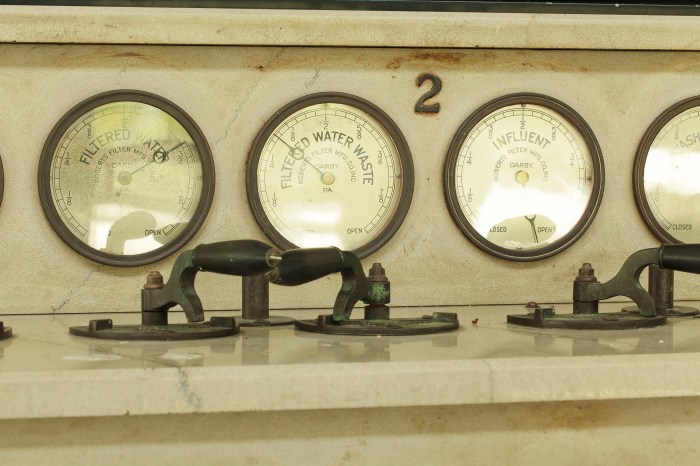
What is so cool about this building is that all of the old dials and knobs are still in place, and is the only plant that can be manually operated, which is an asset in a true emergency. But, if you look behind the curtain or controls, you will see that the plant has been updated and is just as high tech as any new plant today. We love to talk about this building and how almost 100 years later, it is still a vital part of Charlotte’s economy and daily life.