At Charlotte Water, safe and reliable field work starts with well-trained employees.
That is the goal behind the Heavy Equipment Operator Training Program, a training opportunity for Field Operations employees who operate large machinery in neighborhoods and work zones across Charlotte.
The program provides classroom instruction, simulator practice, and hands-on training with real equipment. Employees learn how to operate heavy machinery safely, efficiently, and confidently before using it in the field.

Building skills before stepping into the field
Shuhurah Lee, a Training Specialist for Field Operations here at Charlotte Water, helps lead the program. She said the program was created to give employees the specialized training they need to operate heavy equipment safely.
“Technically, when it comes to a large piece of equipment like that, you need specialized training,” Shuhurah said. “We wanted to make sure that people are certified, and not just that they know how to operate, but that they know how to operate safely.”
The program began with an initial group of experienced crew chiefs and water equipment operators. Charlotte Water then expanded the program to include nominated employees and recent hires who show potential in water equipment operator or crew chief roles.
Training with technology
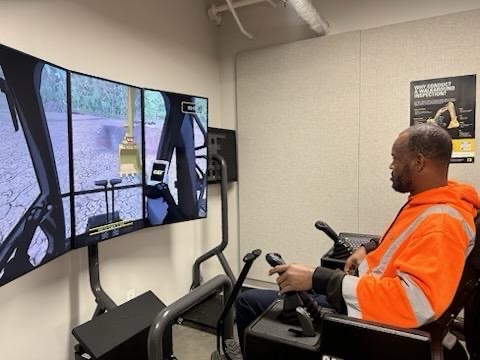
One of the program’s most exciting tools is a heavy equipment simulator located at Charlotte Water’s One Water facility.
The simulator allows employees to practice operating several types of equipment, including:
- Wheel loaders
- Excavators
- Backhoes
- Skid steers
The simulator provides a safe way for employees to practice important skills before operating real equipment. Participants can learn how to complete equipment checks, dig, backfill, maneuver around obstacles, and respond to different situations.
The simulator also helps reduce the risk of accidents, injuries, equipment damage, and unnecessary fuel use during the early stages of training.
While the simulator cannot replace hands-on experience, it gives employees an opportunity to build familiarity and confidence before moving to the next phase.
What does the training include?
Training takes place in small groups of no more than four participants. This allows employees to receive more individual attention from their instructor.
A typical training week includes:
- Classroom instruction on equipment controls, Charlotte Water safety policies, OSHA safety policies, and universal equipment safety
- A pretest to understand each participant’s existing knowledge and experience
- Simulator practice using different equipment and operating scenarios
- Hands-on training with real equipment
- An evaluation and final exam
- Additional practice in the employee’s assigned zone
- Final certification
As the program continues to grow, the training team expects future courses to expand from one week to two weeks. The additional time will allow participants to receive more practice on the simulator and real equipment.

Preparing employees for career growth
The Heavy Equipment Operator Training Program helps employees build skills for their current roles while also preparing them for future opportunities.
Participants can develop toward careers as equipment operators, crew chiefs, and team leaders. Crew chiefs supervise construction crews and may also operate equipment when a designated water equipment operator is not available. Team leaders oversee front-line employees and may step in to demonstrate tasks or provide hands-on support.
Improving safety for employees and the public
Charlotte Water employees often operate heavy equipment near homes, vehicles, pedestrians, and active work zones. Training helps employees understand how to remain aware of their surroundings and operate equipment safely.
Participants learn how to identify hazards, stay aware of an excavator’s swing radius, and safely shut down equipment during an interruption or emergency. They also learn the importance of completing a daily equipment check to identify issues such as damage, cracks, or other problems before beginning work.
These skills help protect Charlotte Water employees, the public, nearby vehicles, and the equipment itself.
“Training is important with everything, especially with the type of work that we do,” Shuhurah said. “You want to make sure that people have accessibility to training, that they know that they’re supported and that they know how to do things the right way.”
A new way to learn
For Shuhurah, the simulator represents an exciting new approach to employee training. It combines technology, classroom instruction, and hands-on experience, helping employees strengthen their skills before operating heavy equipment in the field.
The program is still growing, but its impact is already clear. Employees are gaining new skills, building confidence, and preparing for career advancement, while Charlotte Water continues to strengthen safety for the crews and communities it serves.