Every year, Charlotte Water’s Research Fellowship gives graduate researchers the chance to tackle real-world questions facing our treatment facilities. This year, Fatima Ghaleb spent her fellowship with our Environmental Management Division (EMD) exploring a question that matters every time it rains: does extra rainwater and groundwater entering our sewer system during storms make it harder to remove phosphorus from wastewater? Here’s what her research found.
Getting Oriented
Fatima joined EMD in July 2025 for her fellowship. Early on, she says it became clear how every role in the division protects the community and the environment. That experience pushed her to look at the bigger operational and environmental challenges facing treatment plants today.
The Problem, In Plain Terms
Water treatment plants nationwide face more unpredictable weather. They also must cope with growing cities and sudden inflows into their systems. One method plants use to remove phosphorus from wastewater is called Enhanced Biological Phosphorus Removal, or EBPR. It relies on naturally occurring bacteria that absorb and release phosphorus as they cycle between oxygen-rich and oxygen-free conditions. EBPR is considered a sustainable way to remove phosphorus. It can behave unpredictably at full scale. Many variables affect how well the bacteria perform their job.
Plant operators can control some of those variables. They manage how long solids stay in the system, oxygen levels, pH, and chemical additions. Others are out of their hands. This includes what’s already in the incoming wastewater, seasonal changes, and extra water that sneaks into the sewer during storms. The additional water is inflow and infiltration, abbreviated I&I. Groundwater seeps through cracks and joints underground, while rainwater enters through manholes and openings. Past research shows groundwater seepage often adds extra water beyond direct rain runoff. It varies a lot by season.
What She Studied and How
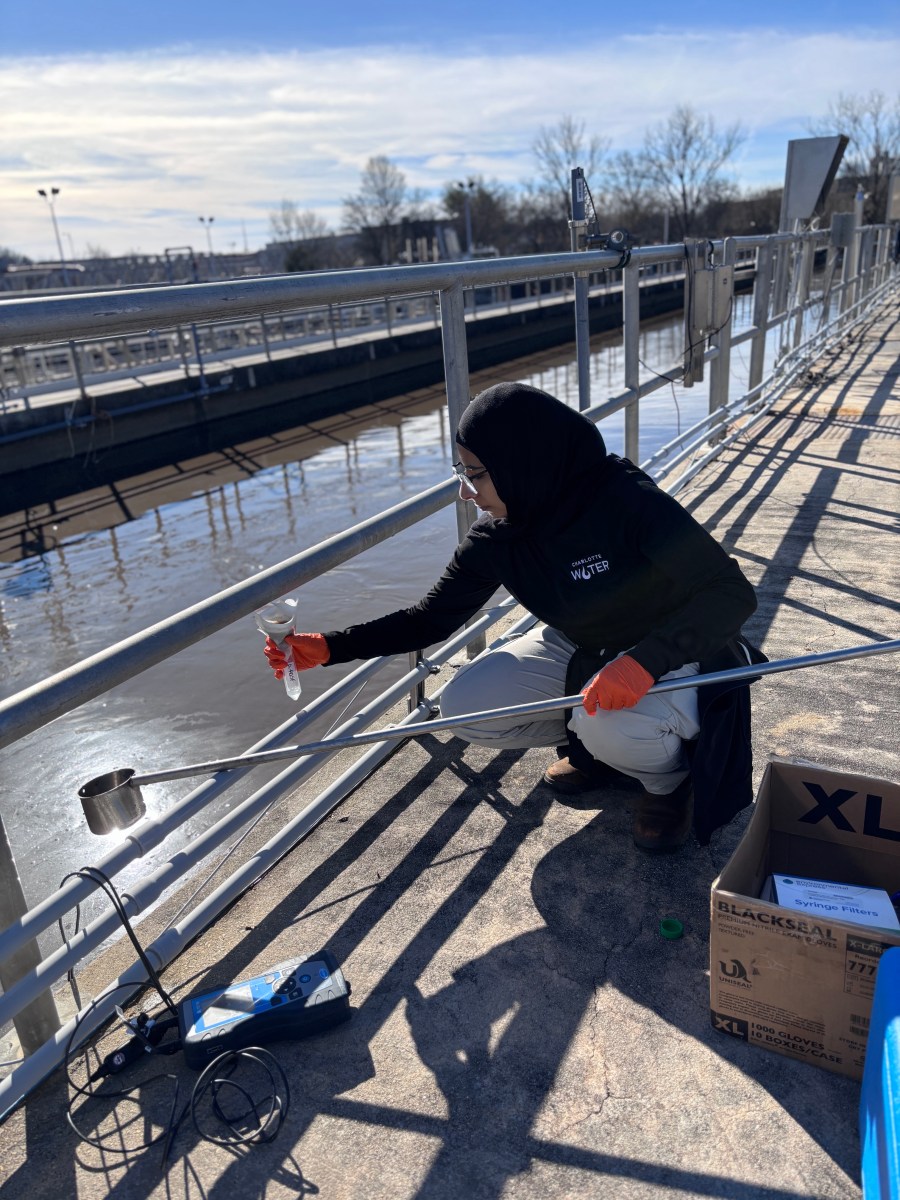
Fatima’s research examined storm-driven I&I and other shifting plant conditions. It assessed their impact on EBPR performance stability at the McAlpine Creek Water Reclamation Facility. She and her team collected samples during three windows: normal dry conditions, right before storms, and right after storms. Timing their sampling using rainfall and stream-flow data from nearby USGS monitoring stations.
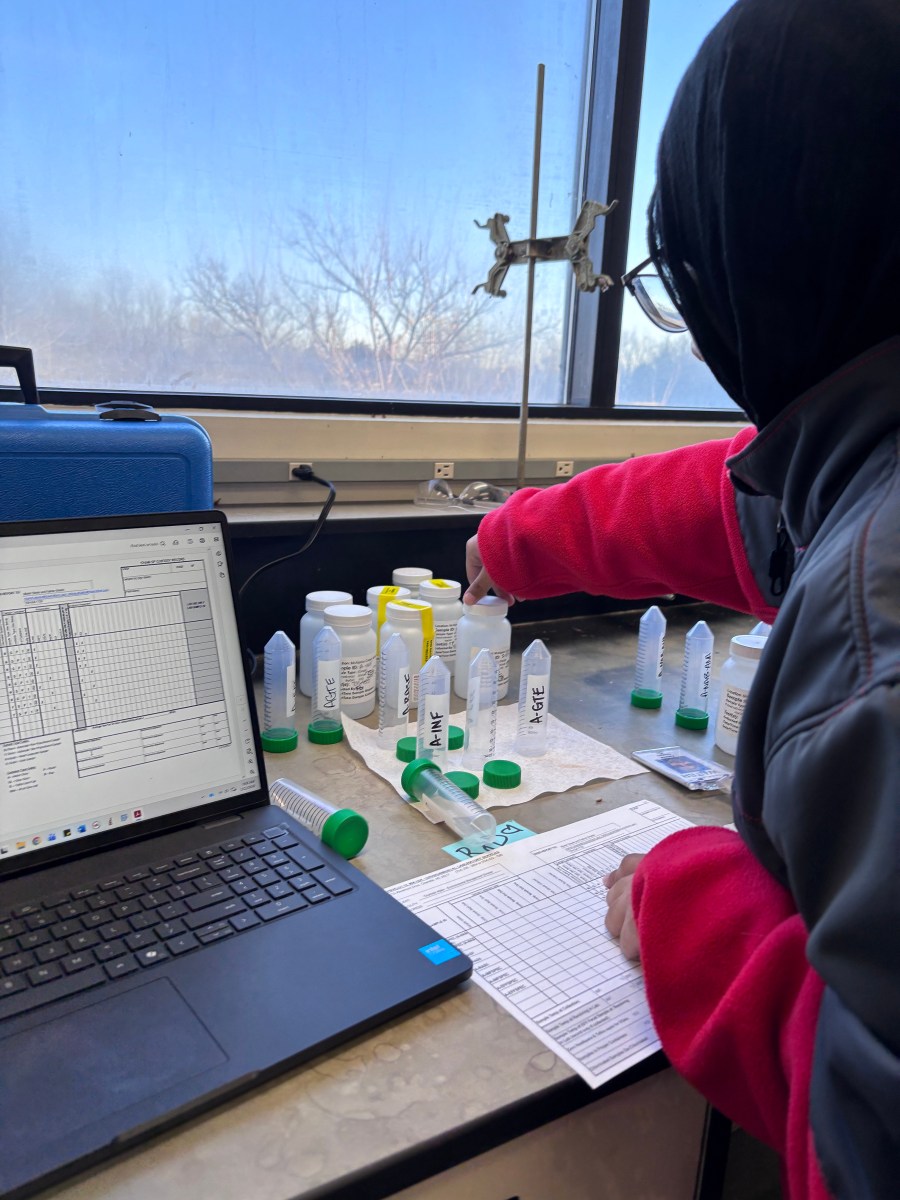
At several points along the treatment process, they measured things like organic matter levels, volatile fatty acids, phosphorus, nitrate, pH, oxygen, temperature, and solids. They also examined the phosphorus-storing bacteria themselves under a microscope using specialized stains, to see how much of that bacteria was present relative to the overall microbial population. Separately, Fatima used mapping software to estimate how deep the wastewater pipes are buried across the service area, since burial depth influences how much groundwater is likely to seep in. She then compared the post-storm data to the dry-weather and pre-storm data to pinpoint which factors storms actually changed.
What She Found
The research ran into some real-world complications along the way, including a drought that limited chances to sample during storms, along with normal day-to-day operational fluctuations. That made it hard to isolate the effect of I&I on its own. Even so, some clear patterns emerged.
Phosphorus removal was slightly less efficient in spring (92.2%) and summer (92.6%) than in winter (94.7%) and fall (94.9%). When stream flow was higher, the wastewater arriving at the plant was measurably more diluted — lower in organic matter, solids, and total phosphorus — which lines up with what you’d expect if extra rain and groundwater were mixing into the sewer system.
However, statistical testing did not find evidence that overall treatment performance got worse because of I&I. Removal of organic matter dropped only slightly, and when Fatima compared pre-storm and post-storm samples directly, most measurements showed no meaningful difference. In other words: aside from diluting the incoming wastewater, storms didn’t appear to meaningfully disrupt the conditions that keep phosphorus treatment working.

In Her Own Reflection
Fatima says she’s leaving the fellowship with real gratitude for how EMD welcomed her, and for the chance to learn from every corner of the team through operations, maintenance crews, project managers, water quality specialists, the biosolids program, and everyone in between. She gives particular thanks to her supervisor, Muriel Steele, for mentorship that shaped her experience. She leaves the program with a stronger foundation, meaningful new connections, and — by her own account — a few new wastewater jokes!