This blog provides general information about what to expect during construction.
This is not comprehensive and may not include all equipment or construction situations.
Water and Wastewater Terms
WATER
Service Lines are the pipes between the water main under the street and the water meter. Sizes are ¾-inch or 1-inch in diameter at the meter box.
Water Mains (also distribution mains) are the pipes under the street that serve immediate customers and neighborhoods. Sizes range 4 to 12-inch diameter pipe along public streets or appropriate rights-of-way used for distributing water to individual customers.
Transmission Mains are the pipes under the street that serve several neighborhoods and zip codes. Sizes range from 16-inches in diameter to 72-inches.
WASTEWATER
Laterals convey wastewater (sewage) from an individual building to a gravity sewer pipe in the road right of way or a Charlotte Water easement.
Manholes are the access points for inspecting and maintaining wastewater pipes.
Low-Pressure Sanitary Sewer (LPSS) helps push wastewater away from properties near steep and uneven topography (usually near lakes and creeks). Properties with this special need also have specialized maintenance needs.
Trunk receives waste from laterals and conveys wastewater under the street or behind buildings along easements.
Interceptor is a large pipe that gathers wastewater from other trunks or collector pipes to convey to a wastewater treatment plant. Sizes range from 8-inches in diameter to 30-inches.
Relief Sewer is a large pipe to assist the existing interceptor when flows are reaching capacity. These pipes help prevent sanitary sewer overflows (SSOs) especially during heavy rain events. Sizes range from 12-inches in diameter to 78-inches.
Force Main & Pump Stations (also known as lift stations) pump neighborhood(s) wastewater from one creek/drainage basin to another through force mains to gravity flow sewer lines so that it can be conveyed to a wastewater treatment plant.
Project Types
-
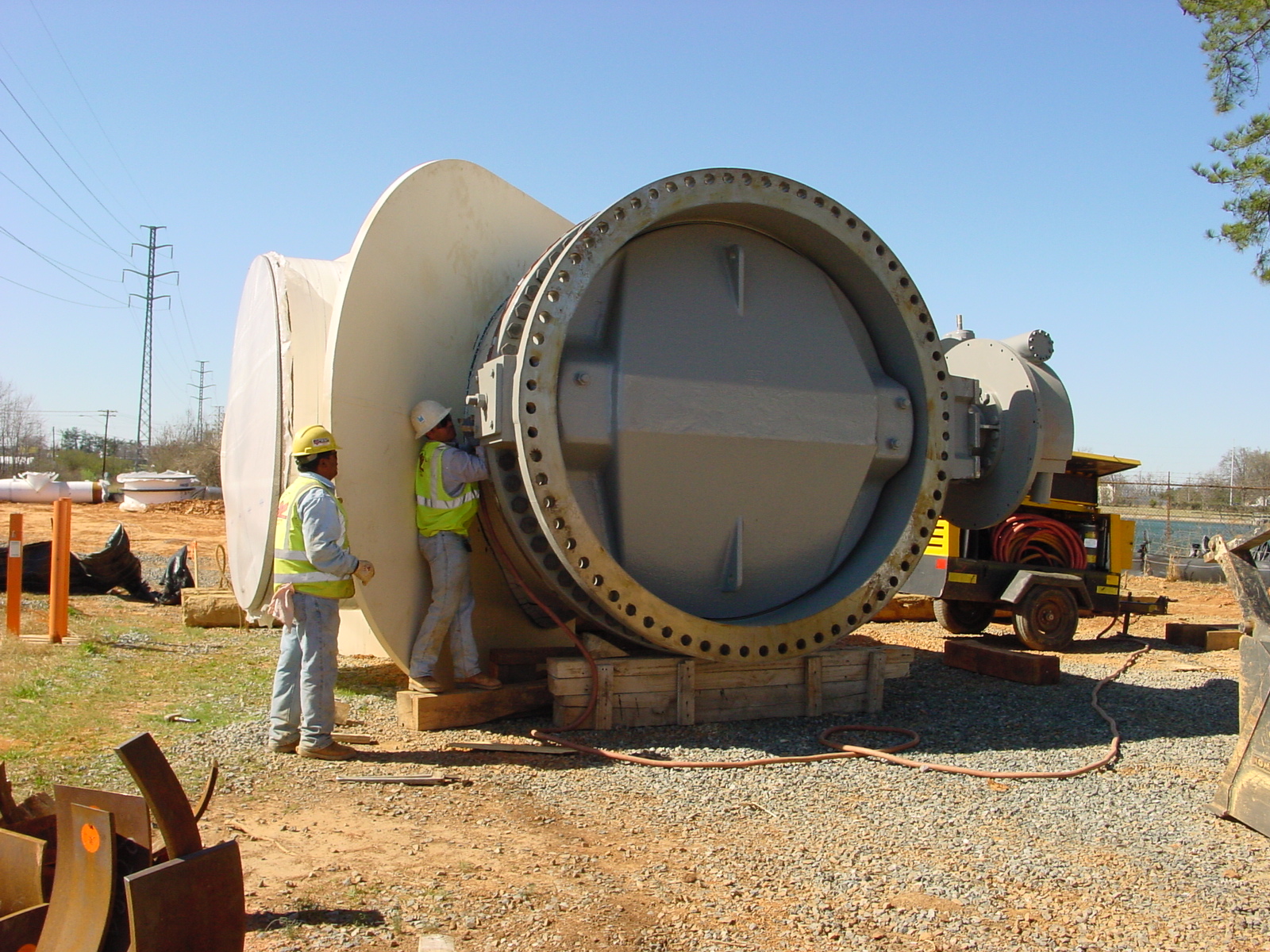
Capital Investment Project – 96-inch transmission water main valve -
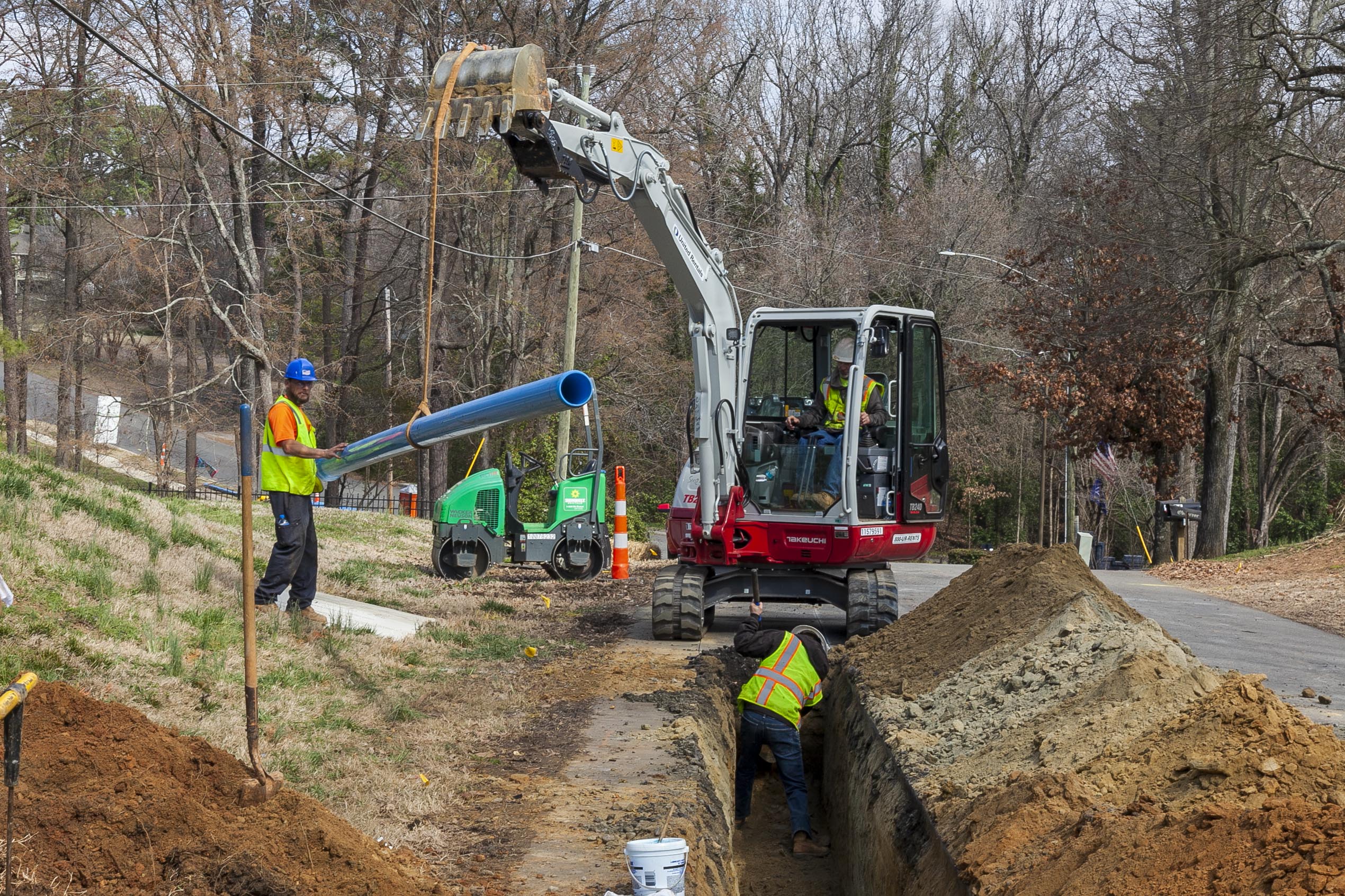
Water Main Replacement – Crews installing new pipe to replace older pipe. -
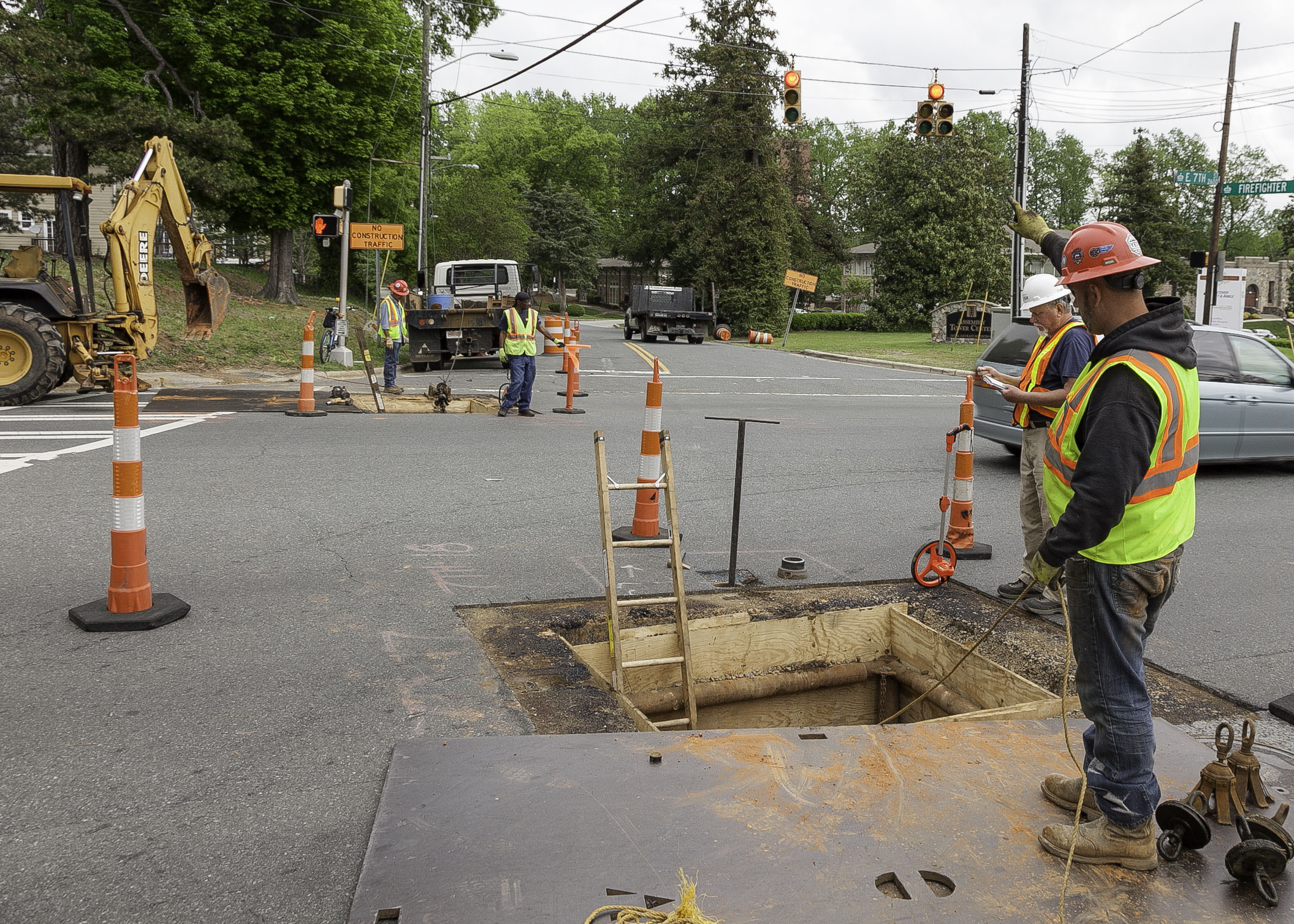
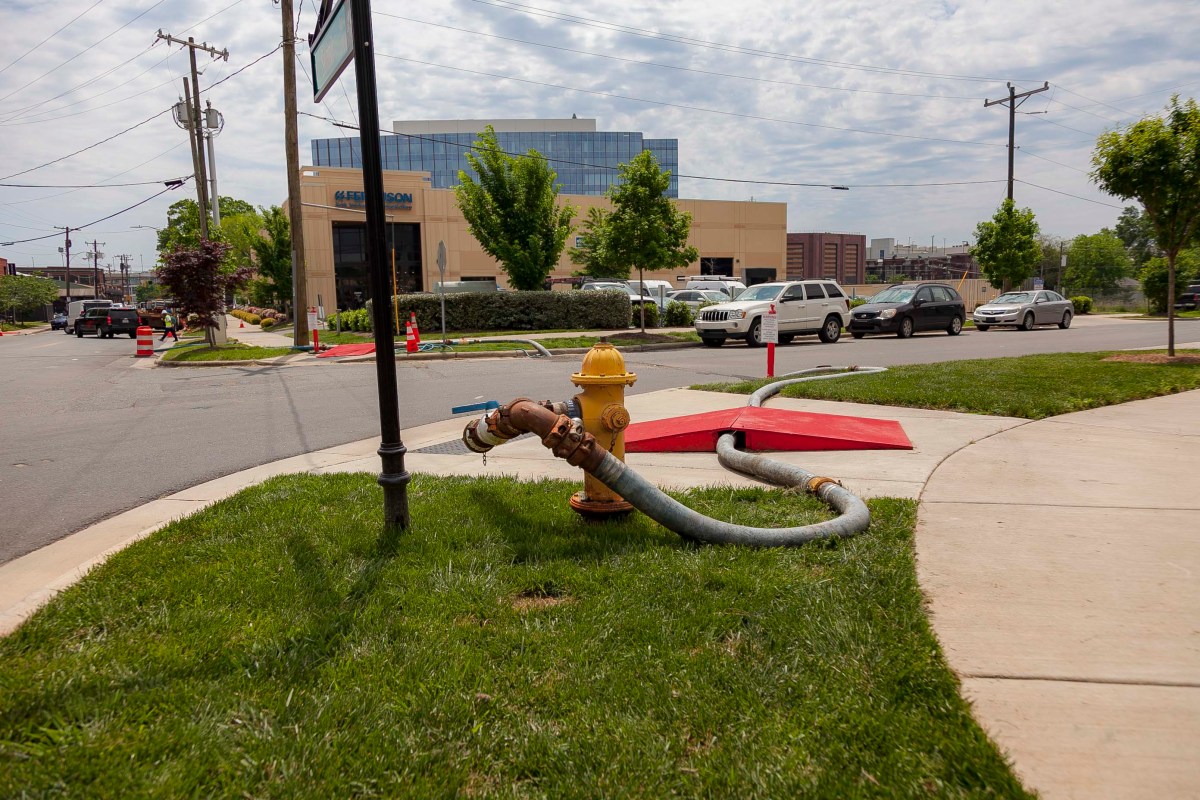
Water rehabilitation – Crew cleaning underground pipe while customers are served with an above ground pipe. -
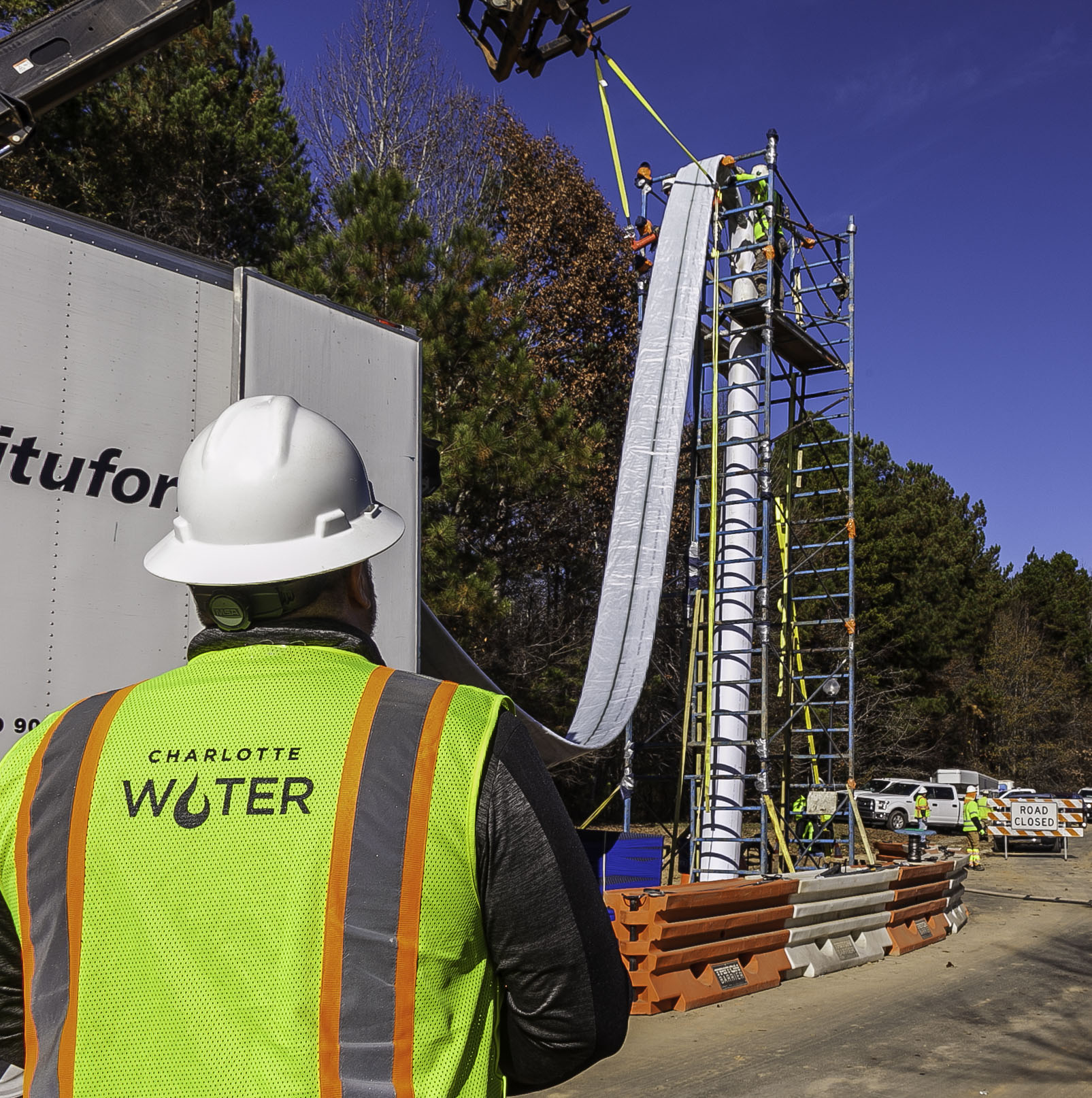
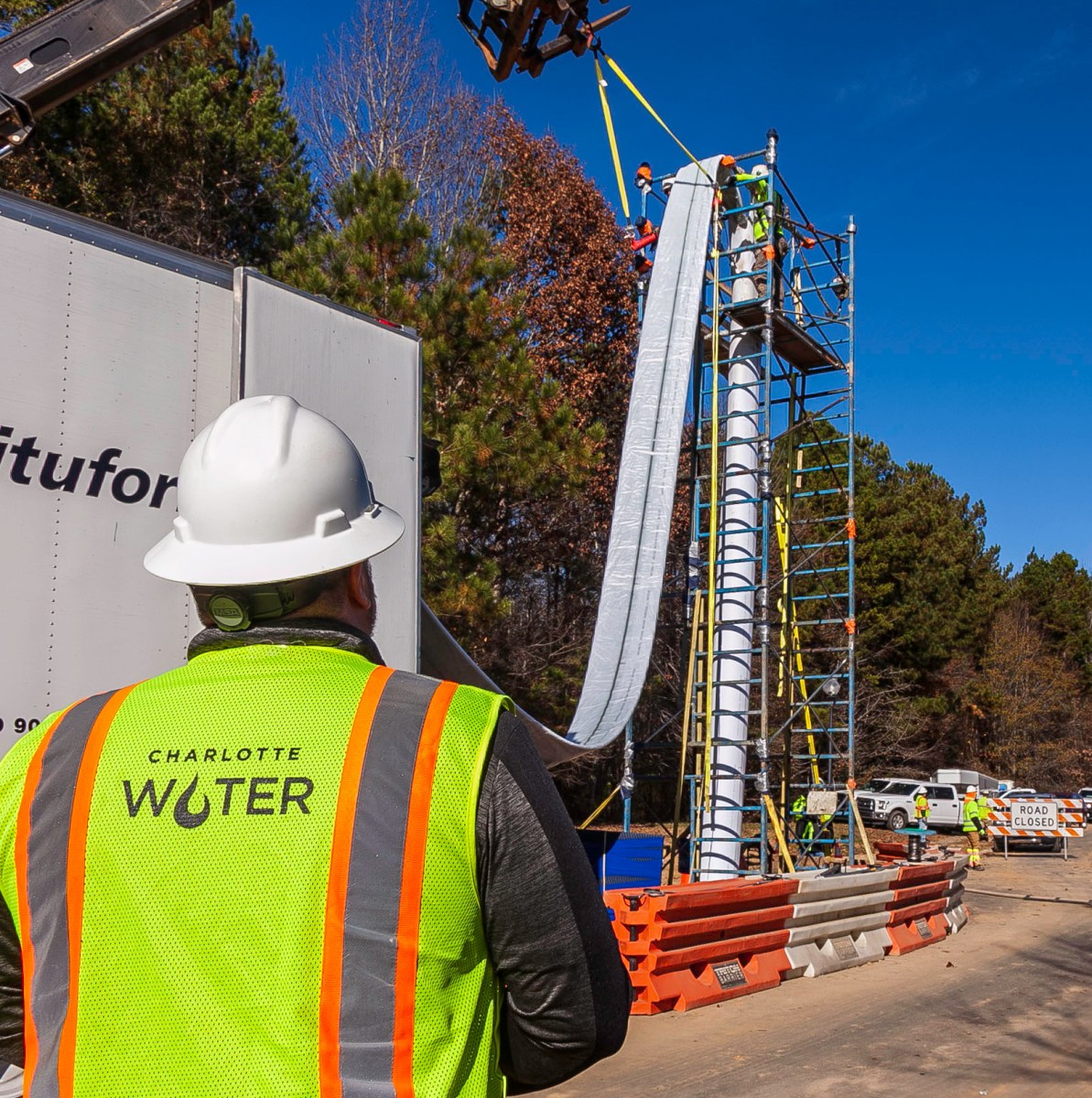
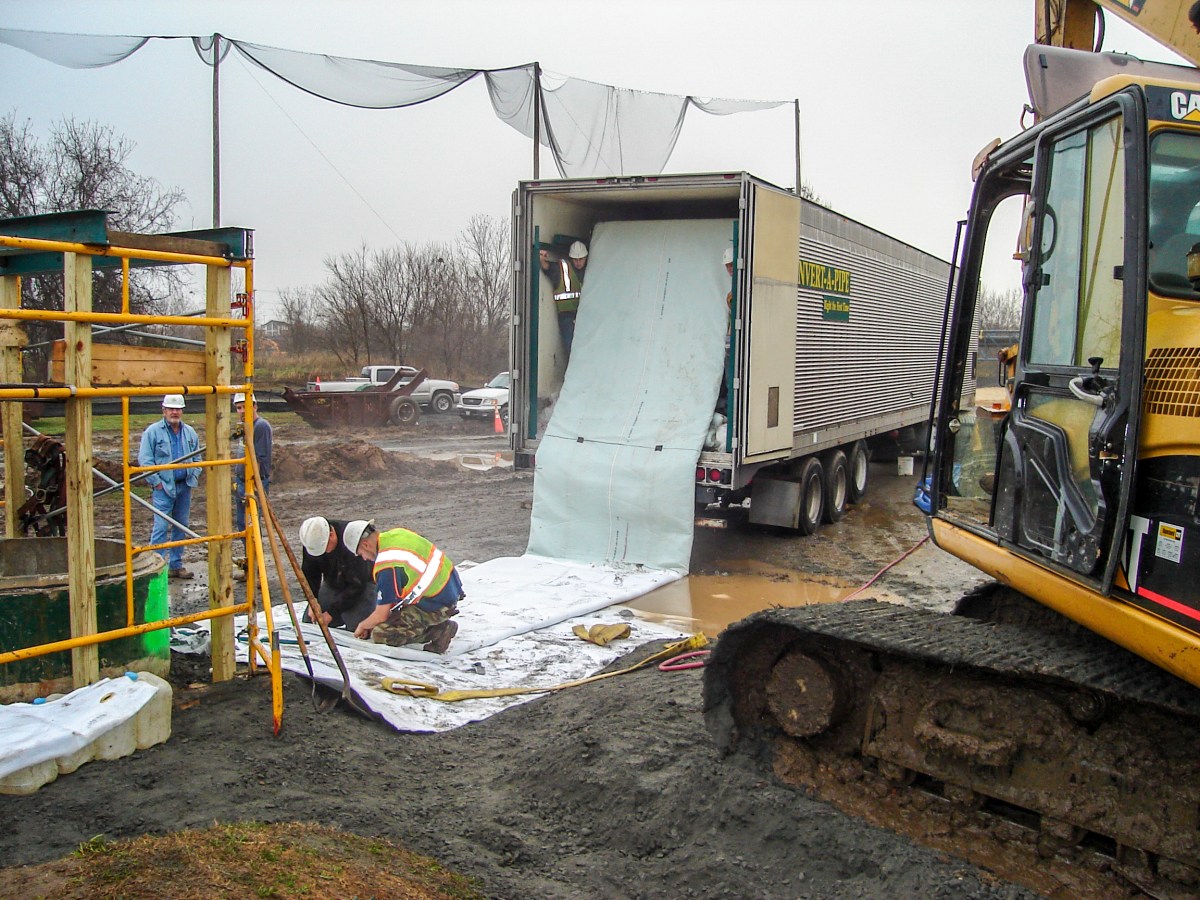
Crews will be on scaffolding installing a sock-like lining inside an existing pipe through manholes. The sock-like liner will extend the wastewater pipe’s service life minimizing construction in the area. -

Donated Project – Project inspector inspecting developer funded projects -
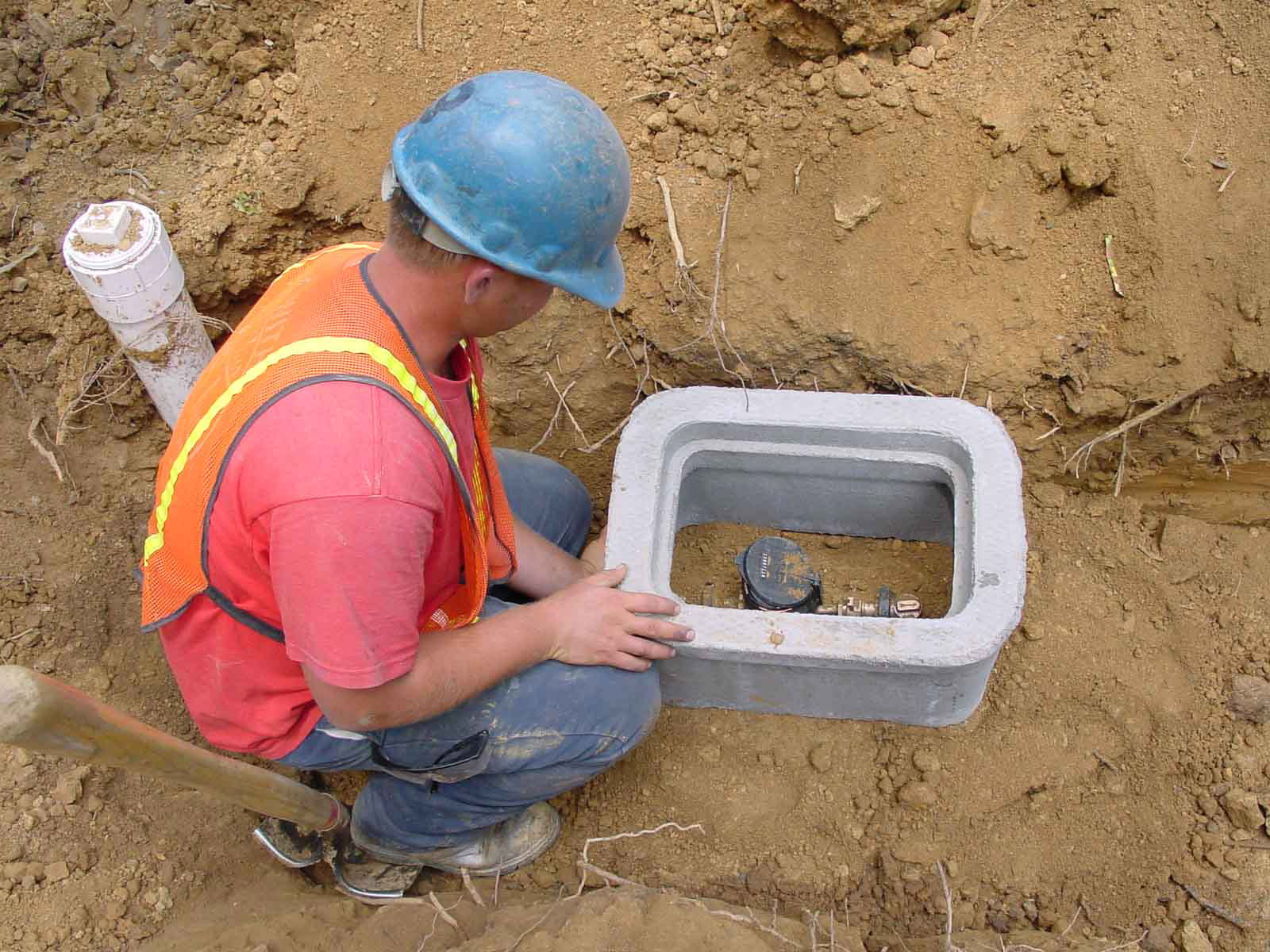
New Service – Meter and meter box installed for a new customer.
Capital Investment Plan (CIP)
Projects identified and budgeted through the Capital Investment Plan. These include projects to serve growing service areas, enhancements at water and wastewater treatment plants and other facilities, and to reline/replace old pipes. Size of equipment and construction zones will vary.
Pipe Replacement
Replacing the water main and/or service pipes (between the water main under the street to the water meter) to reduce future leaks/repairs due to age. Typical construction zone is a few street blocks.
Water Rehabilitation
Crews clean inside of 50+ year old pipes in the oldest neighborhoods. A temporary above-ground drinking water pipe may be installed. Above-ground water pipes serve customers while the water pipe under the street is cleaned and relined with an epoxy solution. All pipes are tested for water quality. A typical construction area is several street blocks.
Wastewater Rehabilitation
Crews clean inside the pipe and install a
sock-like lining inside an existing pipe through manholes. Think of it as a new pipe inside the old pipe. The construction area may be in the street or the backyards.
Developer ‘Donated’ Projects (Installation Development Services, IDS)
Developers install new water and wastewater pipes and then donate to CLTWater.
CLTWater inspects pipe installation and tests pipes.
New Service Tap, Street Main Extension
Customers currently on well, septic, or developing a vacant lot can apply for water or wastewater service if it is within 1,000 feet of their property. Extending the pipe to serve a new customer may take months, depending on the location of the existing infrastructure and required permits.
What To Expect Before Construction
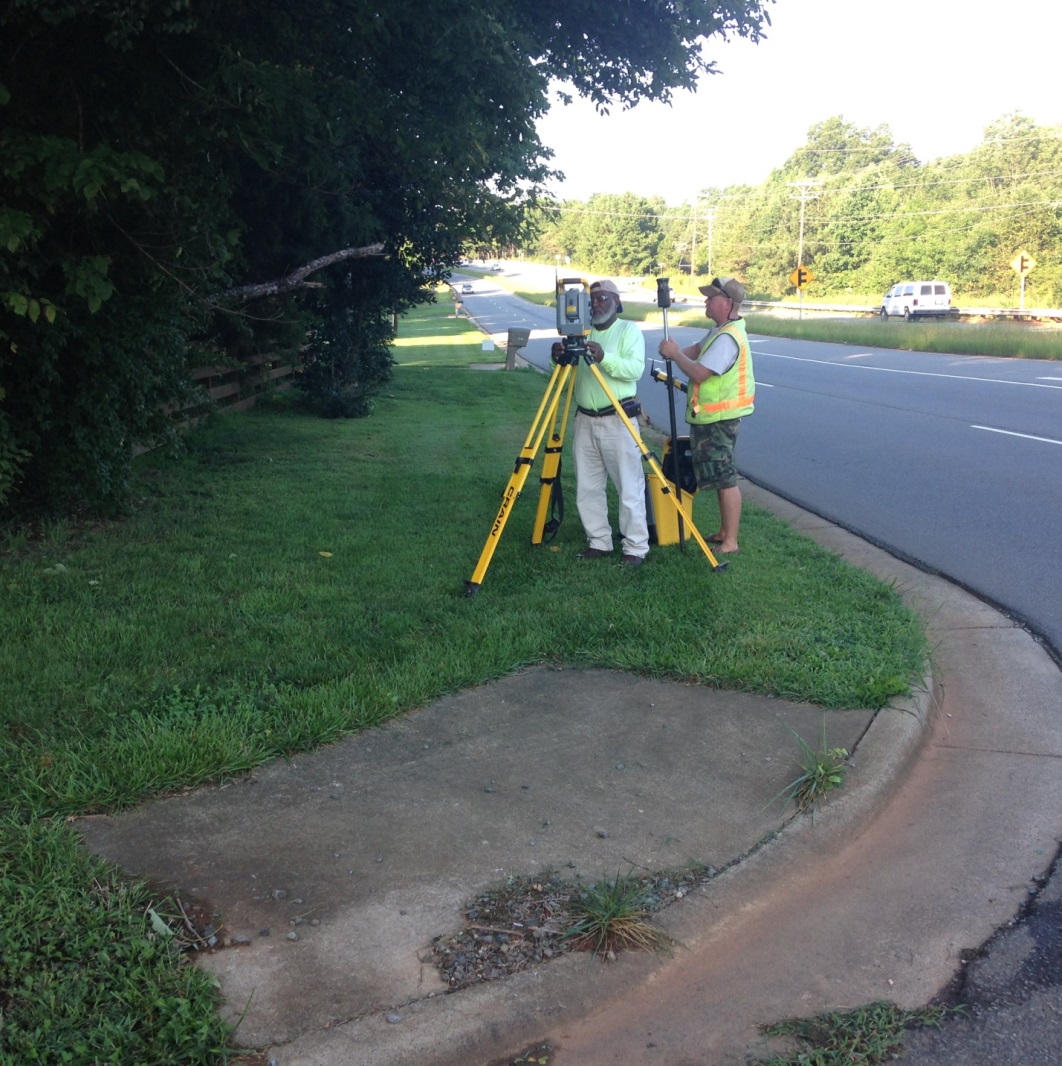
Surveying
Survey crews determine the required depth for pipes by calculating the elevations in the area. Stakes, brightly colored flagging, and paint marks may appear in your yard or on the street after a survey crew has worked.
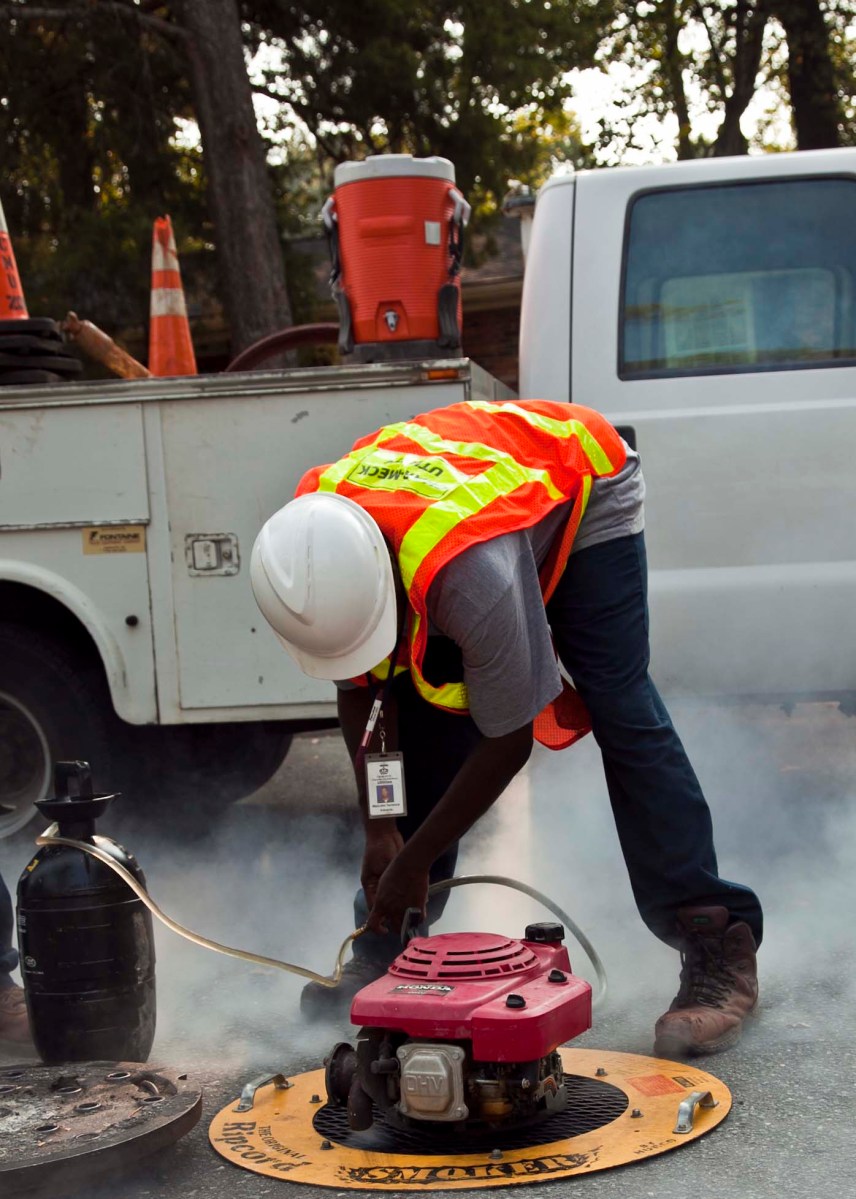
Smoke Testing
Crews may blow smoke into wastewater pipes to identify potential pipe cracks (where smoke escapes). Customers will be notified in advance.
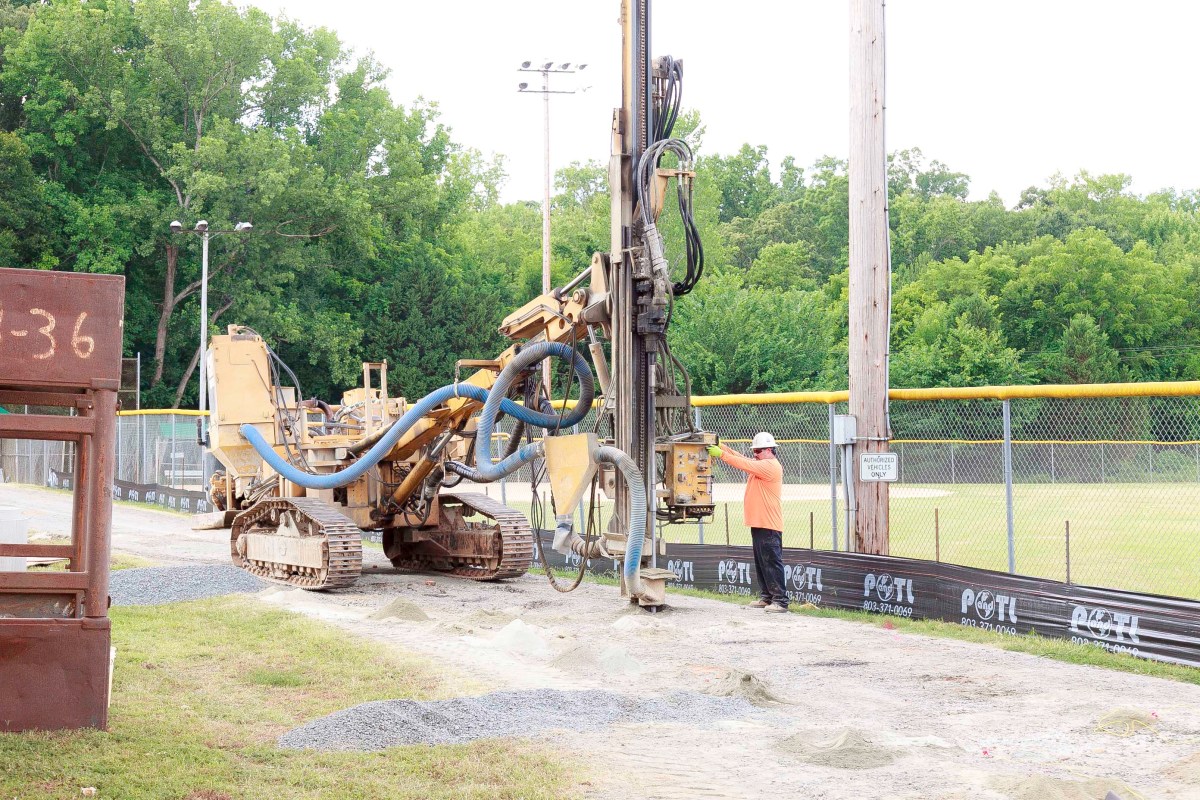
Soil Boring
Subcontractors may conduct subsurface investigations (also known as test pit or soft dig) to assess existing utilities as well as soil and rock conditions along the pipe alignment.

Locates (Spray Painting)
Utilities spray paint where fiber optic, gas, and water pipes to inform contractors before they dig.
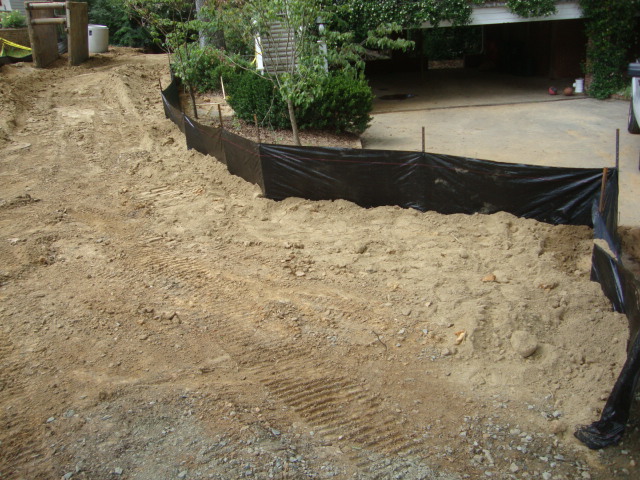
Silt Fence
Silt fencing prevents soil /sediment from washing away.
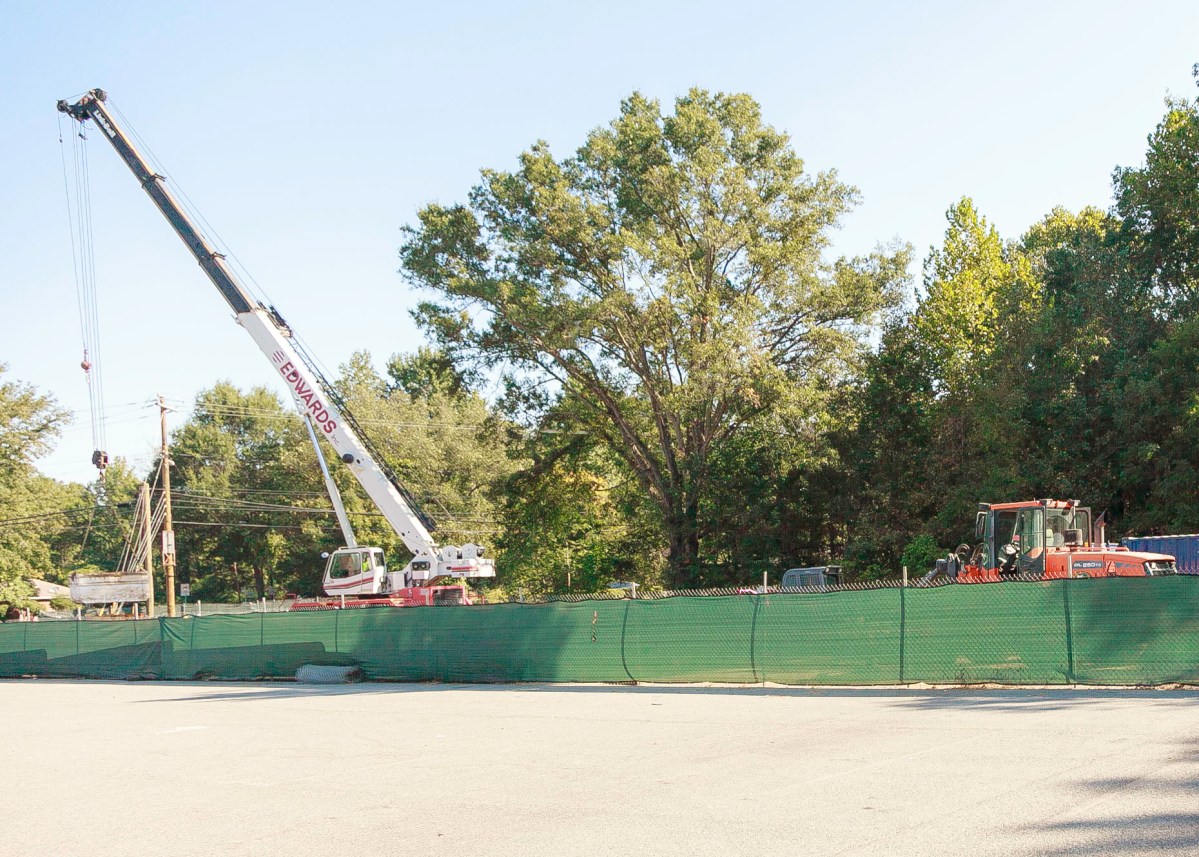
Fencing
Security and privacy fencing may be installed.
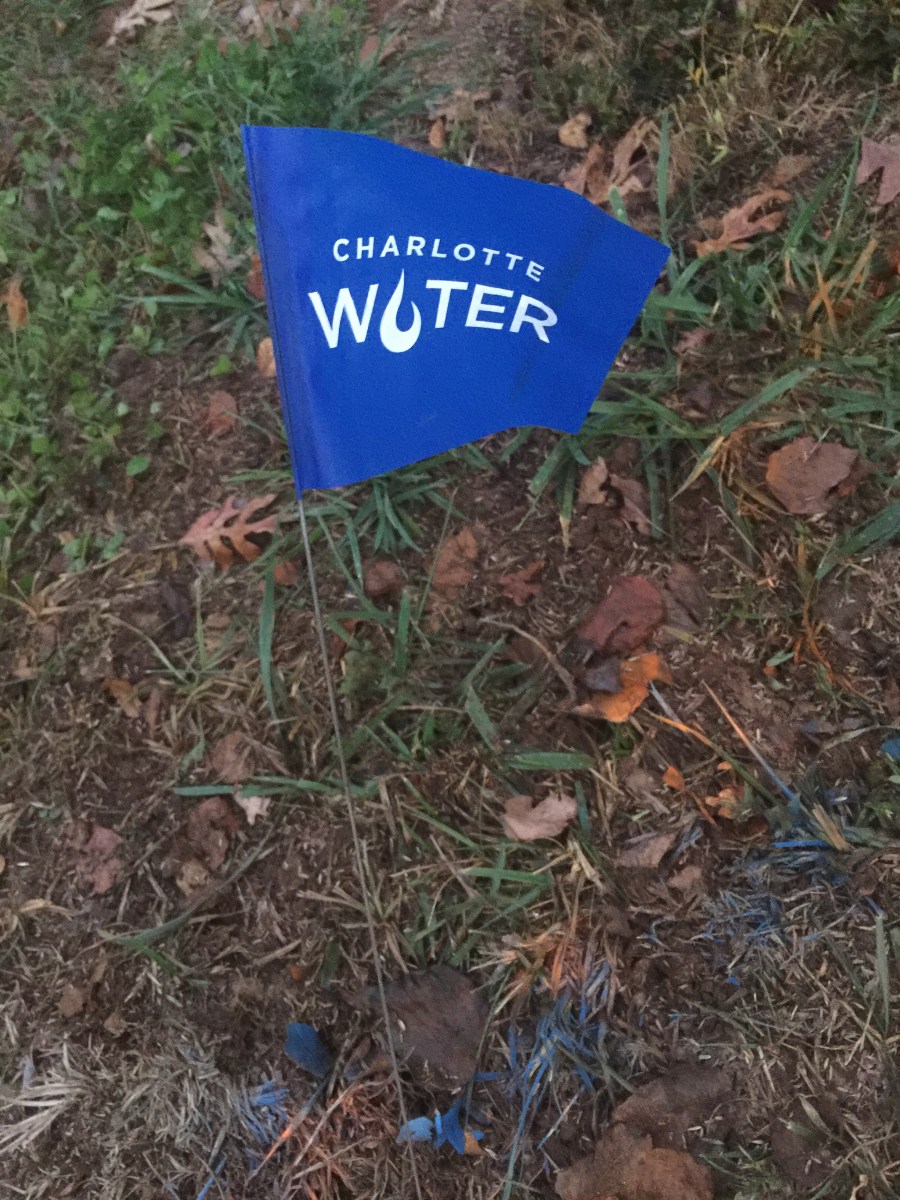
Ribbons, Stakes, & Spray Paint
The project area will have various markings along the pipe alignment. Trees may be labeled differently. Please talk to the project manager or inspector to confirm what markings may mean for the project.
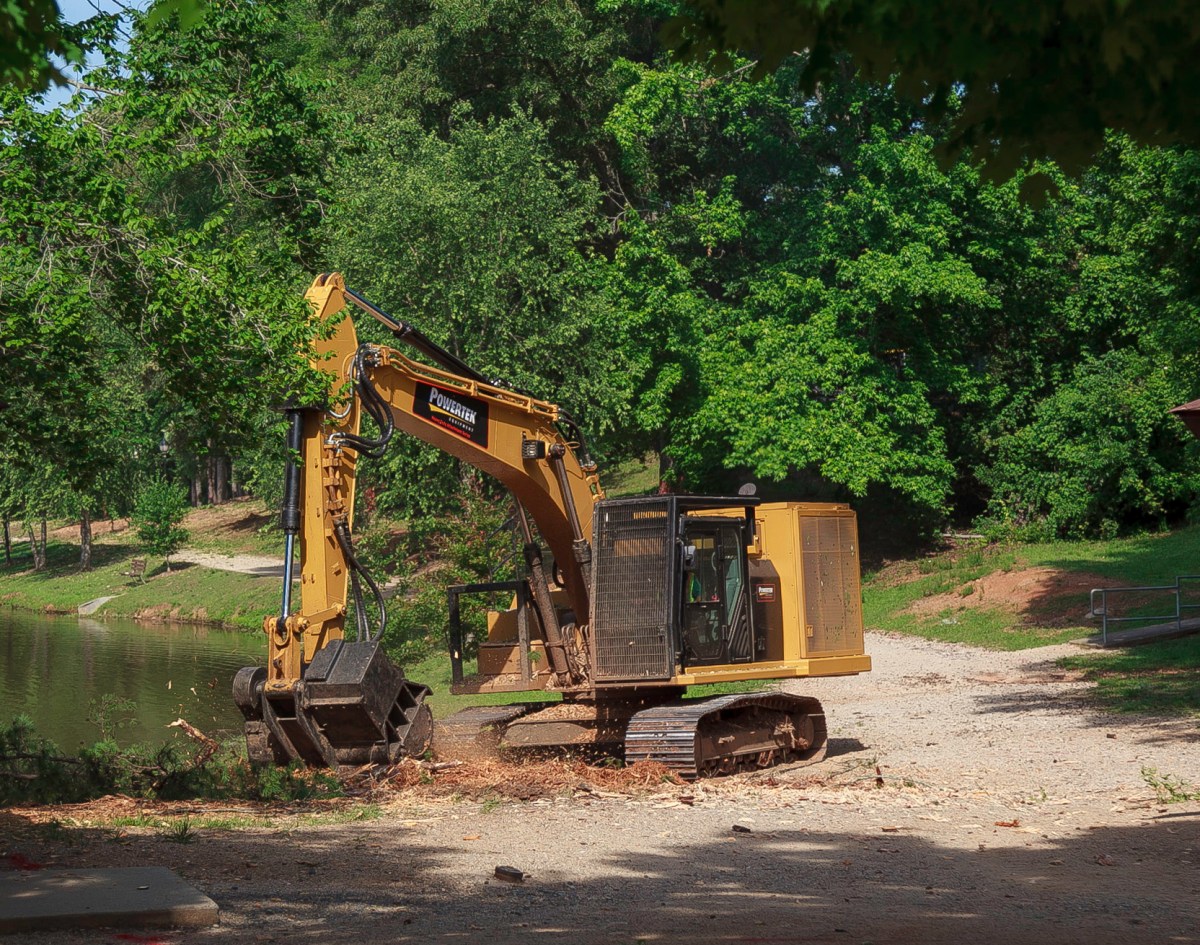
Clearing
The easement and temporary construction easement will be cleared of trees (with some exceptions) and restored to grass after pipe installation. CLTWater will preserve trees if possible.

Easement
The easement for a project will vary based on size of pipe, required depth, and other factors.
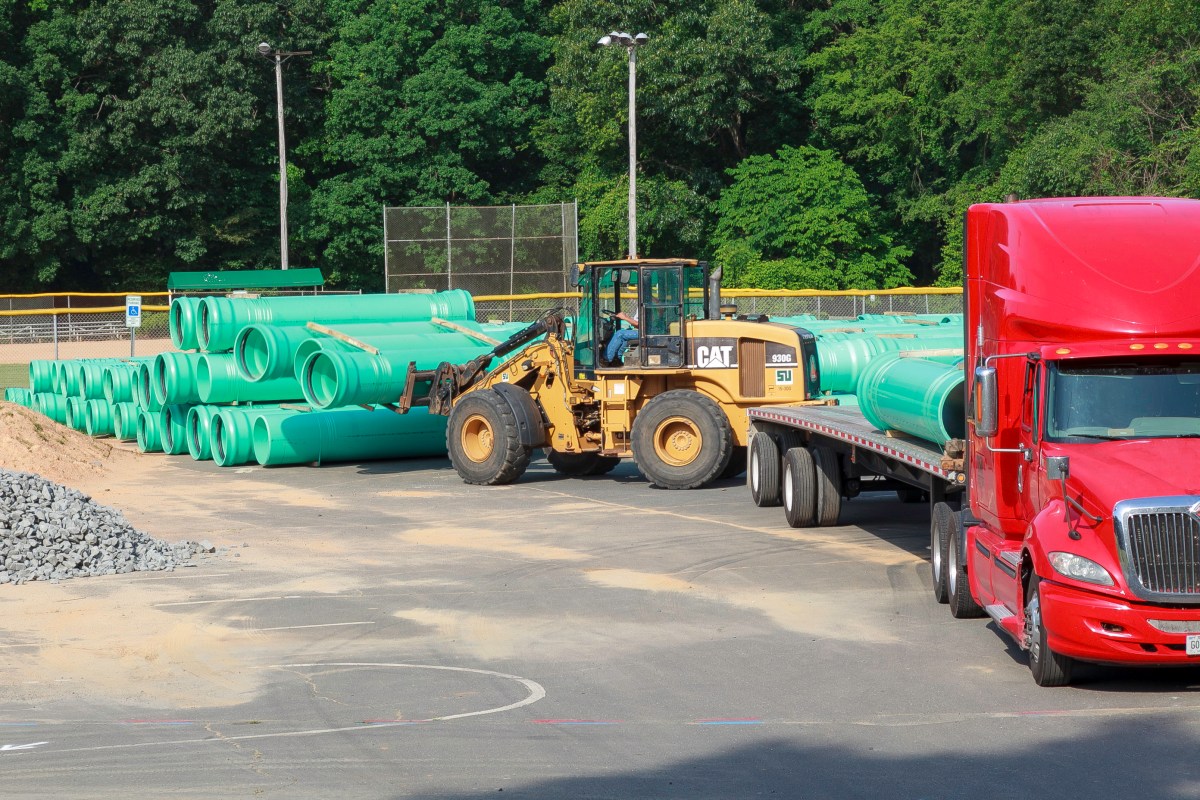
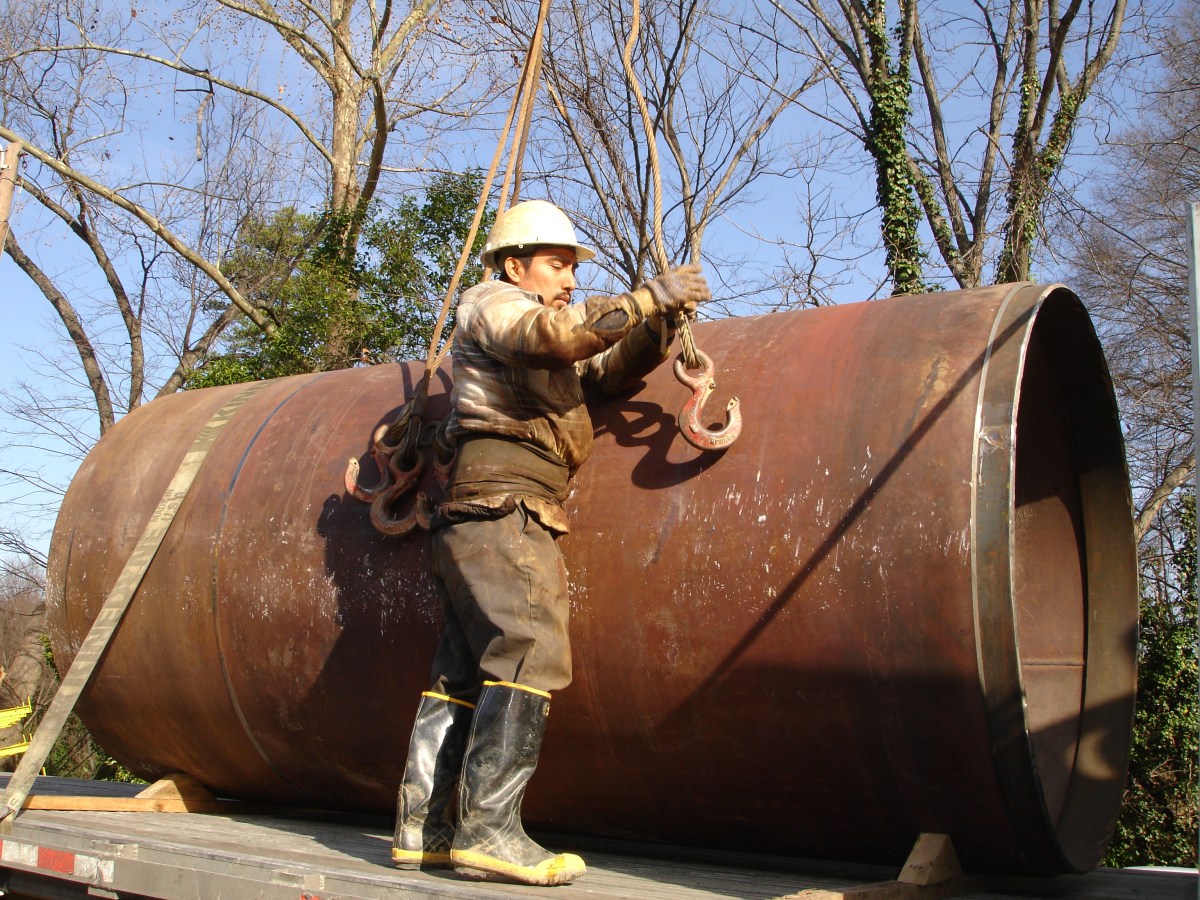
Pipe Delivery and Storage
Pipe, equipment, soil and other materials are stored in the construction easement or road right-of-way.
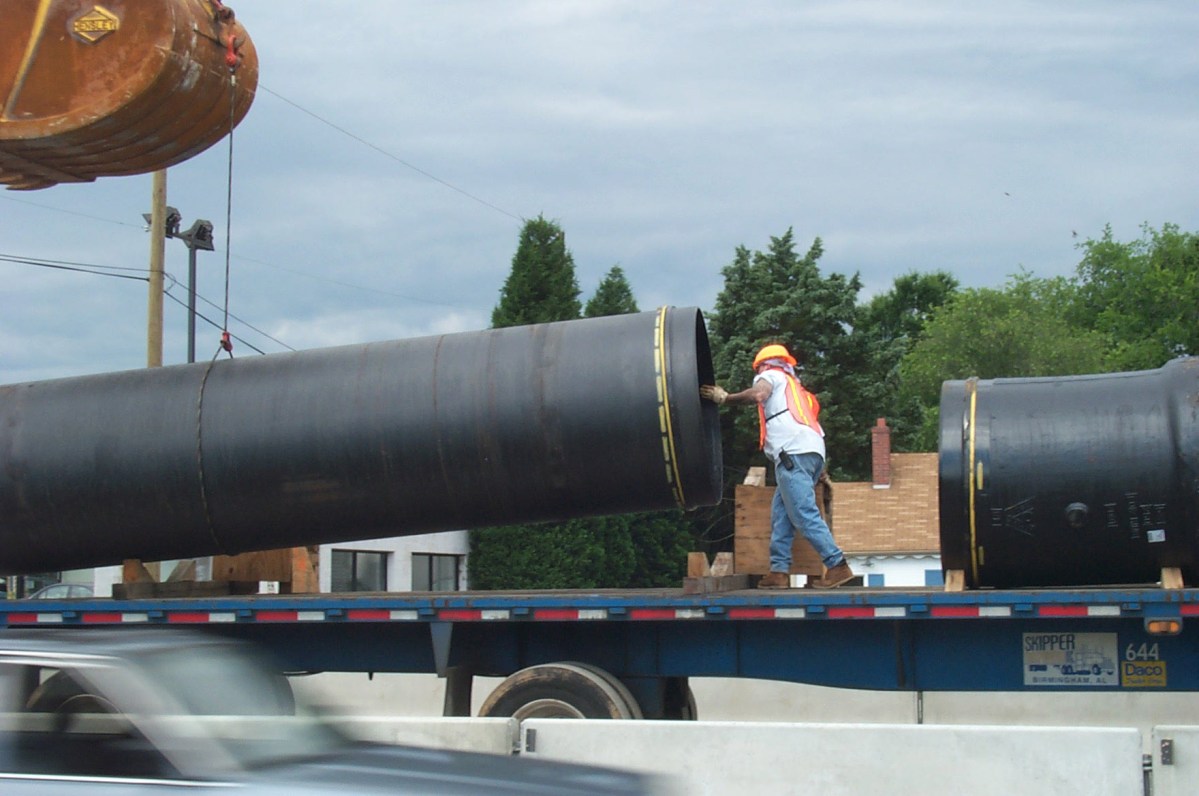
48-inch drinking water pipe delivered to a construction area.

6-inch drinking water pipe along the side of the road during a water pipe replacement project.
What To Expect During Construction
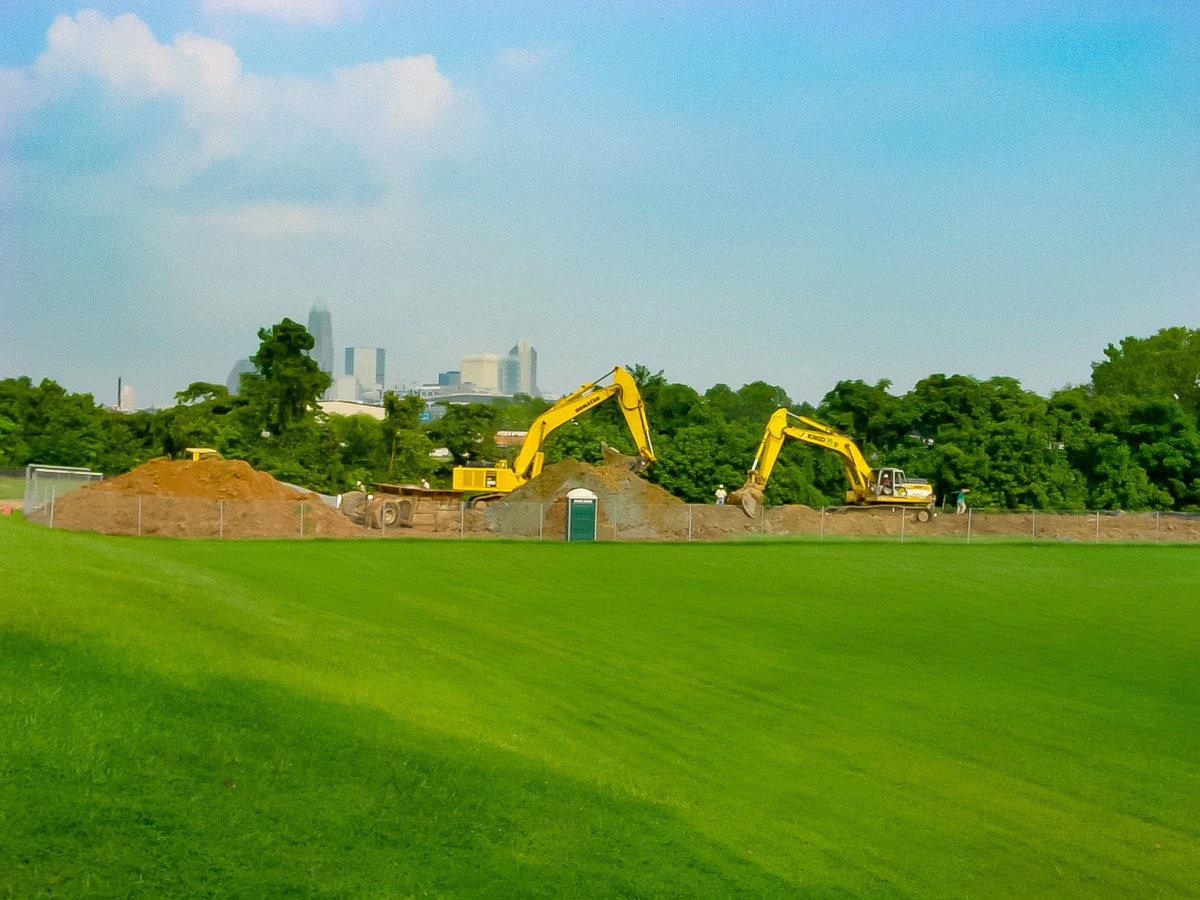
Construction Zone
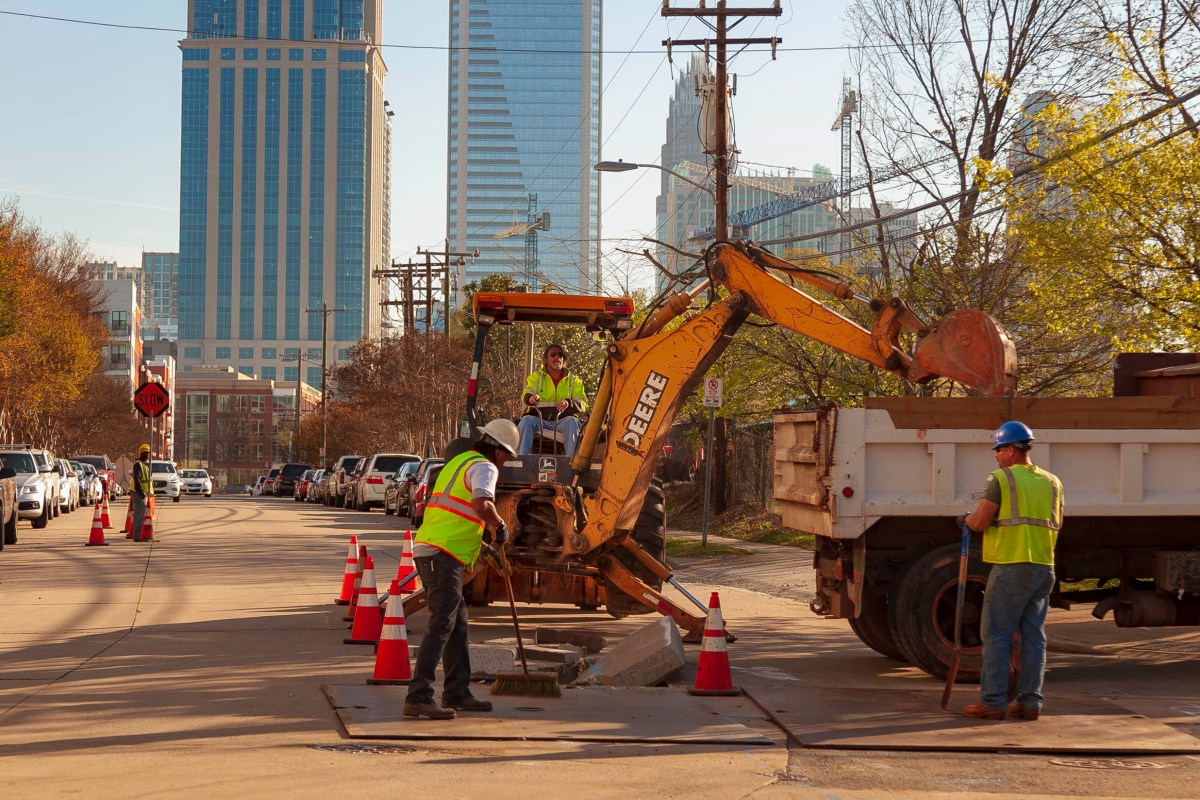
Construction zones will be large enough for excavators and dump trucks to move.

Trackhoe & Backhoe
Excavators use a bucket on a hinged boom to remove dirt in the middle of the road for a new 36-inch pipe.

Crews using a backhoe at a water pipe rehabilitation project
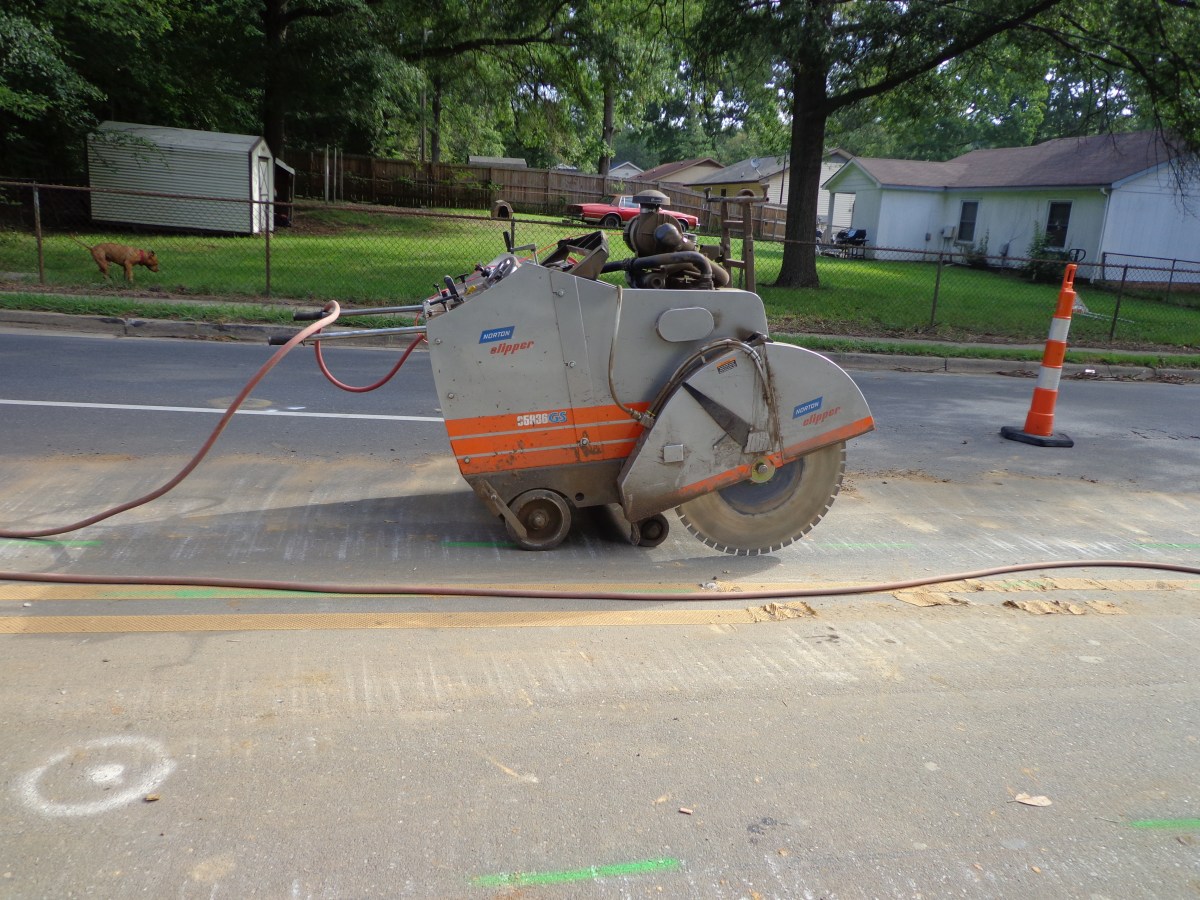
Asphalt Cutter & Impact Hammer
Equipment used to break or cut asphalt to expose the pipe.
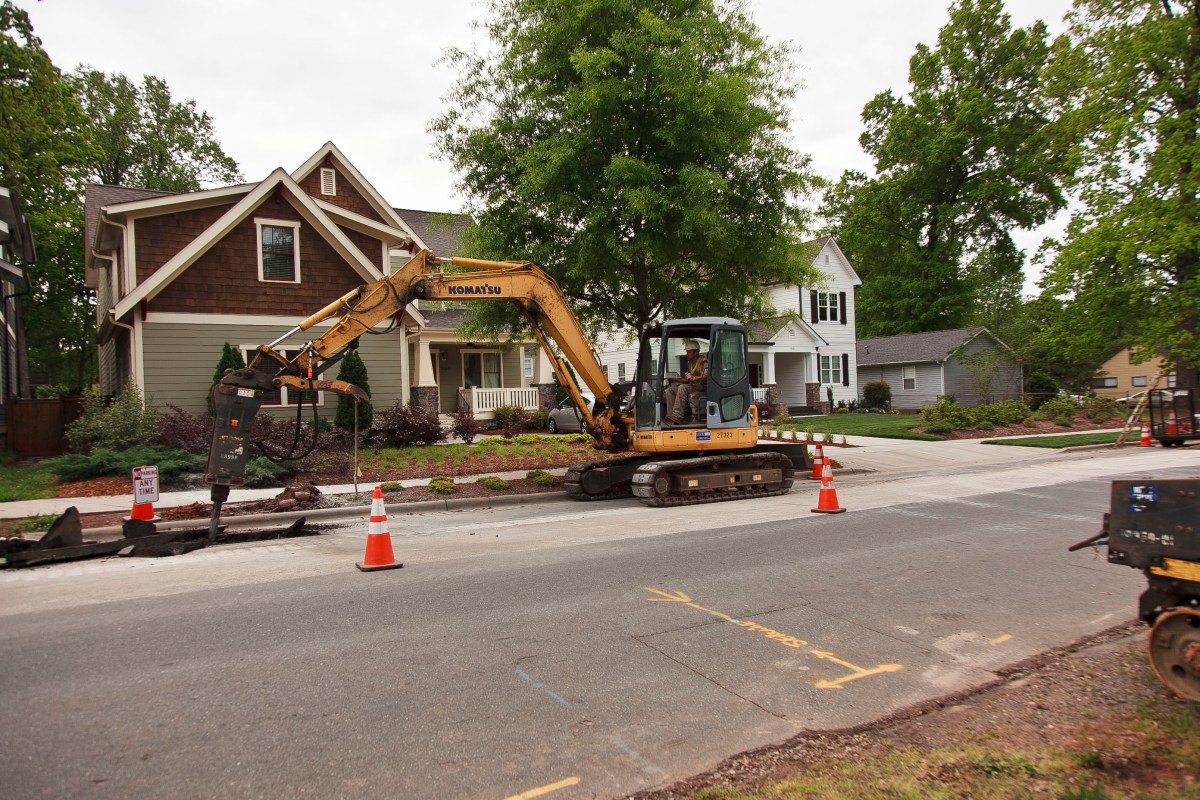

Inspectors
CLTWater inspectors will verify that pipes are installed in accordance with the design and assist customers.
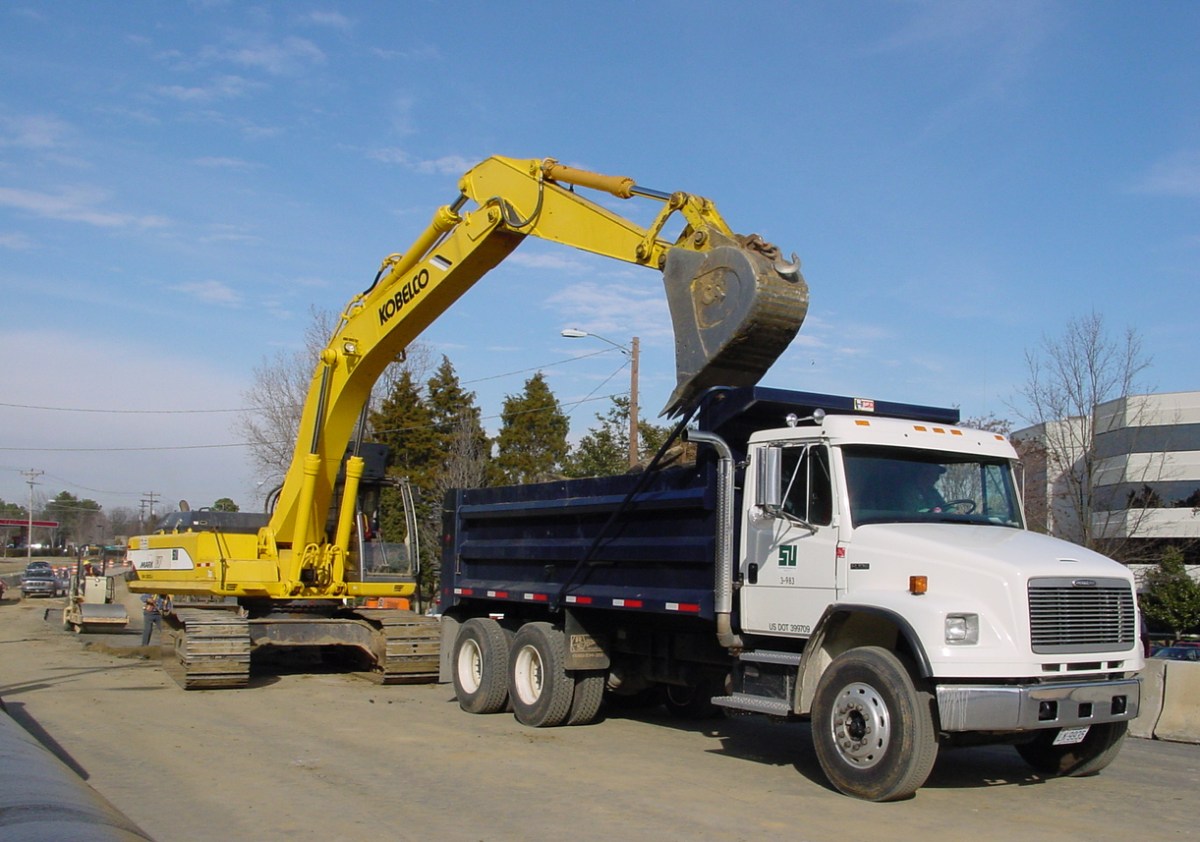
Dump Trucks
Several dump trucks may assist with construction to remove and add soil, gravel, etc.
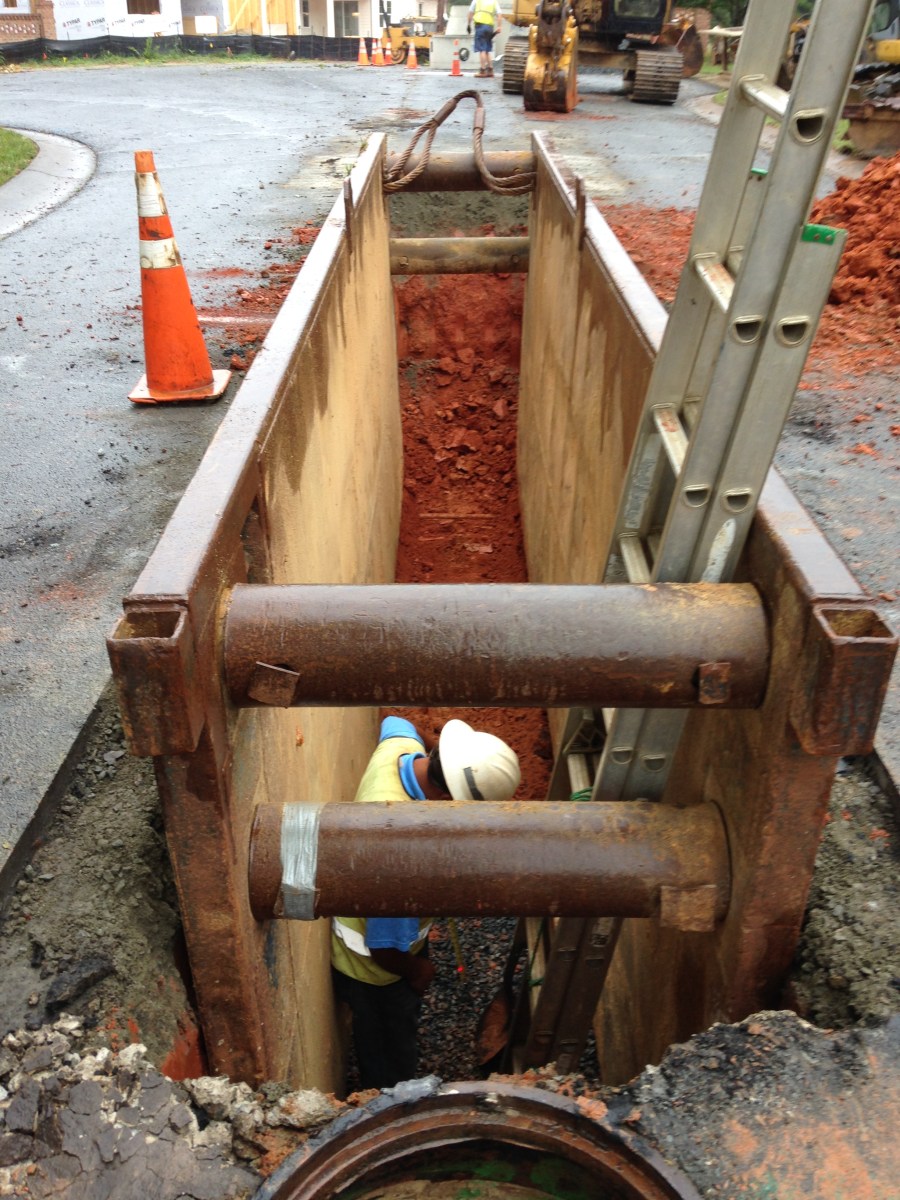
Trench Box
Trench boxes protect workers from cave-ins while installing, inspecting, or replacing pipes in the trench.
Wastewater Pipe Construction
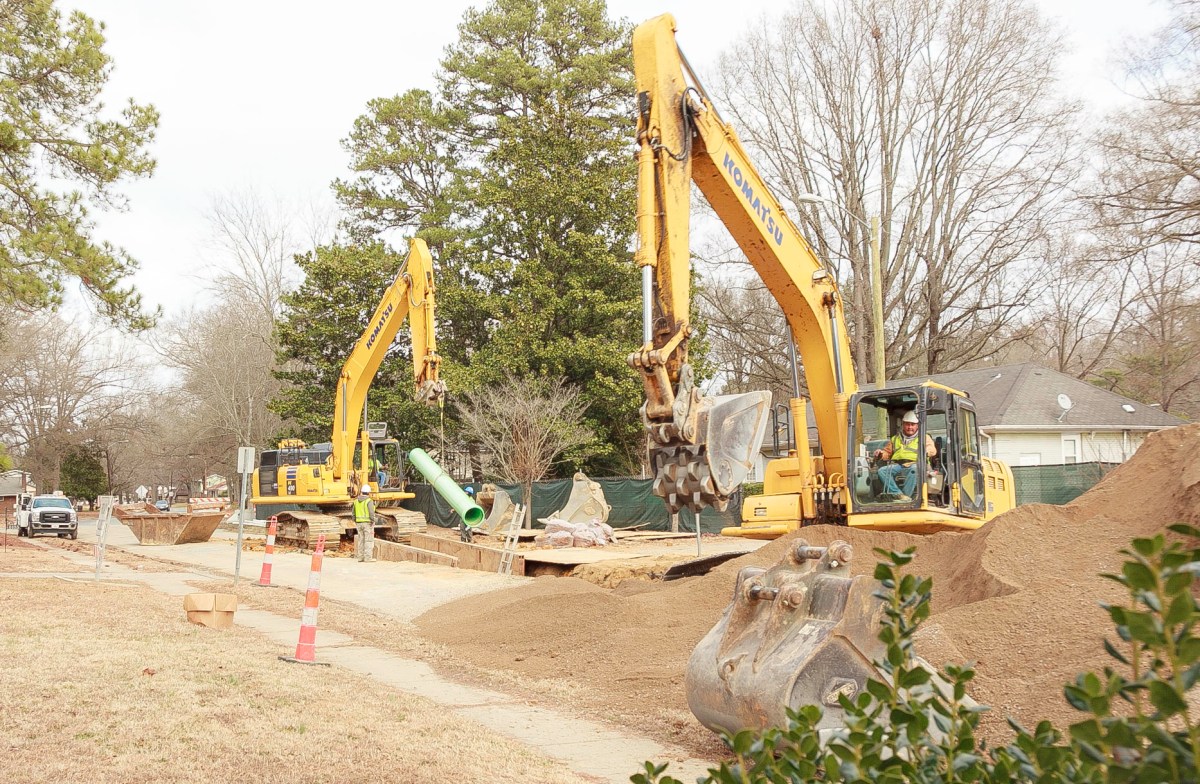
Large Equipment
24-inch wastewater pipe project under a street.
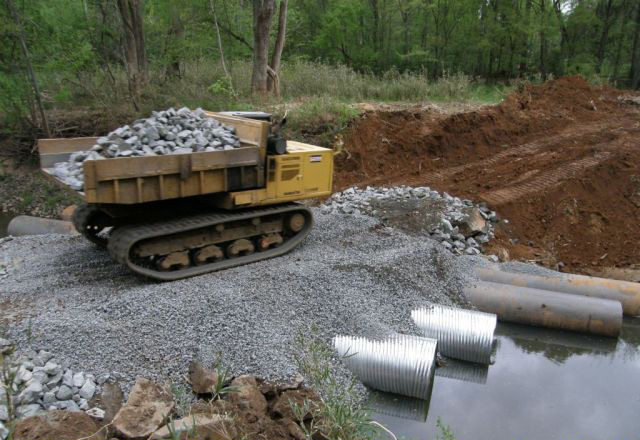
Creek Crossing
Contractors may create a safe creek crossing for equipment. Large pipes keep the creek flowing underneath.
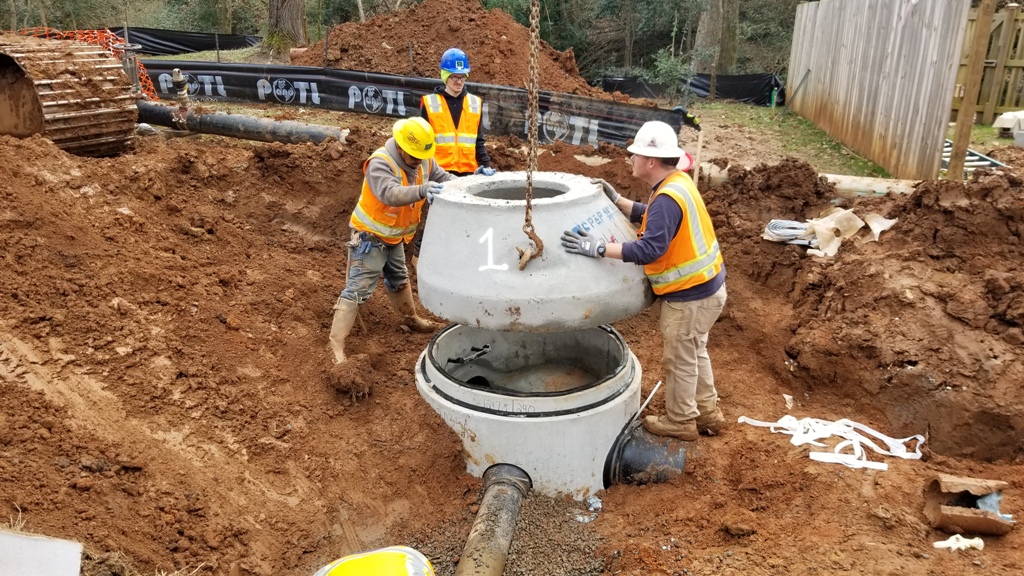
Manholes
Manholes vary in size depending on the amount of wastewater generated by a community.
Drinking Water Pipe Construction
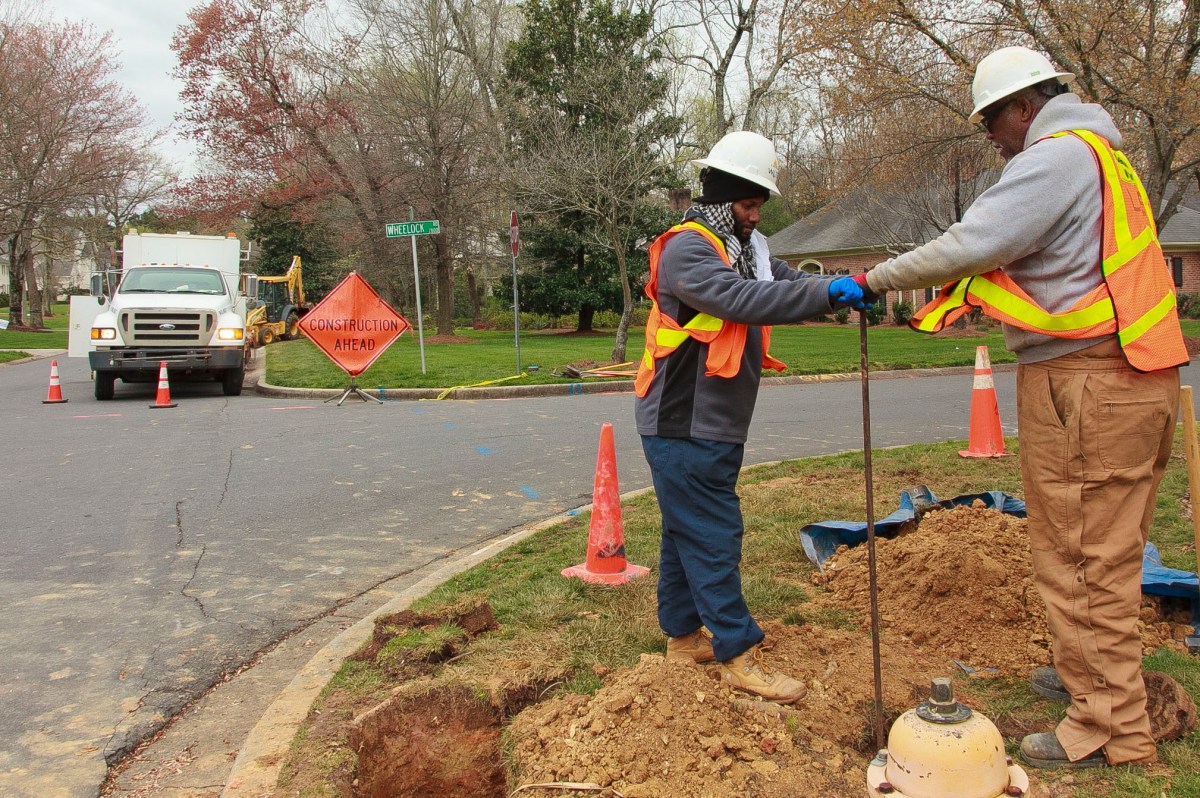
Valves
Crews may use drinking water valves to temporarily turn off water to a pipe.
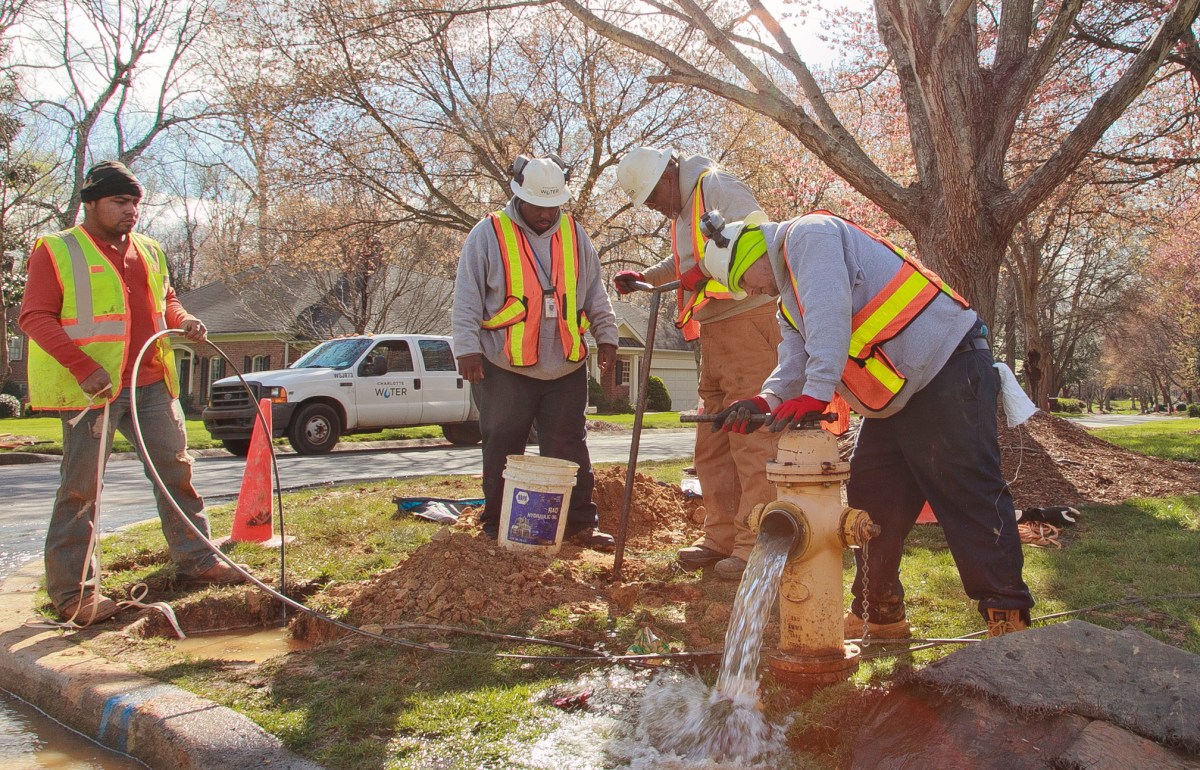
Fire Hydrant Flushing
Crews may flow hydrants to test or maintain water quality.
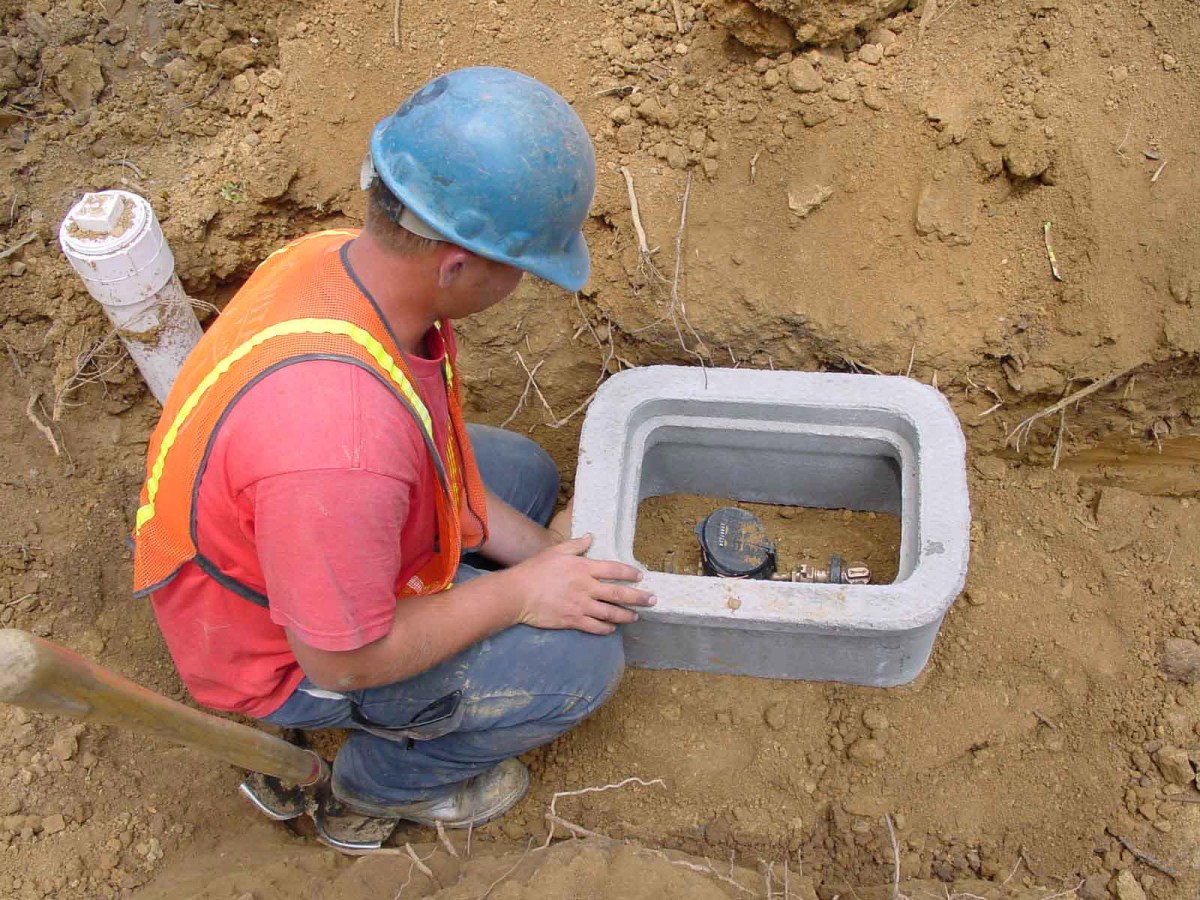
Meter Box Installation
A new water service installation includes: pipe near the property line, meter, and meter box. The property owner is responsible for connecting plumbing to tailpiece leaving the meter box.

Fire Hydrant Installation or Replacement
Fire hydrants are installed to provide emergency water service.

A 72-inch water transmission pipe to serve several neighborhoods.

24-inch drinking water pipe installation.
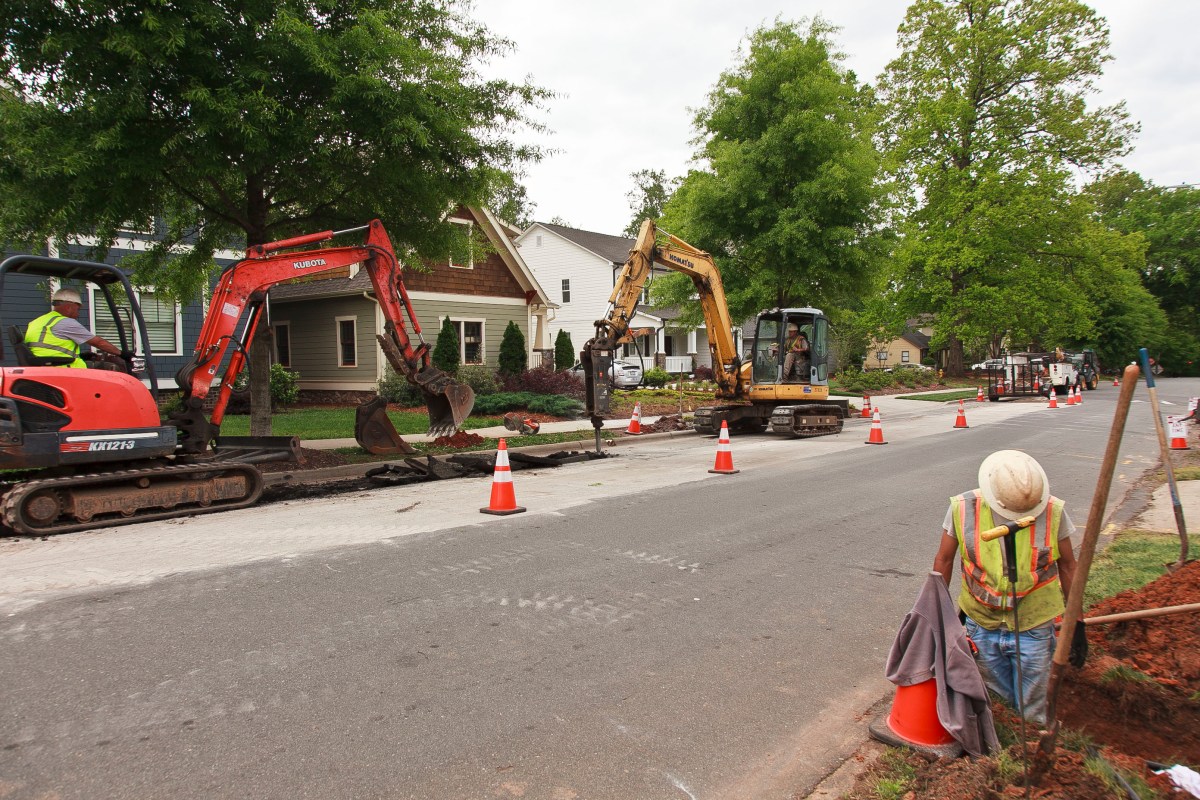
6-inch drinking water pipe replacement project, including new service pipes to each water meter.
What Does Tunneling (Boring) Look Like

CLTWater may tunnel under major roads to reduce lane closures. Tunneling requires entry and exit pits. Tunneling takes several months to complete. Some boring operations may be smaller to go under a large tree or driveway.
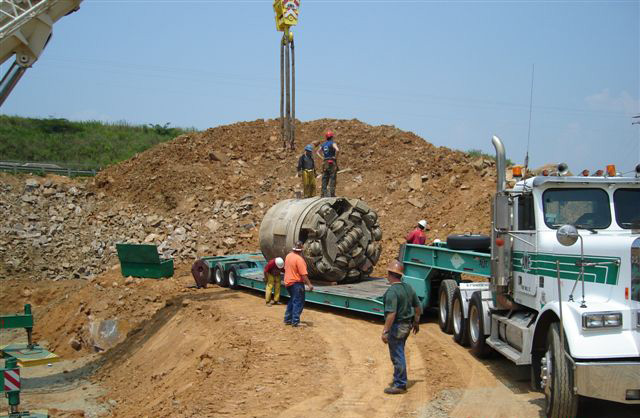
Tunnel Boring Machine (TBM)
Some tunnel boring machines uses disc cutters to fracture rock.
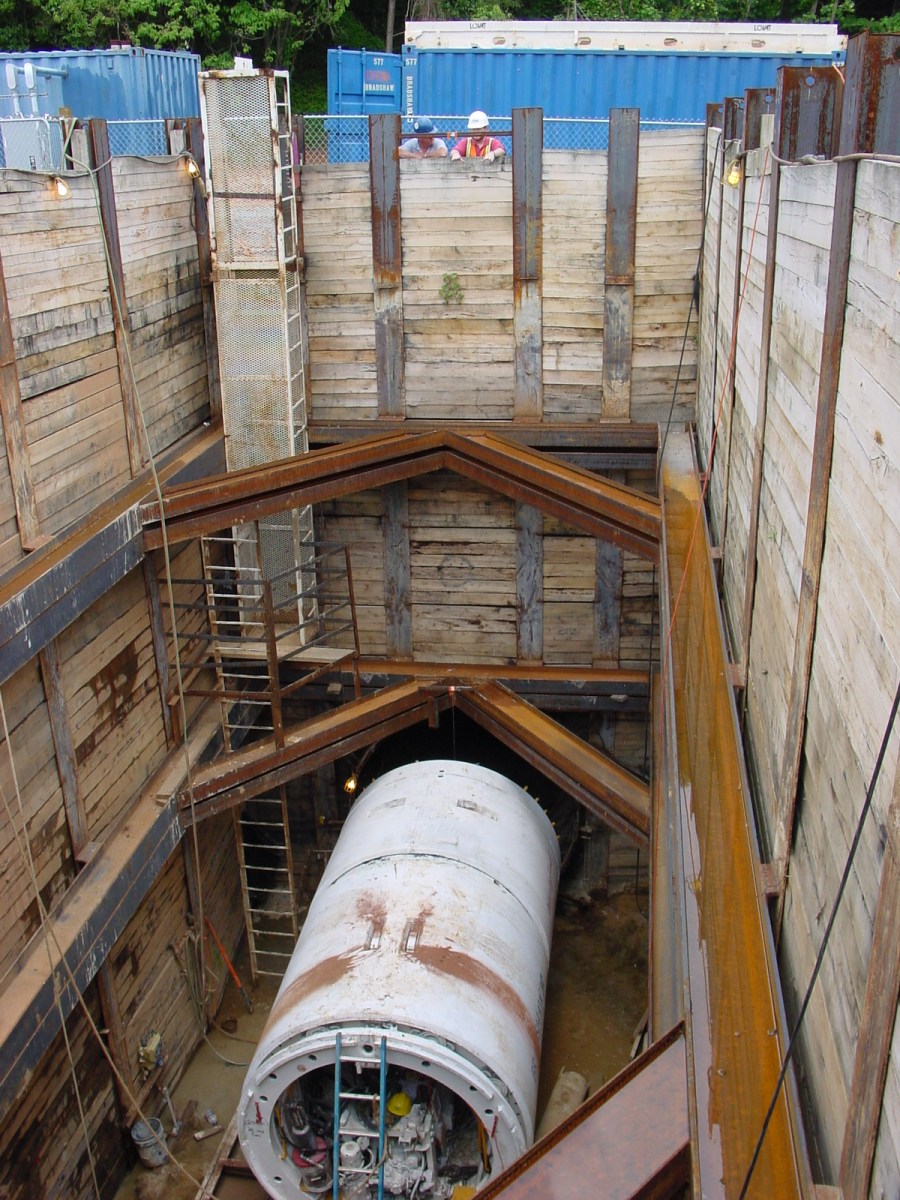
Tunnel boring machine at the bottom of the photo.
The pipe is installed inside a metal casing to
protect the pipe, the street, and other infrastructure above the tunnel.
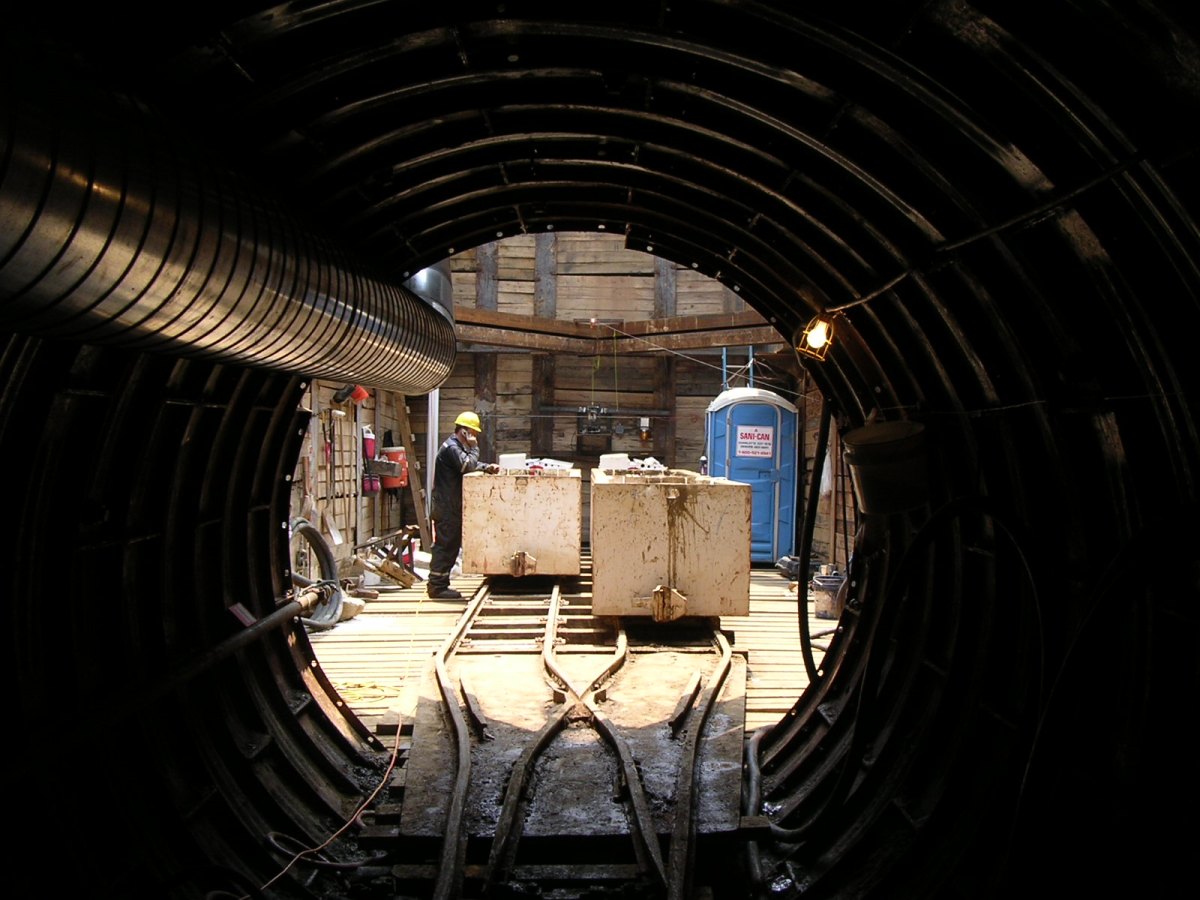
View from inside the tunnel looking at the entry pit.
Cranes may be required to move equipment and dirt.
What Does Rock Blasting Look Like?

CLTWater may contact customers to conduct a pre-blast survey to record building details.
A seismograph monitor records blast vibrations to
verify they are within safe specifications.
Blasting is a standard construction procedure for removing rock when other methods are not effective.
Holes are drilled to insert the dynamite charges into the rock.
Residents may hear a warning horn, a muffled noise, and slight vibration or rumble similar to a slammed door or thunder.
What Does Water Rehabilitation Look Like?
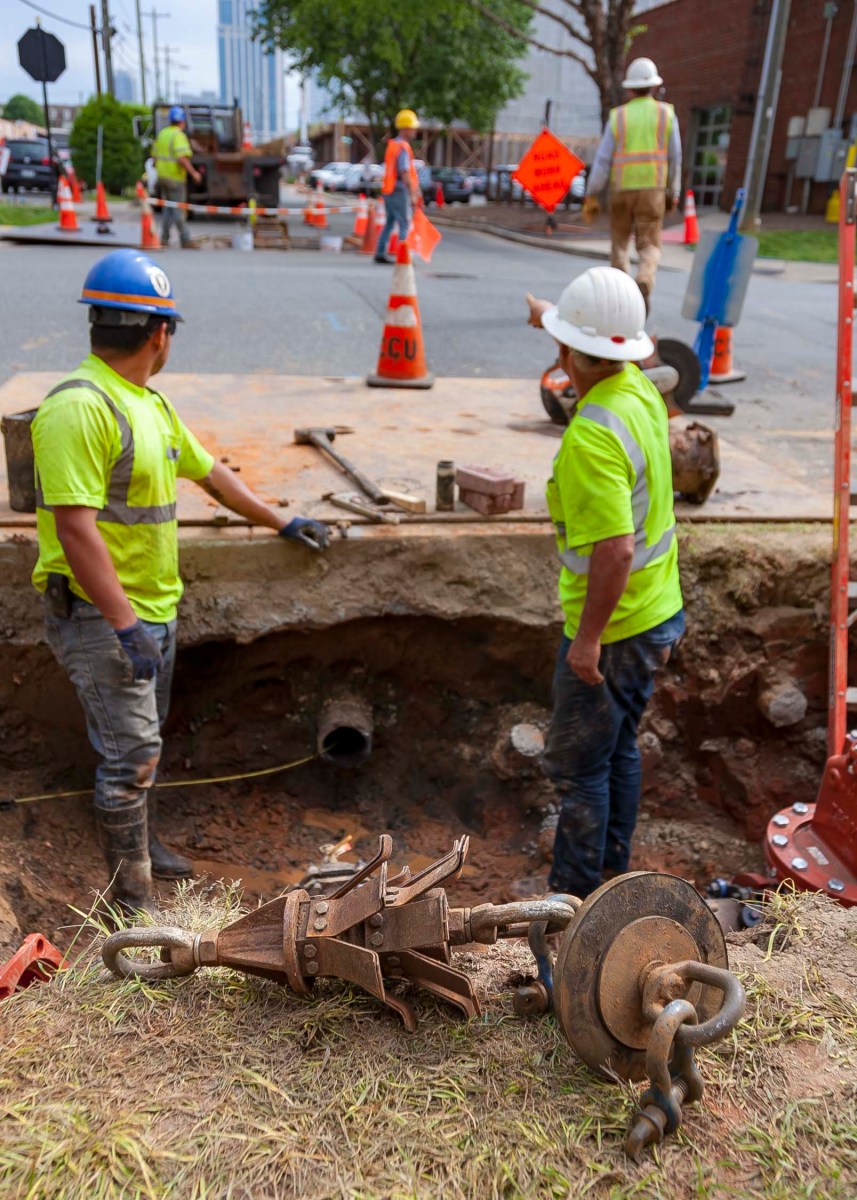
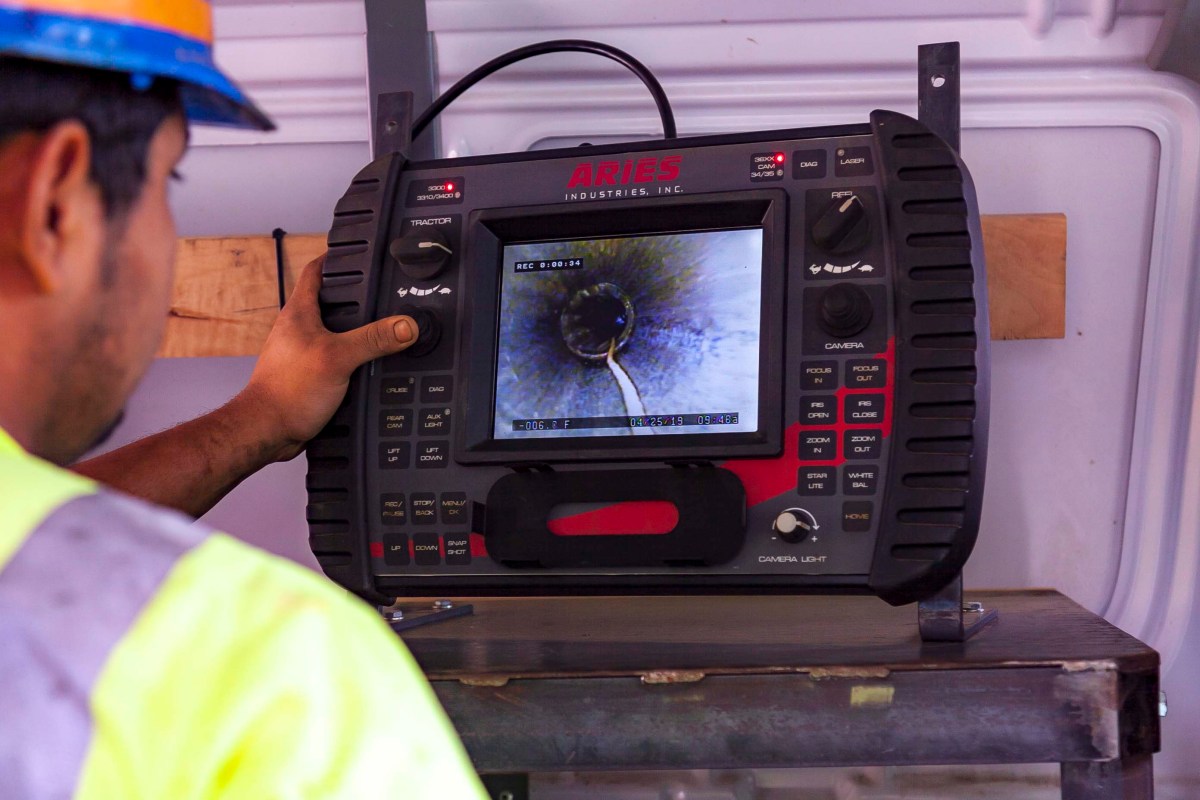
When pipes exceed 50 years of service, CLTWater can extend their service life through rehabilitation. Crews will clean and add a new interior lining. First, the contractor will install a temporary above-ground drinking water pipe and test it for quality. Once the above-ground pipe is approved, customers are connected.
What Does Wastewater Rehabilitation Look Like?
Crews will be on scaffolding, installing a sock-like lining inside an existing pipe through manholes. The sock-like liner will extend the wastewater pipe’s service life, minimizing construction in the area.
What Does Restoration Look Like?
-
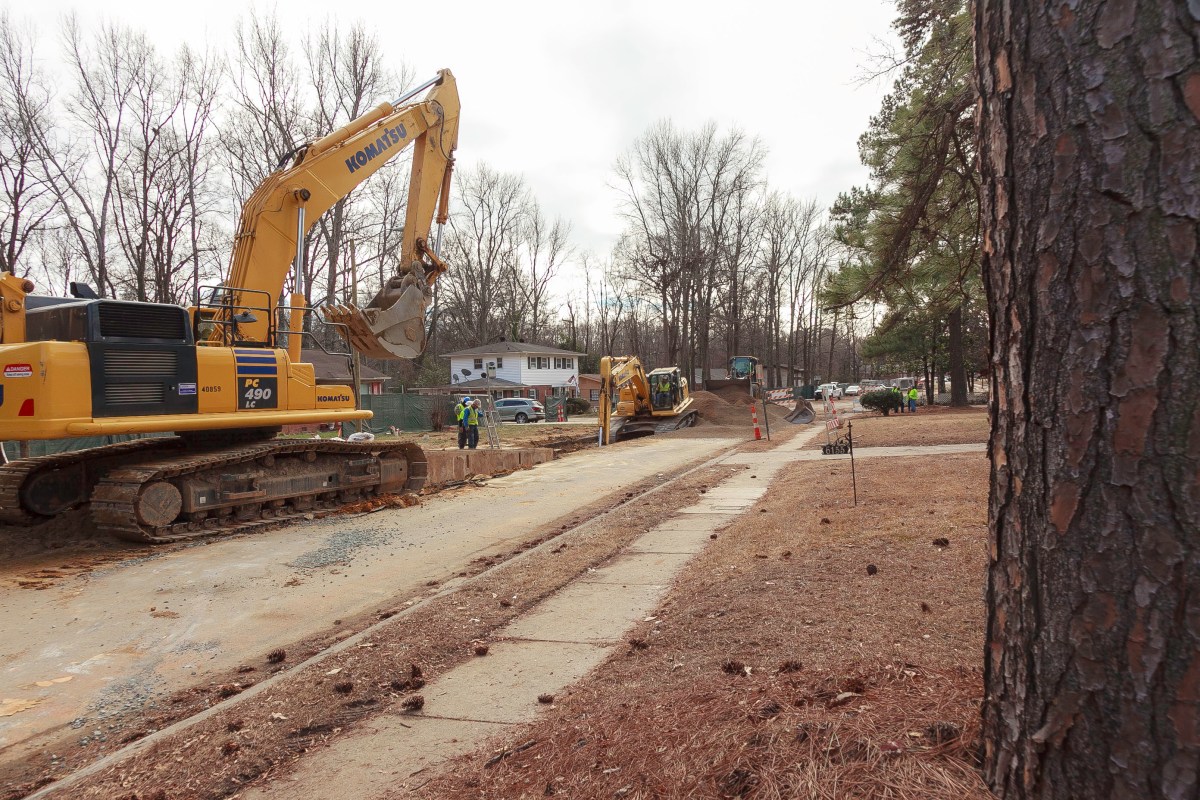
wastewater pipe construction inthe street with two excavators with a ternch. -

restored area showing repaved road and new grass -

All construction and restoration by CLTWater contractors includes a one year warranty. -
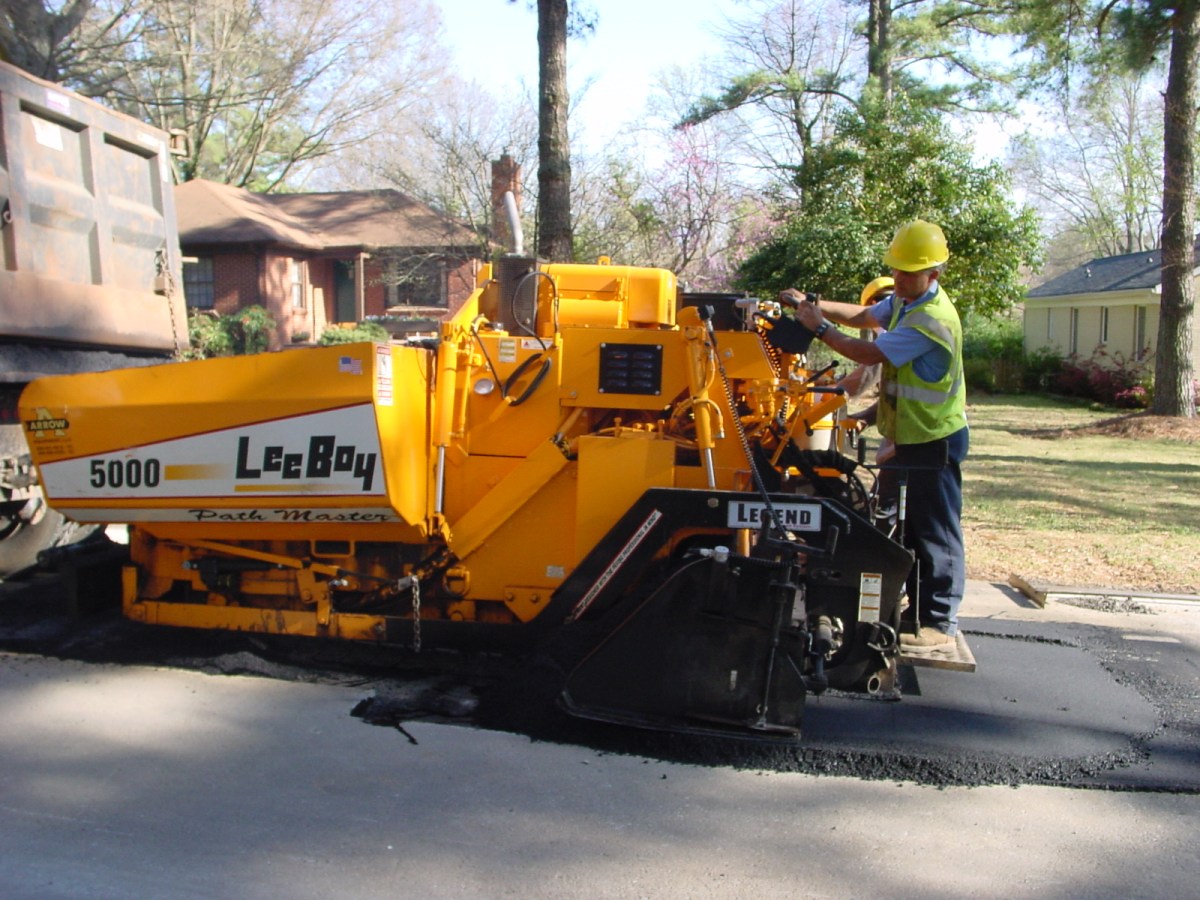
Subcontractors or Charlotte Department of Transportation (CDOT) Street Maintenance may repave a larger area than the trench after the project is complete.
What Do Charlotte Water’s Visible Utility Structures On Private Property Look Like?
-

Fire hydrants are installed within 1,000 feet of every existing property served by Charlotte Water. -

photo of a water sampling station (green) The purpose is to monitor quality of water within the system. -

photo of grass and two circles in the lawn that are the meter lids so that crews can turn water off to a water pipe to replace or repair a pipe. -
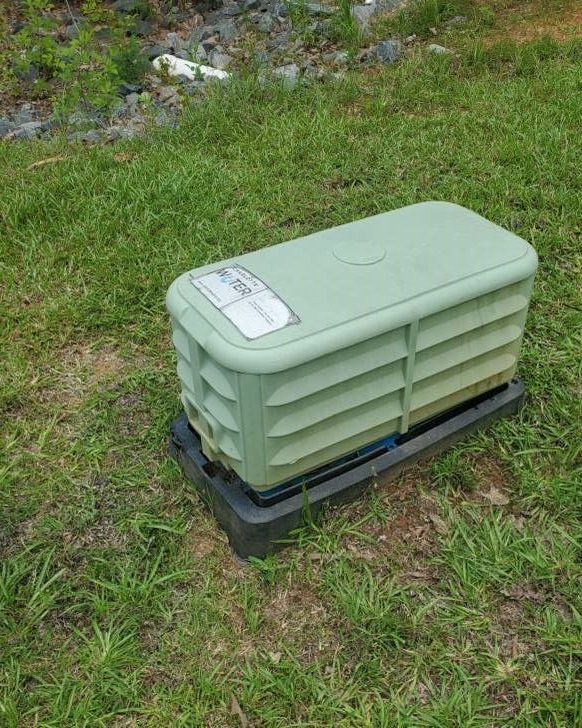
Auto-flushers are used on dead ends or locations to flow water where water flow isn’t optimal to maintain excellent water quality. -
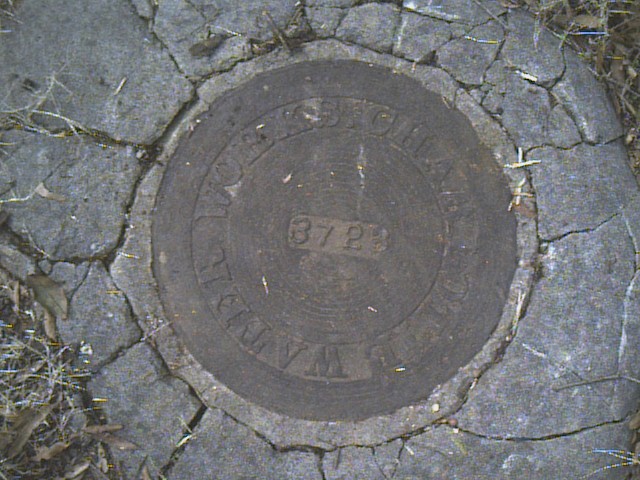
Manholes are installed flush with grass if in a maintained yard. If the manhole is installed in a floodplain, it may have a vent coming out of it or may be raised.