Tag Archives: Wastewater

Why Does Wastewater Cost More On My Water Bill?

Treating wastewater is complex, using sophisticated biological systems, multiple filters, and modern disinfection methods.

So why does your sewer part of the monthly bill cost more than water usage?

The Short Answer:

It is easier and cheaper to treat lake water to make it drinkable than to treat the community’s wastewater (industrial, commercial, and residential) and make it clean enough to reintroduce into a creek or river.

Water leaving the plant must be free of harmful pollutants to protect fish, turtles, birds, and other creatures that depend on the creek.

Below is a step-by-step guide for turning lake water into potable or drinking water.

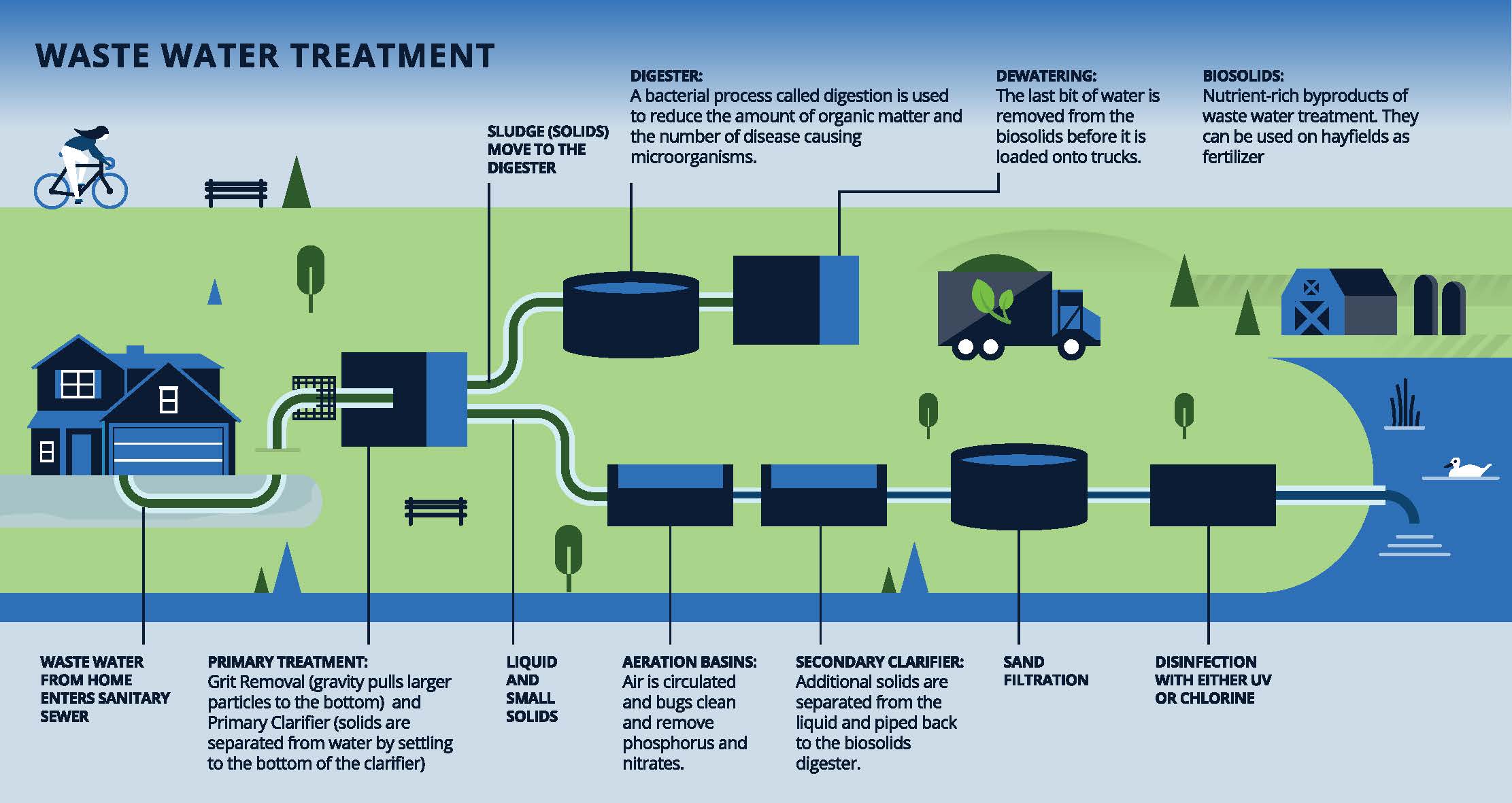
And here are the steps to turn your wastewater into creek-able water.

There are more steps to the wastewater treatment process than water treatment process.

Charlotte Water (CLTWater) only uses water meters to measure usage, so wastewater usage is calculated based on that water usage up to a limit or cap.

Energy and chemical costs are higher for wastewater treatment processes, hence the higher cost for wastewater treatment vs. water treatment on a water bill.

The cost to treat wastewater and meet federal regulations continues to increase. Our goal is to always meet and exceed regulations to ensure cleaner water goes into our creeks.

Stop right here if you’re satisfied! The Longer Answer gets a bit technical about how your billing works.

The Longer Answer:

CLTWater pays for water and wastewater services via usage and billing fees, not taxes (contrary to popular belief). CLTWater posted the official Revenue Manual that details all fees.

How can I help reduce my water / sewer bill and rate increases?
Toss all trash in the trashcan, not down a drain. Did you know that ‘flushable’ wipes clog pipes and require manually pulling them out of pumps? Wipes can cause expensive repairs and maintenance.

Additional resources:

What Happens When I Flush? A Story About Your Poop…

It isn’t magic, it is your water bill working for you…

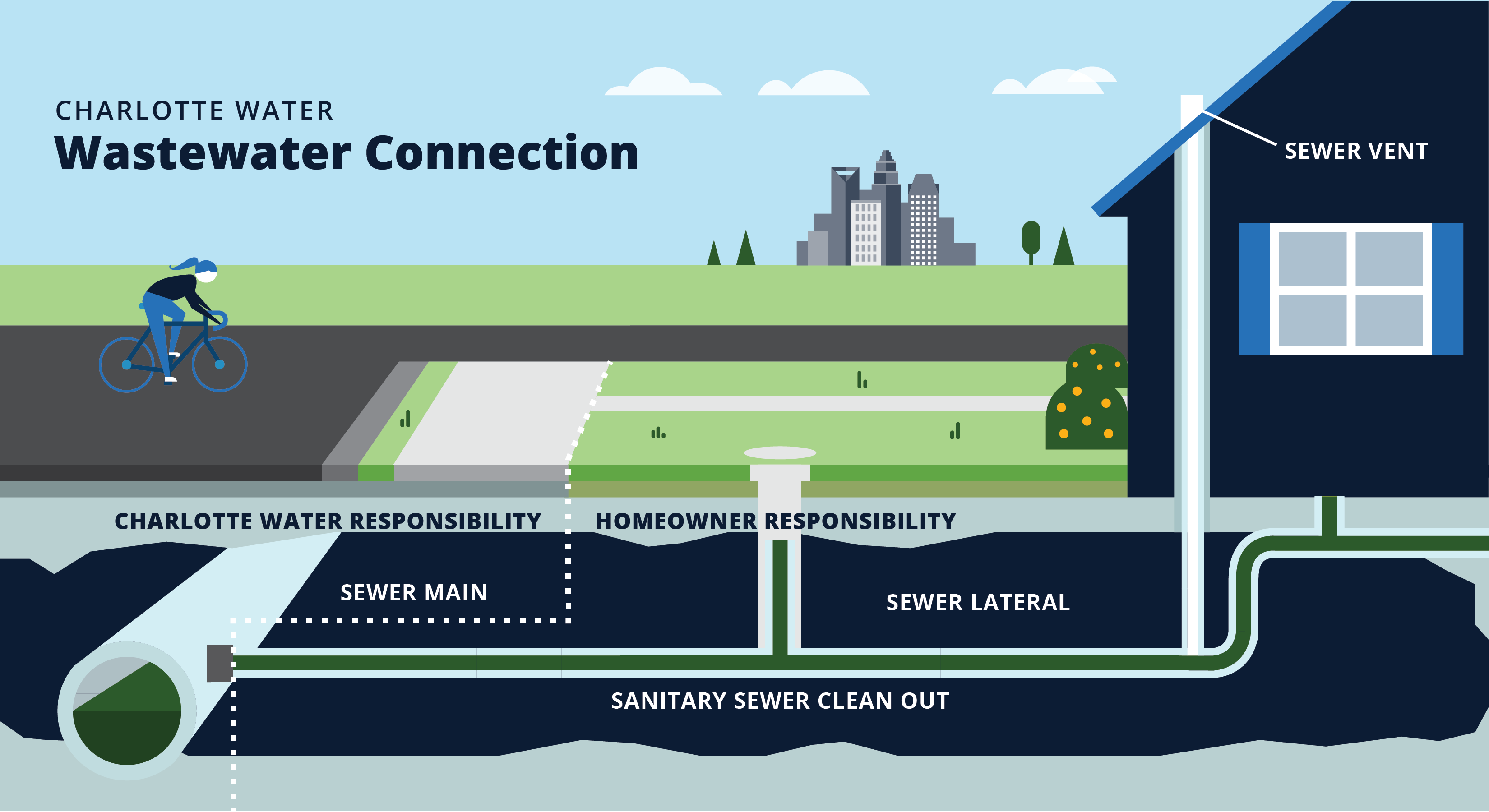
When you wash, brush, or flush, the water leaves your home and flows mostly by gravity down pipes to one of our wastewater treatment plants.

There are over 4,600 miles of pipe used to collect the wastewater in the collection system. Utility crews clean pipelines to prevent blockages and spills. They also clear blocked pipes, maintain pumping stations, repair damaged pipes, and connect new customers. Our plant operators work 24/7 to protect public health and the environment.

What is wastewater, and where does it go?

Used water (wastewater) from inside homes and businesses flow through thousands of miles of pipes to one of five wastewater treatment plants. The used water includes detergents, food, paper, and industrial & human waste. The collection system includes pipes, manholes, and pumping stations.

But how does it all work? Below is a quick explanation:

Pumping Influent

Wastewater flows by gravity from homes and businesses to the wastewater treatment plant. It enters the plant at a low elevation, usually near a creek. The wastewater is pumped uphill to begin treatment. Gravity moves water through the treatment process.

Preliminary Treatment

Screens remove large objects such as bottles,  branches, wipes, and trash. Grit chambers remove grit, sand, sediment, and gravel.

A big part of the wastewater treatment process is to separate the solids from the liquids and the liquids from the solids…

Liquids

Primary Treatment

Wastewater flows slowly through large tanks called primary clarifiers. This allows the heavier organic solids to settle down to the bottom of the tank. The settled material or primary sludge is pumped from the tank to a digester for further treatment.

Secondary (Biological) Treatment

Air bubbles are forced through the wastewater to encourage certain types of useful bacteria and microorganisms (microscopic single-cell organisms, think amoeba) to grow. These ‘bugs’ consume organic pollutants in the wastewater. They break pollutants (i.e. ammonia) into simpler forms (nitrates).

Final Clarification

The bacteria and microorganisms from the biological treatment phase are settled out of the wastewater in large tanks called final clarifiers. The bacteria/bugs are reused again in the treatment process…

Very similar to the primary clarifiers, the water moves slowly to allow the settling process to occur. Settled material or sludge that is pumped from the bottom of the clarifiers goes to digesters for further processing.

Filtration

Even though the wastewater flowing from the final clarifiers appears to be clear, there may be very tiny particles remaining. The flow is passed through a bed of sand or fine mesh screens called an effluent filter. This filter removes these particles.

Disinfection

The processed wastewater (effluent) is disinfected with ultraviolet (UV) light to neutralize any remaining harmful microorganisms.

Cascade Returns Water to Creek

The final stage of treatment is disinfection and then the water flows over a cascade of steps to the creek. The cascade steps looks and acts like a large waterfall putting oxygen from the atmosphere back to the water. The water may have a foam look as it travels down the creek due to the oxygen.

Solids

Digester

Digesters are large tanks where the solids removed from the clarifiers are heated, mixed, and treated with biological processes to remove harmful bacteria, break down fats and oils, and overall reduce the volume of solids. 

Biosolids

The solids removed from the digesters still contain a large amount of water. This water is removed for treatment. The treated biosolids are collected and returned to the environment. The biosolids are nutrient-rich byproducts of wastewater treatment. Biosolids are land applied on agricultural or farmers’ fields to as soil amendments and a source of fertilizer. 

Wastewater treatment operators and our laboratory professionals test both the water and solids throughout the process.

Did you know…

  1. Our oldest plants were built in the 1920s.
  2. Part of designing for treatment plants includes ensuring space for expansion for generations.
  3. Staff can take parts of the wastewater plant offline for cleaning, repairs, and upgrades all while treating the constant flow.

Additional resources:

What does a growing city mean to wastewater treatment plants?

Why does wastewater cost more than water on my bill?

How does CLTWater respond to a wastewater overflow?

Is the odor from a wastewater plant or sewer manhole?

How Does CLTWater Respond To A Wastewater Overflow?

First, what is a wastewater overflow? A wastewater overflow, also referred to as an SSO (Sanitary Sewer Overflow), is a release of untreated or partially treated sewage from a municipal sanitary sewer, typically out of a manhole or a broken pipe.

Taken by Cam Coley, employee City of Charlotte, Charlotte Water

While wastewater overflows are nearly inevitable in a system as large as Charlotte’s, we do our best to keep these incidents to a minimum to protect human and environmental health.

How can I tell if there is a wastewater overflow in a creek?

You may notice a gray, milky color or odor. If you do suspect an overflow, call 311 right away and say or select wastewater emergency, and a crew will respond.

What should I do if I see a wastewater spill?

Call 311 or 704-336-7600 and say or select sewer emergency. We will respond 24 hours a day.

How can I help reduce overflows? 

  • Toss in the trash: paper towels, wipes, hair, cotton swabs, feminine products, dental floss, coffee grounds, and excess food. 
  • Toss in the toilet: only toilet paper. 
  • Drain in the sink: soap suds, small amounts of food from the plate, and liquids. 
  • Take to a full-service recycling center: used and expired oils and grease. 

What causes wastewater overflows?

  • Clogs from wipes, paper towels, leftover kitchen grease, oils, or anything other than toilet paper.
  • Pipe failure (tree falls and breaks pipe, stream/creek erosion causing the pipe to fall into the creek)
  • Tree roots attacking and clogging the pipe
  • Damage by nearby construction. (Reminder to always call 811 before you dig.)

How does CLTWater respond?

A rapid response crew will investigate the area and attempt to remove the clog. This work does not impact drinking water quality. Crews may run hydrants to flush the area, lightly apply lime to sanitize, and/or return to investigate other pipes. Residents and their pets are encouraged to avoid contact with the creek during an overflow response.

How does CLTWater respond to a large overflow?

There is a myriad of responses depending on the situation. For example – a tree falls into the creek, washing out the creek bank and undermining the wastewater pipe just behind the creek bank. Crews frequently inspect these areas, but erosion can occur quickly during heavy rain events. Crews will:

  • Create a temporary access road or path if necessary to respond.
  • Install a temporary wastewater pipe to bypass the broken pipe and stop the overflow. The pumps and temporary above-ground pipes are checked several times daily to prevent possible wastewater overflows.
  • Stabilize the creek bank.
  • Construct a barrier / temporary stream bank to protect workers.
  • Remove the broken pipe. 
  • Install the new pipe and test it.
  • Rebuild the stream bank with clean fill material (soil). 
  • Remove temporary pipes and pumps.
  • Remove large spoil piles of dirt.
  • Complete grading/drainage.
  • Plant trees/shrubs and seed/straw the area.
  • Restore the stream bank and revegetate.
  • If the greenway was closed during work, it would be restored and reopened. When greenways are affected, CLTWater works with Mecklenburg County on restoration.

How does CLTWater handle tropical storms or heavy rains and prevent spills?

The underground sanitary sewer pipe network is not designed to handle rain, yet the runoff and flooding from large rains inevitably infiltrate the wastewater pipe network. Overflow basins at the five largest wastewater treatment plants capture and later treat more than 160 million gallons of rainwater mixed with wastewater. These equalization basins (EQ basins) prevent wastewater from overflowing out of manholes in our community.

CLTWater has also added several large wastewater pipes to help reduce the impact of heavy rains. Crews work to prevent rainwater from getting into the sanitary sewer system and are out investigating our system soon after a storm ends.

Additional Resources:

Wastewater treatment plant process

Why does wastewater cost more than water on my bill?

How does CLTWater respond to a wastewater overflow?

What does a growing city mean to wastewater treatment plants?

Is the odor from a wastewater plant or sewer manhole?

Easement 101

There is a manhole in my backyard. What does Charlotte Water (CLTWater) do to maintain pipes in my yard?

CLTWater maintains a large network of sanitary sewer or wastewater pipes. These are different from the storm drains along gutters. The wastewater pipes flow our communities’ wastewater from your homes and businesses to a wastewater treatment plant.

An easement agreement is a legal document that gives CLTWater the right to access, maintain, clear, repair, inspect, improve, renovate, and replace facilities (including pipes and manholes) on private property. 

Permanent Easements and Your Property

Below is an illustration of wastewater pipes under the streets and then through woods to collect wastewater and flow downstream to a wastewater treatment plant.

the illustration shows a green line under the streets and connecting to circles noting the manholes and then a larger area of 30 feet to note the easement area required to maintain the pipes and manholes.
What is an Easement?Permanent and temporary construction easements are needed to build and maintain water and sewer pipes. An easement agreement is a legal document that gives CLTWater the right to access, maintain, clear, repair, inspect, improve, renovate and replace facilities on a property. City representatives work with property owners to finalize the terms of the agreement, and compensation is determined through an appraisal.

The easement agreement is signed by both the City and the property owner and is recorded at the Mecklenburg Register of Deeds office.  The agreement is accessible online on the Register of Deeds website

NOTE: When purchasing a property, easements are not typically reported as part of a title search for the purchase of title insurance.  The best way to determine if there are any easements is to survey the property.​
What can a property owner do with their land within an easement?Though the property owner still has ownership of the land, there are restrictions to what they can do within an easement.  Any restricted items that are found within an easement during clearing activities will not be replaced at Charlotte Water’s expense.

1. Nothing permanent may be stored or built on top of the easement.  This includes but is not limited to slabs, walls, fill, permanent sheds, pools, gazebos and medium-large size trees.

2. Fences are allowed across an easement if a 12-foot access gate is provided.  Gates shall be dual-locked to allow access by the property owner and the City.

3. Charlotte Water has a ‘Landscaping/Planting Guidelines’ document that can help a property owner decide what to plant within an easement.  Certain plants and trees are restricted, as follows:
+ No trees are allowed within a permanent easement.
+ Plants with an invasive root system are not allowed.
+ Gardens, crops, shrubbery and ornamental trees with shallow roots are acceptable within an easement but not directly over the pipe.

4. Installing a concrete/asphalt driveway partially over the easement is possible but with the following restrictions:
+ The property owner will be responsible for any damage caused to the pipe. Care should be taken in compacting the excavated area to avoid damage to the pipe.
+ The property owner will call 811 have utilities located before digging inside easement.
+ A driveway must be shallow (not to exceed 1 foot and shouldn’t cover any existing access points or manholes).

​​5. Irrigation systems are not permitted within water and sewer easements.  Charlotte Water is not responsible for the repair of any irrigation systems installed within a permanent easement.​
What happens to an easement during construction?Easements are cleared of trees, shrubs, structures, and debris in preparation for construction activities. Existing fences located in the easements are removed and temporary fences are installed during construction. ​​
What happens in an easement after a construction project?Typically, crews will re-grade, fertilize and seed easements after construction. Once restored, property owners can make plans to replace landscaping. Charlotte Water is not responsible for replacing custom landscaping within an easement.  Charlotte Water will also repair and replace pavement that was damaged during construction.​​​
Who can I contact if I have an easement question?Prior to any digging or construction, Call 811 to locate any underground utilities (NC 811, Call Before You Dig) or 800.632.4949.

For water and sewer questions within Mecklenburg County, please call 311 or 704-336-7600, select Charlotte Water, and ask the representative that you have a Charlotte Water easement question. Please include the address or parcel ID of the property.

To identify water or sewer easements on your property, email cltwasbuilts@charlottenc.gov with a location (address/parcel ID), details of the request and your contact information.

Charlotte-Mecklenburg Storm Water Easement information is available on the Storm Water Easement webpage.​ For storm water or drainage easements, please call 311 for assistance. 
How does CLTWater clear the easement?Tree roots can penetrate wastewater pipes, blocking the flow of wastewater, and eventually causing an overflow.
CLTWater periodically clears permanent easements of trees and debris to prevent overflows.
Debris will be turned into mulch or transported off-site.
When possible, trees on the edge of permanent easements are preserved.
Property owners may see activity for several days until crews are able to access easements from another location.
What is a Road right-of-way?A Road right-of-way is a portion of property near the road that is owned by the property owner and available for the city to use for street maintenance or utilities work.
How can I find out what is under my property?Before you start digging along your property borders — or ANYWHERE NEAR public utilities located on or around your property — pick up the phone and dial N.C. One Call number at 1-800-632-4949.
Who do I contact if I have an easement question?You can call 311 or 704-336-7600, select Charlotte Water, and ask the representative that you have a Charlotte Water easement question.

Transcript for Permanent Easements and Your Property Video

There may be more under your property than you know.

If you own a property or are considering buying, the best way to find utility easements is to have the property surveyed. You can also call 311 or 704 336 7600 and ask to speak to Charlotte Water staff about your property. You may be required to sign a confidentiality agreement to receive information. If your property has an easement, then there are restrictions you need to follow. Permanent structures, irrigation systems, trees and other things that may damage or restrict access to the pipe are not permitted within easements, any restricted items found in the easement will not be replaced or repaired by Charlotte Water. If you have a question about an existing easement, please call or email Charlotte Water first. You can expect to see Charlotte Water crews clearing the easement occasionally. Crews may access your property to repair the pipe and eventually replace the pipe. When possible, Charlotte Water will provide advance notice of activities on your property. Charlotte Water staff is dedicated to providing safe drinking water and wastewater services to our community. To learn more please visit CharlotteWater.org.